In praise of Tintin

tintin1A piece of mine I’m republishing, having just been reading some Tintins again!

Tintin of the ageless quiff and boundless enthusiasm, from the gorgeous comic books by the Belgian author and illustrator Herge has turned eighty-six this year ! Of course I have every single volume of his adventures, some in French, some in English, as well as quite a few associated books, including a gorgeous book of travel narratives and photographs retracing the steps of Tintin and his friends in such countries as Tibet, Scotland, the Congo and ‘Syldavia’, compiled by the French magazine Geo. This curiosity, along with Tintin encyclopedias, dictionaries, diaries and several figurines of Tintin and his friends, action figures, bookend the scruffiest, most loved-to-death collection of the Tintin adventures, which we never get tired of rereading.

The Tintin adventures are the books most often pulled out of the groaning family shelves when any of my kids come home to visit. When anyone’s feeling tired, discouraged, or simply at a loose end, Tintin is the prescribed remedy—a remedy of freshness, fun and escape that never fails to work. And when I canvass many of my writer friends as to favourite childhood reading, Tintin comes up again and again.

Translated into the world’s languages, over the four generations and more since his birth in the pages of an obscure children’s journal, Le Petit Vingtième, the immortal little reporter has proved remarkably adept at transcending all kinds of barriers of nationality, culture, religion, class, race, sex, ethnicity, age, whatever you will. The brainchild of the renowned Belgian cartoonist Hergé(his real name was Georges Rémi—and his pen-name comes from the phonetic French rendition of RG, his initials spelt backwards), Tintin’s now reached an iconic status. You rarely hear anymore the snobby, narrow-minded assertion that it’s not right for kids, because it’s—shock, horror!– a comic. Yes, some of the early work is very dated and patronising (my least favourites, for this reason, as well as incoherent story, are the early Tintin in the Congo and Tintin in America). But mostly, the Tintin corpus has aged remarkably well, because at the heart of Herge’s work is a realistic, amused but compassionate view of human nature, and a strong feeling for justice. Along with the social comedy and the crisp dialogue, there is also a horror of cruelty and bullying, and a tenderness for the ‘ordinary’ aspects of human life, as opposed to those who would have us valuing ideas over people.

Hergé very much kept up with what was going on in his times, something that is clear in the Tintin adventures. Yet it’s a curious fact about the Tintin stories that they’re both timeless and very much of their time. With consummate artistry, in both gorgeous pictures and crisp words, Herge managed to both document the realities of the twentieth century, and create his own world. The archetypal characters, social comedy, jaunty pace, inventive language, extraordinary command of line and colour, exciting, suspenseful plots, and clever dialogue of the books are all handled with the lightest of touches that belied the author/illustrator’s painstaking care with his work, both visual and written, and the immense amount of research he did to create such a seemingly effortless, pleasurable result. He combed dictionaries for words that could be used for the ever more colourful and bizarre invective of Captain Haddock; read umpteen atlases, books of science, folklore, geography and history to get exactly the nuances of the various places Tintin explores. Like Shakespeare, he did not visit the places he set the stories in, preferring to document himself in libraries and museums, but his own city of Brussels features anonymously many times at the beginnings of Tintin adventures.

The Tintin books have been highly influential in pop culture. Writers and film-makers have been greatly inspired by them. When I was compiling a series of columns for a book magazine a few years ago, on the favourite childhood books of several prominent children’s writers, Tintin came up many, many times as a major influence. Tintin has also helped to make the extraordinary art of comic books acceptable to a wide range of people(incidentally the massive success of such European books clearly shows that it’s certainly not just the US that calls the cultural tune).

But the Tintin alchemy has not yet been totally successfully distilled into decent film versions—of the abortive 1970’s cartoon series, the less said the better(indeed Herge himself, who had had no control over them, hated and despised them). The recent Steven Spielberg film was okay, but no more. It doesn’t matter We Tintinophiles have all those gorgeous stories to read again and again; a mixture of cinema and storytelling right there in front of our eyes, in a perfect blend of word and image.

An adventurous life and a notorious true crime in Faversham, Kent

Michael-Greenwood-plaqueVisited Faversham in Kent recently and whilst on a walk through this very historic town, came across two very interesting stories, literally plastered on the walls of two ancient houses. One told the story of Michael Greenwood, who at the age of 17 in 1748, was press-ganged into the Navy, then his ship, the Litchfield, was wrecked off the Barbary Coast, and he and his shipmates were captured by Moors, and enslaved for 17 months till they were ransomed. After that he returned to Faversham where he worked as an oyster dredger, but during his captivity he kept an extensive diary which is apparently still in existence and is owned by his descendants in Queensland! Would love to read it..

The other story is of a notorious crime in Tudor times–the murder of a man named Thomas Arden by his wife Alice and her lover Mosby. This was a bungled affair–several attempts were made which failed until finally the murderous pair hired two hitmen, returned English soldiers from Calais known amazingly as Black Will and Loosebag, who killed Arden but bungled it so badly that the murderers, all of them, were quickly discovered and executed, except for Loosebag, who managed to get away. Not surprisingly, this gruesome and bizarre crime was not only the talk of the country but it inspired a play, Arden of Faversham, which though anonymously published, is thought variously to have been written by Christopher Marlowe, Thomas Kyd and William Shakespeare–either solely or collaboratively. The play has been produced many times over the centuries–the latest of which was last year, when it was performed by the Royal Shakespeare Company, updated to modern times. ardens_house

Such great stories! Am sure they will find their way somehow into my writing, somewhere..

Guest post: Elisabeth Storrs on Etruscan love

Today I’m delighted to welcome Elisabeth Storrs to my blog. Elisabeth is the author of The Wedding Shroud and The Golden Dice, the first two books in the Tales of Ancient Rome trilogy set in early Republican Rome and Etruria. The final book, Call to Juno, will be released in April 2016.Storrs-WeddingShroud-20148-CV-FT

00 ElisabethStorrsColor300Elisabeth has long held a passion for the history, myths and legends of the ancient world. She graduated from the University of Sydney with a degree in Arts Law having studied Classics along the way. She lives in Sydney with her husband and two sons and over the years has worked as a solicitor, corporate lawyer and governance consultant. She is the co-founder of the Historical Novel Society Australasia, and the Deputy Chair of the NSW Writers’ Centre.

Warding off Evil: The Power of A Loving Embrace.

by Elisabeth Storrs
I was inspired to write The Wedding Shroud and its sequel, The Golden Dice, when I found a photo of a C6th BCE sarcophagus of a man and women lying on their bed in a tender embrace. The casket (known as the Sarcophagus of the Married Couple) was unusual because, in this period of history, women were rarely commemorated in funerary art let alone depicted in such a pose of affection. The image of the lovers remained with me. What kind of culture exalted marital fidelity while showing such an openly sensuous connection? What ancient society revered women as much as men? Discovering the answer led me to the Etruscans, a society that existed from before archaic times in Italy and was mainly situated in the areas we now know as Tuscany and Lazio.

Married Couple                                              Sarcophagus of the Married Couple
                                                            Late C6th BCE

Etruscan women were afforded education, high status and independence. As a result they were often described as ‘wicked’ by Greek and Roman historians and travellers whose cultures repressed women. Etruscan women dined with their husbands at banquets and drank wine. In such commentators’ eyes, this liberal behaviour may well have equated with depravity. One famous account claims that wives indulged in orgies. And so modern historians continue to debate the contradictory depictions of Etruscan women –were they promiscuous adulterers or faithful wives?
Etruscan society clearly celebrated both marriage and sex. The image of men and women embracing is a constant theme in their tomb art and ranges from being demure, as in the case of the Married Couple, to the strongly erotic (Tomb of the Bulls) and even pornographic (Tomb of the Whippings.) The latter illustrations seem to confirm the more prurient view of Etruscan women but the symplegma or ‘sexual embrace’ was not a gratuitous portrayal of abandon but instead was an atropaic symbol invoking the forces of fertility against evil and death.
No better example of this is a particularly striking double sarcophagus found in Vulci in Italy and which is now located in the Museum of Fine Arts, Boston. Wrought in fine white limestone, the man and woman lie entwined in each other’s arms. However, unlike the anonymous Married Couple, this husband and wife can be identified. They are Larth Tetnies and Tanchvil Tarnai. The very fact that Tanchvil has two names is evidence of the status of Etruscan women. In early Rome, females only had one name – that of their father’s in feminine form. In Etruria, the bloodlines of both sides of a woman’s family were often recorded on their casket.

Tetnies Younger                                                       Larth Tetnies and Tanchvil Tarnai
                                                         Late C4th early 3rd BCE
The image of the couple is both intimate and yet openly erotic. The spouses are not young but are nevertheless beautiful. Tanchvil gently clasps the nape of Larth’s neck as the lovers gaze into each other’s eyes. They are naked, the outline of their limbs evident beneath the sculpted folds of the mantle that covers them. However nudity cannot hide their status. Their luxurious hairstyles and elegant jewellery declare their wealth, as does the wide, decorated double bed upon which they lie.
There was a second sarcophagus found in the sepulchre at Vulci. It is narrow and only held the remains of a woman, Ramtha Visnai, but its lid depicts her embracing her husband, Arnth Tetnies. They are the parents of Larth. This coffin is made of rough nenfro stone. Wrapped in their shroud, the figures embrace each other on their bed. Unlike the sexually charged younger couple, the older pair is more contemplative as they face each other although the sight of their feet peeping from beneath the covers hints at the relaxed familiarity of their marriage.

Tetnies Elder                                                  Ramtha Visnai and Arnth Tetnies
                                                          C450-400 BCE

The Married Couple inspired me to write my trilgy, but the two caskets in the Tetnies tomb were the inspiration for the title of The Wedding Shroud. For both couples lie beneath mantles that I came to understand could symbolise the large veil under which an Etruscan bride and groom stood when they took their vows. In effect the spouses were swathed in their wedding shroud for eternity, their union protecting them from the dark forces that lay beyond the grave.
As for the conflicting views of Etruscan women, it is clear from studying this society’s art that they celebrated life. Many worshipped the religion of Fufluns (the Greek Dionysus and Roman Bacchus) whose later cult adherents were famous for indulging in debauchery but in its purest form was a belief in the power of regeneration. So which version is correct? Sinners indulging in group sex or steadfast wives? Perhaps both, because the concept of a culture that condones female promiscuity while also honouring wives and mothers is not necessarily contradictory. For while it can be erroneous to compare modern societies with ancient ones, it could be argued that this attitude to females occurs in many present-day Western cultures today.
Either way, the erotic and sensual image of an embrace transcends any moralising in which historians might indulge. Ultimately I believe that the symplegma is not just an atropaic symbol but something more powerful. Whether sculpted in stone, moulded in terracotta or painted in a mural, the embrace of two lovers remains, above all, an eternal celebration of abiding love.

Tetnies Sarcophagi photographs © 2010 Museum of Fine Arts, Boston
The Married Couple courtesy Wikimedia Commons.Storrs-GoldenDice-20146-CV-FT

Elisabeth’s website http://www.elisabethstorrs.com
Twitter https://twitter.com/elisabethstorrs
Facebook https://www.facebook.com/elisabeth.storrs
Buy links on Amazon http://www.amazon.com/Elisabeth-Storrs/e/B005NVUWZ4/

Writing journals

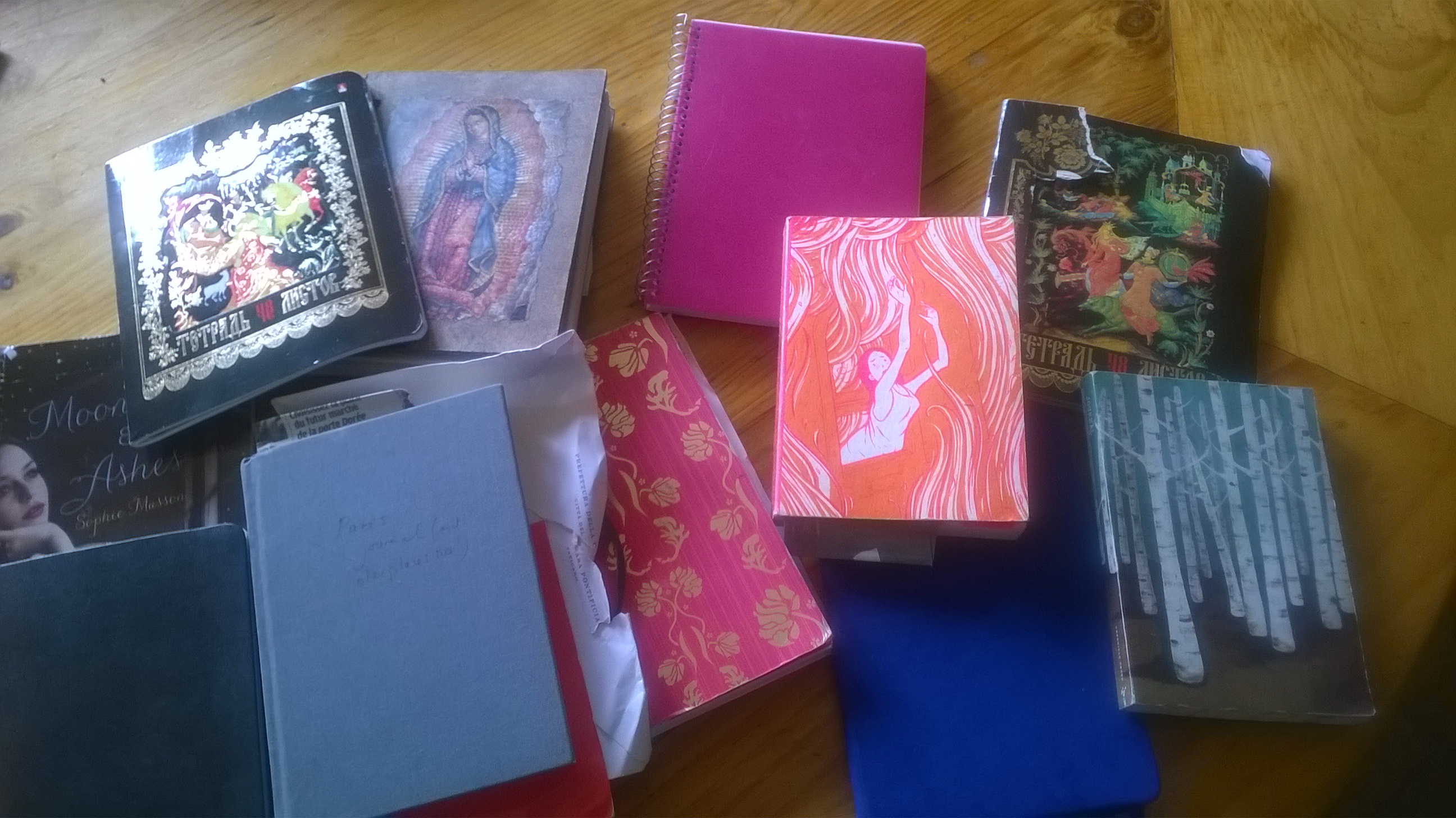
Just a small selection of my writing journals!

Just a small selection of my writing journals!

Writing journals: not all of us use them but many of us writers keep them, in one way or another: whether as a specific writing journal, as a diary, a notebook, or other. At various points I have kept, and continue to keep, all of these. I have diaries stretching back decades, amongst which is one dating from when I was 12. Amongst all the stuff about school and food(my mother is a fantastic cook and I was always writing down stuff about the cakes she’d made!) I also mention writing projects I’d undertaken, such as ‘The Twins’ Highland Holiday’ which I don’t remember at all but which sounds very much influenced by Enid Blyton! Meanwhile, a tattered  exercise book dating from around age 16-17 has notes and research as well as the first few chapters of a massive fantasy novel, never finished. Travel journals kept at various points have also included vignettes of scenes, ideas for stories, as well as observations of things I saw around me, many of which fed into stories later; while there’s piles of notebooks filled with often indecipherable scrawl about plots, characters, themes, sudden ideas, observations on chapters I’m working on, and more.

And in 2007, after having been given a gorgeous notebook by one of my publishers, Random House WP_20150612_004[1]Australia, I decided to start a different kind of writerly journal, which I call The Literary Life. This journal, which has now run into six volumes, is a chronicle of the literary life–my own, and within the wider literary world–and is an honest and unvarnished portrayal of life as a writer: the public and private, the festivals, launches, meetings with other authors and illustrators, publisher meetings, struggles and excitements of writing, challenges and pleasures of the publishing industry, emotional highs and lows, WP_20150612_007[1]talk about literary groups and news and yes a little gossip too! Though it isn’t strictly speaking a writing journal, keeping it has not only helped me to vent frustrations and express observations, it’s also helped to clarify my own writing trends and re-reading the journal’s back issues, as it were, has enabled me to reflect back onto projects I have worked on in the past.

Thinking about all that made me also curious about other people’s practices in this regard, so I emailed a few writer friends, asking them these questions:

Do you keep a writing journal? How long have you kept it? What medium is it in–hard copy or on screen?  And how useful do you find it? 

Here’s a selection of answers.

Kate Forsyth: 

Yes, I keep a writing journal … in that I keep a journal and all I really write about in it is my writing! I’ve kept my diary since I was 12 years old, and have always recorded my hopes, my dreams and daydreams, my disappointments, my ideas, my inspirations, my writing process … I use it to work out problems,  to make lists of things to do, to scribble down flashes of inspiration, to keep a record of the creative process. I write longhand in a notebook, and have about 60 volumes – I average 3-4 diaries a year. I also have a notebook for each novel, in which I keep a work every day as I’m writing – I stick in or draw  pictures, maps, diagrams – keep a record of my research … write character outlines … record word counts … all dated so I can see how long it takes me!
How useful do I find them – my diary and my notebook? I could not live without them, let alone write!
I have recently begun keeping a writing journal, just over the last six months or so. I have found it to be invaluable, especially in terms of reviewing my frustrations with time, what is hanging me up, and in terms of keeping track of some story possibilities that I might other wise lose. My journal is a hardcover, lined paper variety, which I much prefer to the computer for ease of reference. I also find it almost therapeutic to be able to put pencil to paper sometimes; writing longhand is its own form of creativity, I think.
I haven’t kept a journal for many years, though I think it’s an excellent thing to do. I stopped when I felt I didn’t need it any more … but it was my great salvation during my long, long period of writer’s block. After I’d failed to finish every piece of fiction I started for five or so years, I realised I had to write SOMETHING! So I began to keep a journal, setting myself not less than one page per day (but no maximum – some entries were 15-20 pages). Everything went into it – dreams, events, thoughts, self-analysis, pieces of description. I began it when I came to Australia – a new life in more than one way – and continued for ten years, plus a few shorter bursts after that. It didn’t see me out of my period of writer’s block, which went on for several years more, but it kept me sane and it kept me writing.
I don’t keep a journal now, but I do make notes on all sorts of ideas and experiences. Because I’m always planning books far far ahead, I can see where they’re going to find a fictional home by and by. So I’m not so interested in them as MY experiences – and although the kind of fantasy I write draws ultimately on feelings I’ve been through myself, it looks nothing like a memoir. Plus journal-writing takes so long! I need to give all my time to producing final stuff (after my 25 years of producing nothing at all)!
So, do I keep a journal now? No. Do I recommend keeping a journal? Yes, very definitely.
I don’t keep an actual writing journal, but I do have small notebooks – usually a few on the go at a time – where I jot down any random book-related thoughts. These tend to have to share space with other sorts of writing, though – generally of the domestic type, shopping lists, addresses, quickly dashed off school absentee notes etc. I also use the notes function on my phone. It’s great for those moments when brilliant ideas arrive unexpectedly – usually late at night when I’m about to drift off, and it’s too dark to write anywhere else. I’m waiting for a waterproof phone — so many good ideas lost in the shower, or while swimming.
I don’t keep a writing ‘journal’ but have several notebooks for different projects on the go at the same time. I write longhand in them but they are also full of post its, images, sketches, and random thoughts. Also loose pages and paper clips as I sometimes find I have the wrong notebook…In addition I  have an ideas ‘file’ on my computer. New ideas are jotted down so they can form an orderly queue…
I’ve done this for two years or so, and began doing so after going to workshops where several writers explained how useful they were.
They were right! I find them very useful both as a reference if I get stuck, or just to write longhand in. I find my style is a bit more relaxed using them in this way than it was writing exclusively on computer.


The inspiration behind Hunter’s Moon

Hunter's Moon coverAs this week saw the official release of my new novel, Hunter’s Moon, and next week sees the first of the launches celebrating the book, I thought I’d feature a piece I wrote about the inspirations behind Hunter’s Moon. I first wrote this for the excellent Teachers’ Notes my publisher, Random House Australia, have created for the book, which feature discussion points, ideas for activities etc. If you’re interested, you can download the full set of notes from the Random House website, here. 

Inspirations of Hunter’s Moon

by Sophie Masson

The main inspiration behind Hunter’s Moon is of course the classic fairy tale of Snow White. This Germanic fairy tale is one of my favourites, with its blend of suspense, drama, romance, dark magic and dark secrets. It’s also become one of the world’s favourite stories, and has been told and retold many times over in novels, poems, films and even TV series.

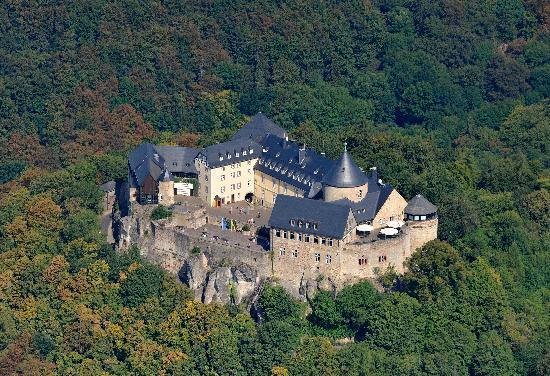
First written down in the form we know it by Jakob and Wilhelm Grimm in 1812, the story was told to them by people who had passed it down throughout the ages. Some people think it may possibly have been partly inspired by the real-life story of the 16th century beauty Margaretha von Waldeck, whose jealous stepmother forced her out of her home to live abroad, only to die poisoned at the age of 21. It’s said that the dwarves could be inspired by the fact that Margaretha’s father Count Philip owned

Schloss Waldeck, home of the Waldeck family

Schloss Waldeck, home of the Waldeck family

several copper mines, where miners worked from an early age, becoming hunched from working in such confined quarters. Others say that the story derived from sources much earlier than that, and point to variations of the Snow White story to be found in many other traditions, such as in France, Albania, Armenia, Russia and as far afield as Malaysia. Like most fairy tales, in fact, the inspiration for the story probably derived from a whole mix of things, leading to the form we know and love today.

As with most fairy tales, there are many things behind the surface of the magical action and extraordinary characters in Snow White: intriguing motifs such as a magic mirror, a poisoned apple, a glass coffin, a huntsman who takes pity on the girl he’s supposed to kill. And there are many contrasting themes, too: betrayal and friendship; beauty and cruelty; appearance and reality. When as a novelist you are working with traditional stories, it’s important to find ways in which you can mine this rich material in an original way yet also respect the themes at its heart. And for me that lay principally in reinventing Snow White herself, to make her a more complex and interesting character.

In the fairy tale, poor Snow White has to learn the hard way that nothing is what it seems and that it is a grave mistake to trust to a fair face and honeyed words. And yet she is still trusting enough to blunder into the home of strangers in the shape of dwarves, and later accepting apples from someone who just turns up at the door; her essential innocence is untouched by the painful revelation of her stepmother’s treachery and cruelty. She is also quite passive: aside from her flight into the woods when the huntsman spares her life, she doesn’t do a great deal for herself.

My Snow White character, Bianca Dalmatin, isn’t like that though she certainly starts in a similar way. Just like Snow White, Bianca has been lulled into a sense of false security by the apparent kindness of her beautiful stepmother Belladonna; like Snow White, she learns the hard way that appearances aren’t reality. Her heart is broken by the revelation; but instead of just hiding and accepting her fate, she wants to kick against it, to change things, even if it is very dangerous. And she is full of hatred for the woman who has destroyed her world. And yet like Snow White in the fairy tale, she doesn’t altogether lose her trust in others. It leads her to make mistakes—but also means that she will not turn into someone like Belladonna. Similarly, I worked with other aspects of the Snow White story, such as the seven dwarves, the truth-telling mirror, the huntsman and the glass coffin, to transform the original material whilst keeping its powerful impact.

As with my other fairy tale novels (Moonlight and Ashes; Scarlet in the Snow; The Crystal Heart) Hunter’s Moon is set in a magical alternative world, a world inspired by Europe in the late 19th century, but where ancient magic exists side by side with modern technology. In terms of specific setting, Hunter’s Moon takes the reader back to the Faustine Empire, which first appeared in Moonlight and Ashes. However Hunter’s Moon is set in a different province of the Empire: in Noricia, rather than Ashberg. Just as Ashberg in the earlier novel was based on Prague and the Czech countryside beyond, so Noricia in Hunter’s Moon is based on Austria, and its main city, Lepmest, is based on Vienna. And the inspiration for the Ladies’ Fair department store empire owned by Bianca’s father came from the gorgeous 19th century department stores that you can still find in cities such as Vienna, Paris, Moscow and London—glittering palaces of fashion and beauty housed in elegant old buildings.

And finally, Hunter’s Moon also has influences and elements from those earlier fairy tale novels of mine, including a recurring minor character who in this book takes on a bit more of a role!

Fairytale novels combined

Northern Russian splendours: an interview with photographer Richard Davies

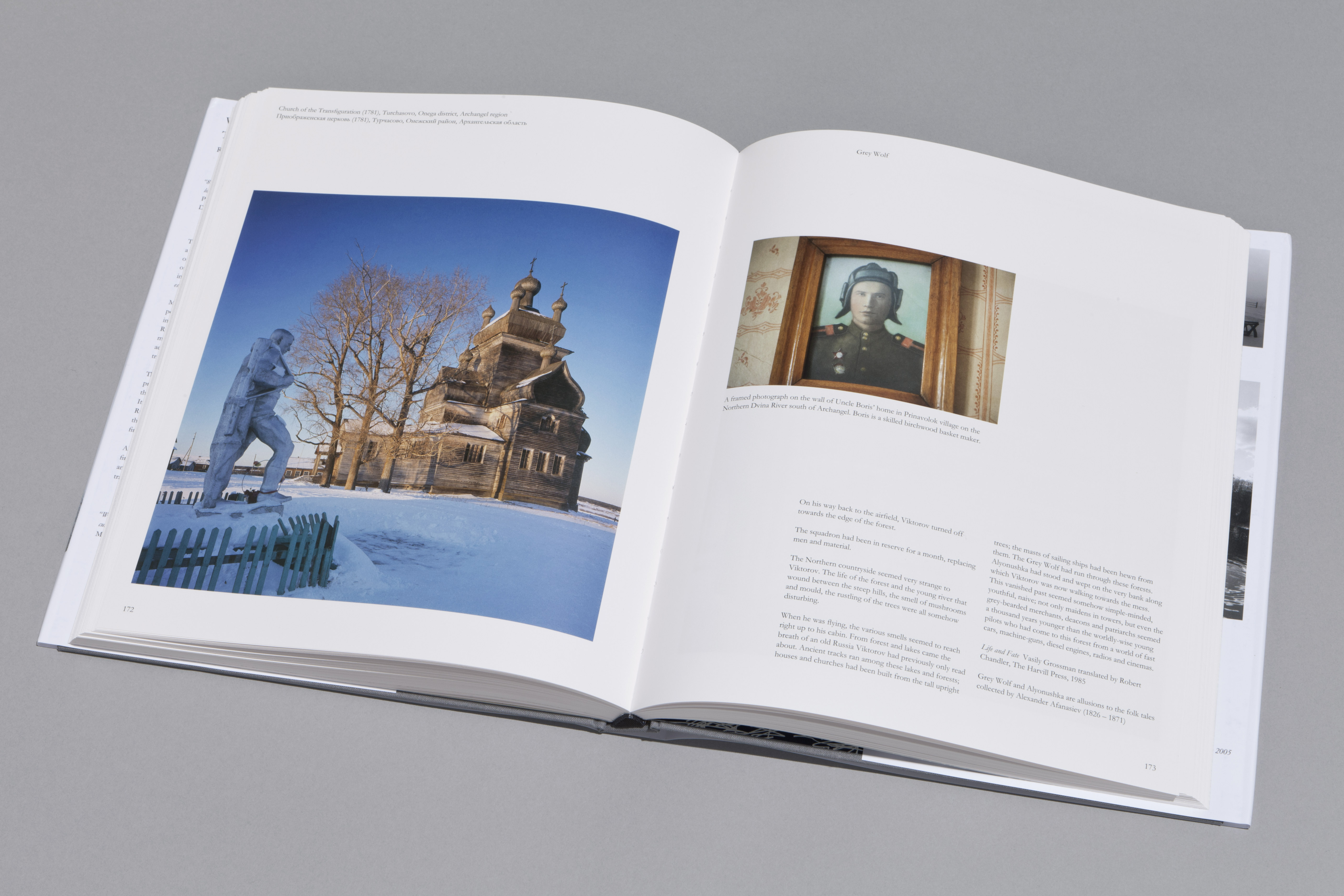
2(1)Recently I became aware of the magnificent work of  British photographer Richard Davies, who over several periods of travel in Northern Russia, has been documenting the everyday and extraordinary splendours and colours of the region, and especially its glorious wooden churches and colourful characters. Richard has published two beautiful books: Wooden Churches: Travelling in the Russian North 100 years after Bilibin(sadly out of print at the moment) and the recent Russian Types and Scenes, which you can get on Amazon (and which I can very highly recommend!). Inspired by the gorgeous work of this fellow Russophile, I got in touch with Richard, and this fascinating interview is the result. Enjoy!207RT_mod2[1]

Richard, can you tell us first about Northern Russia, which has inspired your work? How long have you been visiting the area? And what drew you to it?

I’m a Russophile! My standard story for explaining this is that one-day, my mother came home with an LP (long playing record) of Jascha Heifetz playing Mendelssohn’s violin concerto. On the flip side he was playing Prokofiev’s 2nd violin concerto. It was the most exciting thing I had ever heard and I played it continuously, day and night for weeks. It drove my father crazy, my mother was happy that I was happy. I was head banging to Prokofiev while my friends head banged to the Rolling Stones – very sad. The other influence, I remembered this recently, was our local dentist. He was an out and out Communist and a great dentist. The waiting room was strewn with copies of Soviet magazines and the patients were left to quietly soak up the propaganda. Danny Stalford, Red dentist, and local Communist Councillor obviously had some success with me – I fell in love with the country if not the system.

In the late 70’s and 80’s I took Intourist trips to Leningrad and Moscow to satisfy my Russophile needs. Concerts at the Philharmonia, opera at the Kirov, Maly and Bolshoi, art at the Hermitage, Russian, Pushkin and Tretyakov museums, day trips to Novgorod and the Golden Ring etc etc – but the countryside of Turgenev and Tolstoy was out of bounds
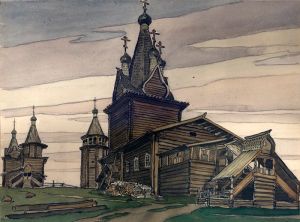
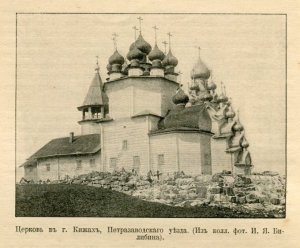
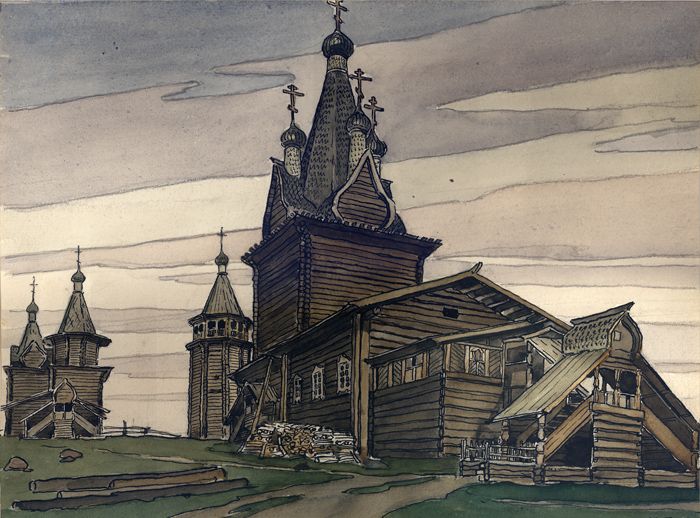
bilibin wooden church

Illustration by Ivan Bilibin

bilibin wooden church photo

Photograph by Ivan Bilibin


With the break of the Soviet Union, that changed. In 2001 I came across some postcards published at the beginning the 20th century of watercolours and photographs of wooden churches by the artist Ivan Bilibin. Bilibin had travelled to the Russian North in 1902, 1903 and 1904. Friends in St Petersburg found me a driver, Alex Popov the Professor of Atmospheric Physics at St Petersburg University, and in 2002 we set off in Bilibin’s coach tracks.

1a(1)Wooden Churches was published ten years later.

The wooden churches of northern Russia, which you have documented in your first book, are unique and fragile works of art as well as testaments of faith. What is being done both to preserve them as monuments and keep them alive as part of the distinctive religious life of the region? And what do you think might further be done?

Many of the churches that Bilibin had recorded were no more and those that had survived were in a perilous state.

During the war a wonderful book had been published in Russia celebrating the wooden architecture of the north – it was recognized as a facet of Russian culture that the armed forces where fighting to preserve. After the war, Stalin was able to blame the destruction of these cultural artifacts on the enemy and great efforts where made to restore those that had survived the revolution and the war. But with the break up of the Soviet Union funds disappeared and the churches where again left to rot, with rusting signs attached proclaiming that such and such a church was an ‘Historic Monument under the Protection of the State’.

47RTprint[1]Many churches are being re-inhabited by their local communities, roofs are being patched and plastic bagged cardboard icons are being pinned to walls but many churches, because of collectivisation, have been left with nobody to care for them.

In the summer volunteers now flock to the north, many under the flag of Obscheye Delo, an organization founded by the Moscow priest, Father Alexei, to do what they can to save the churches. There are very good professional restorers on hand but sadly the funds aren’t. The feeling is that the Church is more interested in building spanking new buildings than preserving archaic old wooden ones. And for the moment the State seems to be more interested in building up its nuclear arsenal than preserving historic churches in the far north.183RT_mod2[1]

The ‘Wooden Churches’ book has sold out – do you have plans to reprint?

I had a publisher for ‘Wooden Churches’ but they came back to me with terrible layouts– can you believe it they cropped my photographs!! So I ended up publishing the book myself. It was great fun but not a great money making venture (I did in fact get my money back) so I’m thinking hard before reprinting. I’m sure it would sell (the churches are so beautiful), but it would be good to reprint it on the back of an exhibition.

How have local people reacted to your work? 

The local people in the Russian North are naturally very kind and generous and I’m pleased to say that they have been very kind and generous to ‘Wooden Churches’. I’ve done my best to make sure that it is sitting on a good few shelves in Northern Russia. I haven’t yet had the chance to show ‘Russian Types’ to many people in Russia although I have had two reactions. 1/ The wife of the restorer Alexander Popov complained that the photograph of her husband showed his bottom and not his face. 2/Our translator on the last trip to Russia in April this year laughed out loud almost every time she turned a page – I took this as a compliment.

87RT_mod1(1)[1]What anecdotes or encounters particularly stand out for you in your travels throughout northern Russia?

Everyday, travelling in Russia is an adventure – I’ve yet to encounter a bear although I’ve heard many encountering-bear stories! I have been towed by snowmobile across a frozen lake horizontally on a sledge and arrived at our destination iced up like a frozen corpse. I’ve flown in a flimsy aircraft to land in a field next to a wooden terminal. I’ve been hauled in for questioning by the authorities at a town with an intercontinental ballistic missile site attached. I’ve venture across the White Sea to uninhabited islands and crumbling churches with twenty beautiful art history students from St Petersburg University. I’ve drunk more vodka than I should on occasions and eaten piles of bliny with honey and cream – my liver is shot and my cholesterol levels are sky high – I could go on…

In your second book, Russian Types and Scenes, you and your co-creator Alexander Mozhaev profile the everyday life and colourful characters of northern Russia in a wonderfully vivid way, through both photographs and texts. Can you tell us a bit about how the book came to be, and how you worked on it together?1_(1)

Having published one book myself, the only thing I could do was to publish another. I’d continued to travel to the North, with the students, filmmakers and friends. I had been taking photographs of people while photographing the churches and continued to do so on these trips. I love pure photographic books but I also love words so I wanted to put a book together gelling the two. Alexander Moshaev, a Moscow writer and architectural historian, was one of the friends who joined me on some of these trips. Sasha is very lively and I soon understood that he had insights into what we were seeing that I, as an Englishman, would never have (needless to say, many of the things I enjoyed he found rather banal). He would also interpret the content of my photographs in ways that I couldn’t. I read a lot of Russian stories in English, sadly I don’t speak Russian, and tracked down quotations that would fit into my photographic narrative. And as the book was coming together I would ask Sasha for suggestions and 28(1)stories.
I was also very lucky that one of the students from St Petersburg, Natasha Shalina, was studying in London while I was putting the book together. With a few deft taps on her iphone she would come up with wonderful things from Russian web sites that would inevitably lead to other wonderful things. She also helped with translating Sasha’s particular style.219ART_mod2[1]

Do you have any anecdotes about the people or occasions you’ve featured in that book?

The fun about putting these books together, ‘Wooden Churches’ over 9 years and ‘Russian Types’ over two years, is obviously that what you have at the end is the result of a great adventure. As a photographer you never know who or what will come in front of your camera each day. Matilda Moreton, the writer of Wooden Churches never knew who she would meet each day and what they would tell her. Researching the texts was equally exhilarating. I bought a copy of the New Yorker once on a whim and inside was a great story about Russian bells. I was reading the biography of a Russian children’s writer and suddenly he’s talking about wooden churches. It’s as though all these things are given to you if you loiter long enough. But then again there are the photos you missed, the people you didn’t talk to and the books you didn’t open.

Are you working on a new book at the moment?

I am. I will publish a book with a photograph I took in 1967 – by rights the book should appear in 2017. The book will have photographs and stories about seaside ‘Pleasure Piers’ – like Russian Churches they are often decorated with onion domes and they also attracts great writing and yarns!

Note: All photos aside from those by Ivan Bilibin pic are copyright to and courtesy of Richard Davies. 
Guest post: Jan Latta, author and wildlife photographer

Today I’m delighted to welcome Jan Latta to my blog.cover 50% 72dpi222

Jan is an adventurous author and photographer who follows animals in their natural habitats to create her series of 14 True to Life books for children. She’s travelled to Borneo for orangutans, the mountains of China for pandas, Uganda for Dr Jane Goodall’s chimpanzees, India for tigers, nine times to Africa for the big cats, elephants, rhinos and zebras, and Sri Lanka for the endangered leopard book.

In this fascinating guest post, she tells the story about a day in the Maasai Mara, Africa.

A DAY IN THE LIFE OF JAN LATTA –

AUTHOR AND WILDLIFE PHOTOGRAPHER

3.am: I hear a noise outside my tent I can’t identify – the rustle of leaves followed by munching sounds. I hold my breath and listen. Then I hear the deep rumble of a large animal’s stomach. I open the flap of my tent and see a magnificent bull elephant, and he’s only a metre away. I watch him eating and as I’m not in any danger, I go back to sleep.

5.0am: After my wake-up call and a mug of tea I open the zipper of my tent and wriggle my torch into the sky. This is the signal for the guide to escort me to the jeep.

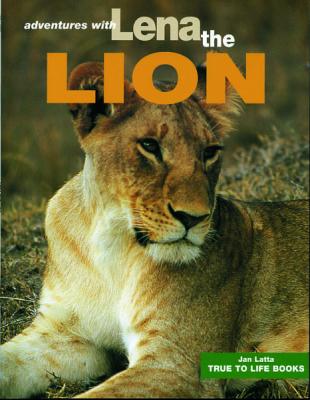
6.0am: I watch the gentle beauty of a journey of giraffes in the golden sunrise. When they are close I can see the little Oxpecker birds clean the giraffe’s teeth and then ride on their mane. There is a lioness lapping water from a puddle. She looks at me and her eye contact is mesmerizing. She walks right up to the jeep, still looking up at me, then turns, walks beside the jeep and then into the bush. My guide says, “You didn’t take a photo?” I said no, because it was so special to have eye contact with her. My guide said it was the lioness we saw yesterday with her wildebeest kill and her two cubs.lena_the_lion_by_jan_latta_0980795869

9.0am: Fat hippos grunting, honking and farting their way up the river with their nasty habit of swishing dung into the next hippo’s face. A herd of elephants walk silently past the jeep and there is a tiny calf trotting along with its wobbly little trunk exploring everything. It’s adorable. Then I see my favourite animal, the cheetah. She is resting in the tall grass after her morning hunt.chipper-lge

11.0am: Drive back to camp for lunch and a shower. The guide calls the camp when we are close and a bucket of hot water is waiting for me. The bucket is tipped into my inside shower unit by a rope outside. I wash my socks but I have to stay guarding them because last year baboons stole all my socks from the tent rope. I wonder what they do with them?

3.0pm: On the way to see the lioness again there is a huge male lion walking towards her area. This is very dangerous because the male will demand the wildebeest remains, or he might kill the cubs to mate with the lioness. The guide stops and I hold my breath. What will happen? The lioness is rigid and stares at the male – but he just flops in the grass and falls asleep – plonk –he’s the daddy!

On the way back to camp I see a very cranky rhino on the horizon. 10 minutes later he thunders out of the bush, with dust and dirt flying everywhere. I yelp a warning and the guide accelerates. The rhino gets closer and closer to the jeep but finally we pick up speed and escape him.

7.0pm: I walk to the main tent to have dinner with the camp manager. During dinner we hear a loud bang, and unzip a section of the tent to see a lion chase a wildebeest right through the middle of the tent. Wow!! The Maasai run to help me and I try to calm down but realise I have to walk back to my tent with the pride close to camp. Two Maasai escort me safely back to my tent. The lions roar throughout the night and in the morning I hear the soft pant breathing of a lion right next to my tent. rufus

I’ve had so many amazing adventures creating my series of 14 True to Life books and it is a privilege to be so close to them in the wild. To be the “voice” to tell their story in both photographs and words.


Check out Jan’s website here. You can also buy her books and DVD direct from the website.

Watch her fabulous wildlife videos on You Tube!

Connect with her on Facebook here.

Contact her for exciting school and festival presentations:  janlatta@truetolifebooks.com.au

Creating the world of The Crystal Heart

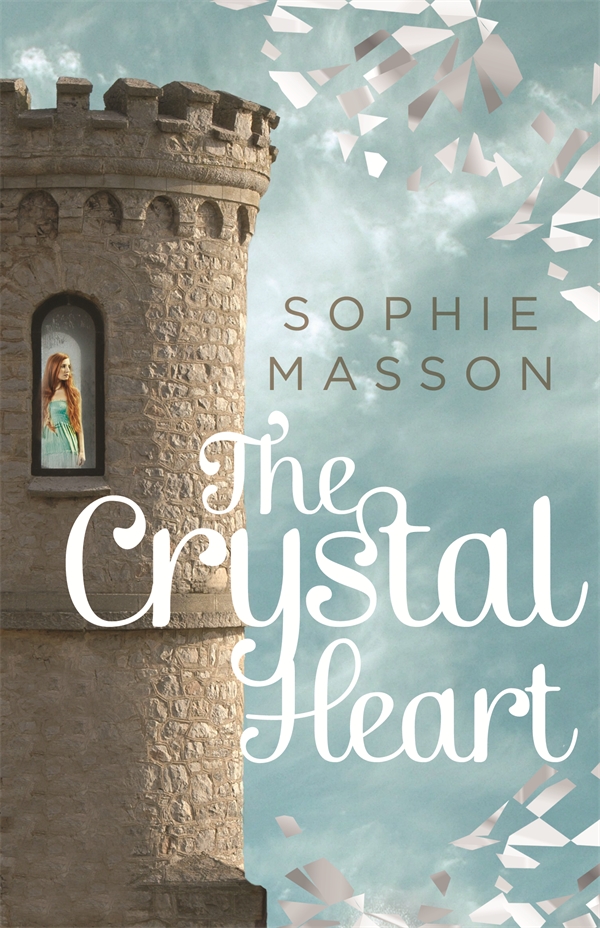
DSCN2499For anyone interested in knowing more about my novel The Crystal Heart (named as a CBCA Notable Book this year) I have a guest post on creating the world of the book, on Goldie Alexander’s blog. Following is a short extract. You can read the full thing here. 

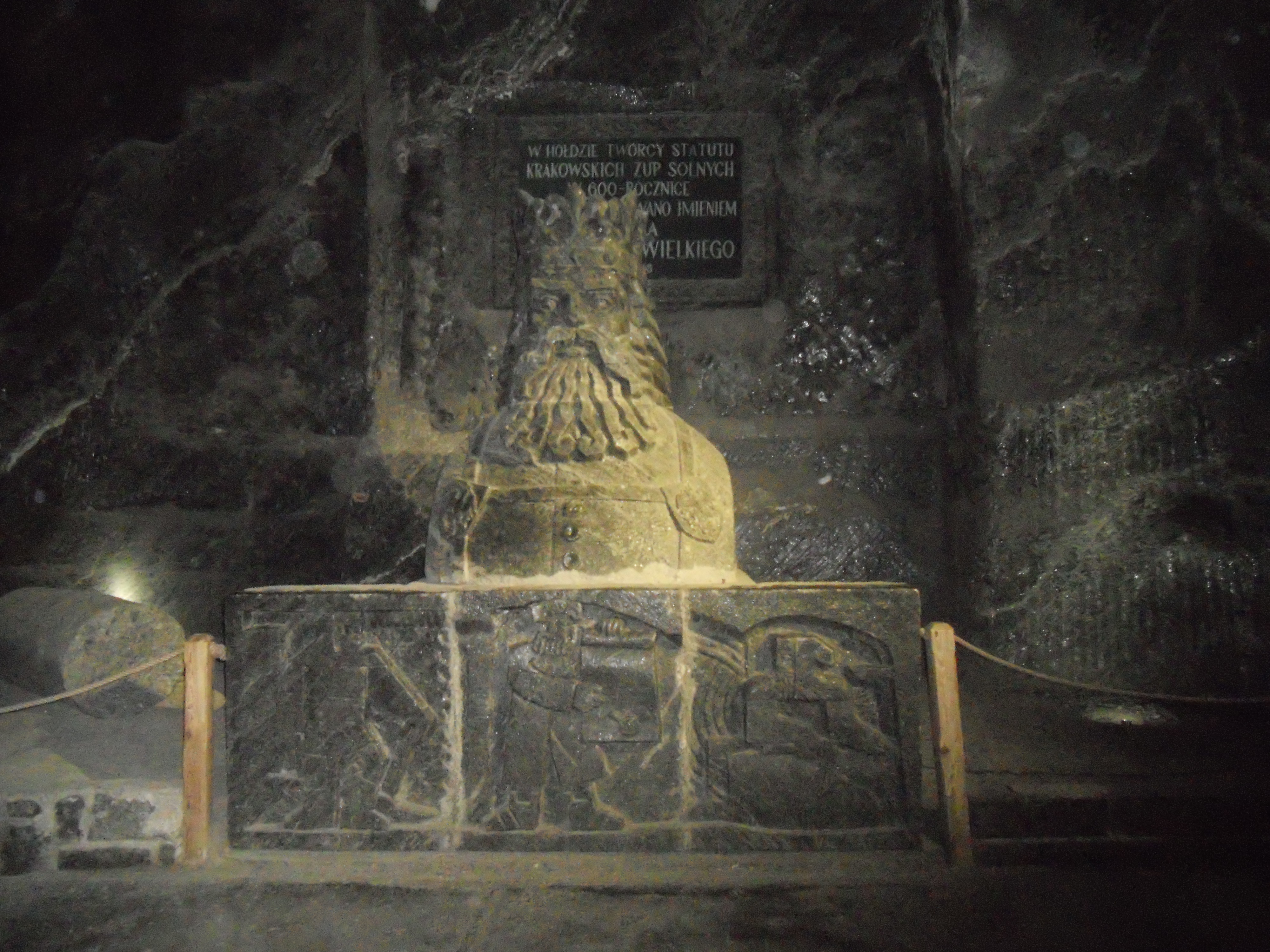
The Crystal Heart is set in the military state of Krainos, a small country which is on a constant war footing due to its enmity with the underground, magical realm of Night. But it’s also partly set in Night itself, an amazing realm which is much more advanced than Krainos. Some of the elements of the kingdom of Night owe their inspiration to two things: first, a magical, extraordinary place in the real world, the Wieliczka Salt Mines near Krakow in Poland, http://en.wikipedia.org/wiki/Wieliczka_Salt_Mine , which I visited in 2012.DSCN2488

As soon as I set foot in this amazing underground world, with its huge caves, shining salt walls, fantastical statues carved out of grey and white rock salt, and its fairytale cathedral entirely carved out of salt, with glittering chandeliers made of salt crystals, I knew I had to use it in a book! By the time I had emerged from our extraordinary journey underground, the characters of Izolda and Kasper were already whispering in my ear…

The other inspiration for the underground setting was one of my favourite childhood books, George MacDonald’s classic fantasy novel for children, The Princess and the Goblin. I disliked the goblins but was fascinated by their underground kingdom! And when I saw the Wieliczka Salt Mines, those nasty goblins from George MacDonald’s book morphed into even nastier ones in my world!

Crystal Heart cover


Guest post: Goldie Alexander on fictionalising history

Last week, I featured a guest post by Wendy J.Dunn, about how she creates her historical fiction. Today, I’m presenting a guest post from Goldie Alexander on a related subject–the importance of fictionalising history.

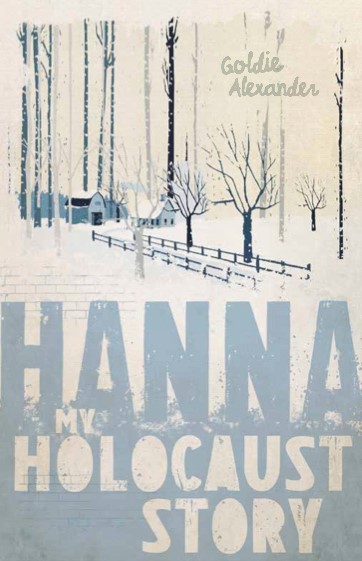
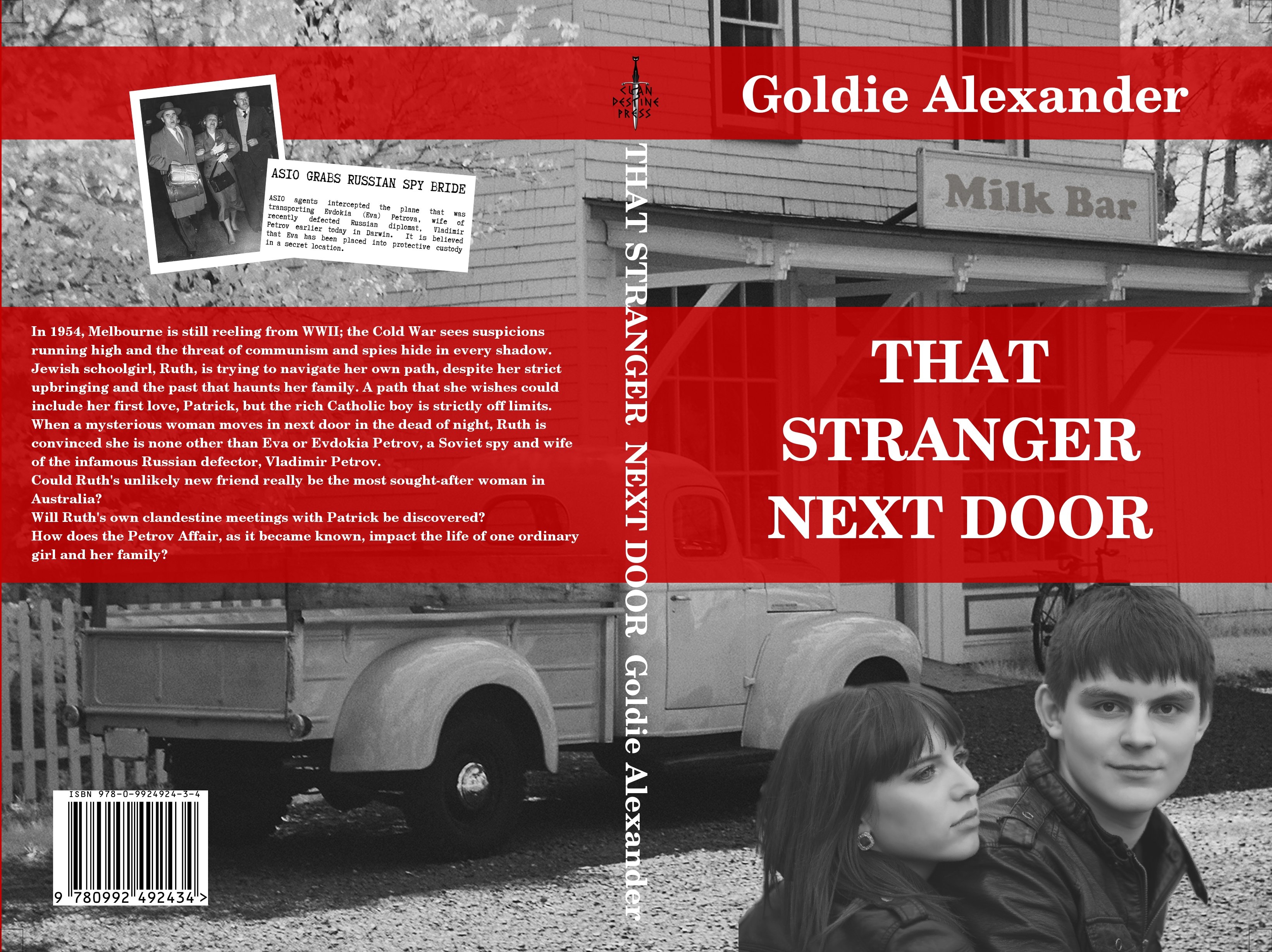
Goldie Alexander writes award winning short stories, articles, radio scripts, plays and books. Her novels are published both in Australia and overseas for readers of all ages. Her books for adults include: ‘The Grevillea Murder Mysteries’ ‘Lilbet’s Romance’,  Dessi’s Romance’,Penelope’s Ghostmentoring your memoir and ‘Mentoring Your Memoir’. Her first YA novel ‘Mavis Road Medley’ was a Notable CBCA, was shortlisted for by the Office of Multi-Cultural Affairs and is listed as one of the best YA books in the Victorian State Library. Her best known book for children is: ‘My Australian Story: Surviving Sydney Cove’. Her fiction for children includes three collections of short stories and several mysteries, fantasies and science fictions. Her other historical fictions include: ‘The Youngest Cameleer’, ‘That Stranger Next Door’, My Holocaust Story: Hanna’ and the verse novel ‘In Hades’. She has also co-authored a non-fiction book, The Business of Writing for Young People, with fellow writer Hazel Edwards.

Welcome, Goldie!Goldie%20A1

Fictionalising history

by Goldie Alexander

Back in the dark ages the history I was taught when very young consisted of memorising facts and dates. I could recite all the kings and queens of England, though I knew almost nothing of our own history. I recall with wry amusement a first year university British History course made up entirely of 16th Century documents, but with no explanation as to why I was required to understand them.
In a way fictionalizing history is writing about time. Time is the element in which we all live much like fish in water and yet the realisation that time flows on and on and never flows backward is one of the most stunning of childhood discoveries. Time is what makes discovering history so important, because time is the narrative of mankind. It provides answers as to how people lived in the past as well as the roots of contemporary laws, customs, and political ideas. The accuracy of that old adage, “you can’t know where you are going unless you know where you have been” holds true. Historians realize history does repeat itself, though with different permutations. This repetition has importance in all societies. It teaches younger generations the value of certain social attitudes, it helps social change and gives sound governmental policies. A good example is the Aborigines of Australia who managed to hang onto their history for 40,000 years by word of mouth. A knowledge of history clearly proves early man’s love of the arts and demonstrates that once a civilisation is able to maintain a steady food supply that their creative ideas flowed whether the evidence appeared on rock walls, papyrus, or cedar bark.
A child immersed in facebook, twitter, instagram, or playing the latest computer game, might ask, why lilbets-romance1bother with those old stories? So the challenge for us authors who write historical fiction is to make these stories as relevant and exciting as any Hunger Game or Vampire novel and to write what our youngsters will enjoy, and incidentally learn a lot. I think this can happen if the author is able to turn the story into a compelling ‘here and now’ narrative. The best historical fiction works on the premise of “What if you were there at the time?”
It goes without saying that all historical fiction in whichever medium it appears (film, TV, or novel) must be based on careful research. My favourite faux pas is Elizabeth Taylor’s ‘Cleopatra costume’ with its frontal zip and the extra wearing a watch. Does anyone here recall that? Nothing is more irritating coming across a glaring error such as dialogue set well in the past in the past using a contemporary idiom.

There are certain rules we authors keep. We know that good historical fiction has a strong internal logic and is easy for young readers to follow. If the story darts too quickly between ‘times’, unless this is carefully stated, this can confuse even a sophisticated adult. And the story must contain some kind of quest. The characters must have a clear idea of what they desire or fear. They must be wholly rounded, and as three dimensional as if living in the present. The reader must be able to identify with these characters and feel empathy or compassion for their situation.
Some writers worry that readers might not like characters who exhibit typical prejudices of their time. But flawed characters who gain the readers’ sympathy and understanding despite their flaws are a key element of good fiction. Good historical fiction balances a characters’ flaws with qualities we can respect and admire, and gains sympathy for them without excusing prejudice, cruelty and the like.

surviving sydney coveI have written a number of historical novels for young readers. As an Aussie author, I mostly stick to our own history. I fictionalised the lives of our First Fleet in “My Australian Story Surviving Sydney Cove”; wrote about life during the Great Depression in “Mavis Road Medley”; wrote about the little known non-indigenous discovery of Uluru in “The Youngest Cameleer”; explored the First World War for very young readers in “Gallipoli Medals”; and imagined life in Melbourne just before World War Two in “Lilbet’s Romance”. One of my recent novels ‘That Stranger Next Door’ centres on the Australian equivalent of the mid-fifties McCarthy Senate inquiries and can be compared to the Children Overboard incident as both have political overtones. I believe the events I use as my settings have helped shape my country as to what it is now. My most recent novel ‘My Holocaust Story: Hanna’, my only historical novel set in the Warsaw Ghetto, partly shaped what I am now,
Browsing, I came across this comment in Good Reads; “Historical fiction gives me the opportunity to engage with what it would be like to live in those times. It is always great when you find a good source and even more so if that source confirms what you have already imagined. There is so much to learn from the past, it would be waste to just write about our day to day Holocaust Cover Smallpresence.

Writers are often chastised for writing about the past – as if only 21st Century problems are relevant, as if writing fantasy is the only way we will persuade youngsters to read. Certainly there are vogues involving vampires, zombies, super- adventurous girls, and a heap of Tolkien-style fantasy. In the end I doubt they will have a long life. These novels are often commercially driven and may only last until something new takes over. On the other hand history is never out of fashion and fictionalising it, is the best way of ensuring that some understanding of past mistakes might prevent them happening again.

www.goldiealexander.com

www.goldiealexander.com/blog

twitter.com/goldiealexander

facebook.com/goldiealexander

petrov large cover

Guest post: Wendy J. Dunn on writing historical fiction

Today I’m delighted to welcome historical novelist Wendy J. Dunn to my blog, with an intriguing guest post about how she approaches creating the imaginative landscape of her books, whilst also recreating a very particular historical period.

Wendy is an Australian writer who has been obsessed by Anne Boleyn and Tudor History since she was ten years old. She is the author of two Tudor novels: Dear Heart, How Like You This?, the winner of the 2003 Glyph Fiction Award and 2004 runner up in the Eric Hoffer Award for Commercial Fiction, and The Light in the Labyrinth, her first young adult novel.

While she continues to have a very close and spooky relationship with Sir Thomas Wyatt, the elder (Tom told the story of Anne Boleyn in Dear Heart, How Like You This?), serendipity of life now leaves her no longer wondering if she has been channeling Anne Boleyn and Sir Tom for years in her writing, but considering the possibility of ancestral memory. Her own family tree reveals the intriguing fact that her ancestors – possibly over three generations – had purchased land from both the Boleyn and Wyatt families to build up their own holdings. It seems very likely Wendy’s ancestors knew the Wyatts and Boleyns personally.

Born in Melbourne, Australia, Wendy is married and the mother of three sons and one daughter—named after a certain Tudor queen, surprisingly, not Anne.

After successfully completing her MA (Writing) at Swinburne University Wendy became a tutor for the same course. She gained her PhD (Human Society) in 2014.

As a committee member of the Historical Novel Society of Australasia, Wendy was also part of the team who put together the very successful inaugural HNSA conference of historical fiction writers and readers, recently held in Sydney.

Welcome, Wendy!wendy dunn

Some Thoughts about Writing Historical Fiction.

by Wendy J.Dunn

I have now written two novels inspired by the story of Anne Boleyn. My first published novel, Dear Heart, How Like You This? tells her story through the voice of Sir Thomas Wyatt, the Elder. A real historical person, he was not only a Tudor diplomat, but also a very gifted and important Tudor poet. Reconstructing him in fiction became my means to explore the nature and cost of love, as well as how Tudor women’s lives were controlled by their gender. The Light in the Labyrinth, my first young adult novel, as well as being a coming of age story, also casts a light upon women’s lives.

Why two novels about Anne Boleyn? Well, she has fascinated me since childhood, from the moment I first watched the movie Anne of The Thousand Days, and came away inspired by its construction of a strong, intelligent and very brave woman. By the movie’s end, Anne had become my hero, alongside my very first hero, her daughter, Elizabeth Tudor.anne boleyn

In my teenage and early adult years, I immersed myself in novels to do with the Tudor period. I also immersed myself in history books to help me learn more about the context that shaped the people of this era. These non-fiction books made it very clear that women in this period had very little ownership of their own lives. Even their identities came from their fathers, and then their husbands. More and more, Anne Boleyn stood out as a woman who was able to claim a true identity. While years of research have helped me to recognise her imperfections, it has also increased my reasons to love and respect her. Through my research, I now believe Anne’s insistence of her right to own and use her voice resulted in her death. This is the woman who lives in my imagination.

And this is the thing. Whilst my characters are birthed through research, and the knowledge I gain by research, I am a writer of fiction. Research is the key that opens the door to my imagination, when I begin typing up my daydream of another time and place. A time and place where my characters step forward and tell their story. For me, doing historical research has four main purposes: it deepens my well of historical knowledge; it gives me ideas turn into fiction; it takes me from the threshold of conceiving my first idea to the actual task of constructing historical fiction, when I build a world through imagination, and, finally, it continually fuels my imagination in the act of writing. It is my response to research that produces an imaginative reaction that takes me deeper into the process of story writing.dear heart

Writing The Light in the Labyrinth, a young adult novel, brought with it particular challenges. Young adult novels tend to be written in first person, and I tried to do this with Kate’s story. However, I decided to challenge myself by switching to third person limited. While the story was still revealed through Kate’s perspective, it was a very different structure to my usual way of writing.
Another challenge was giving voice to a 14-year-old girl from the Tudor period, a time very different from our own times. 14-year-old girls in Tudor England were considered old enough to be married and have children. The life of Catherine Willoughby, the Duchess of Suffolk, provides an example of this. Some historians claim Catherine was as young as fourteen when she married Charles Brandon, a man close to fifty. Kate’s experiences had to evoke that of a Tudor girl, yet also speak to girls today.
History seems to know very little about Katherine Carey’s early years. Like her aunt, Anne Boleyn, even her birth year is the subject of debate. This historical ‘silence’ allowed me imagine, at the start of The Light in the Labyrinth, Kate living with her mother at Rochford, a property owned by the Boleyns, and at least two days of riding from London. My research suggested this property was not well liked by the Boleyns (in the 16th century, it was situated in a very unhealthy area). Yet Mary lived there with her second husband, William Stafford, rather than be too close to her immediate family. I don’t believe it was simply because Mary had disgraced her family by her choice of a second husband – a man without wealth or title. While she seems to have married for love, her marriage could also be also be seen as an act of defiance, the claiming of her own life and identity.
I wondered what kind of mother she could have been for Kate – imagining that Kate saw her as a soft mother, but really Mary was not soft, rather too aware of the hardness of life. Through my knowledge of the lives of Mary and Anne Boleyn, I was able to imagine my Kate Carey, a girl influenced by admiration for her aunt, Anne Boleyn, and rebellious against what she saw represented by her mother.
the-light-in-the-labyrinth-coverThe silences of history offer historical fiction writers those vital gaps to enter by use of their imagination; a time they can use “historical circumstances with the greatest economy” (Kundera 2003, p. 36). In my own practice, I also deepen my understanding of what William Styron means when he writes: “while it may be satisfying and advantageous for historians to feast on rich archival material, the writer of historical fiction is better off when past events have left him with short rations” (2010: 428).
By this I mean I know have done my research about the Tudors and their period. This research has had time to soak into the depths of my unconsciousness. These gaps in historical record are my invitation to allow my imagination free rein, when I can let my characters speak, and re-construct their lives.
This is why the “curious, alluring space between fact and fiction” (Parini 1998, p. B4) is vitally important for me as a writer: it gestates imagination. It takes me “back then” (Thom, 2010, p. 26). And if I am taken “back then”, as a writer, I believe it also follows I have the possibility of taking back my reader through the construction of my text.

Works cited:
Kundera, M, 2003, The Art of the Novel, Harper Perennial Modern Classics.
Parini, J 1998, ‘Delving into the World of Drewww.wendyjdunn.comams by Blending Fact and Fiction’, The Chronicle of Higher Education, February 27, p. B4.

Styron, W, 2010, The Confessions of Nat Turner, Kindle edition: Open Road.

Thom, J. A. 2010, The art and craft of writing historical fiction, Writer’s Digest Books, Cincinnati, Ohio.

Wendy’s website: www.wendyjdunn.com/
Like Wendy on Facebook: www.facebook.com/authorwendyjdunn
Goodreads author page: www.goodreads.com/author/show/197156.Wendy_J_Dunn

Follow on Twitter: @wendyjdunn