Today Linda Newbery shares her five favourites.
Today, Pamela Freeman (who also writes under the name of Pamela Hart) is writing about her five favourites.
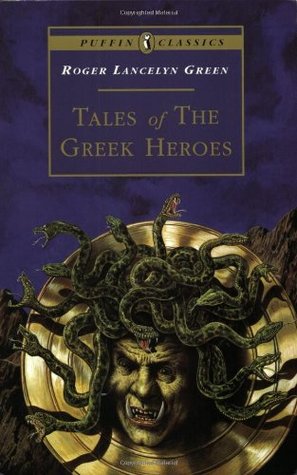
Roger Lancelyn Green’s Myths of Greece and Rome.
I also loved his other books about Norse Myths, Dragons, Witches, etc. Green basically set me on the path to read (and write) fantasy and science fiction, and I have found the knowledge of the classical myths which he told with such flair VERY helpful in later life.
Year’s Best Science Fiction and Fantasy stories.
Our librarian, Mrs Ward, bought these anthologies every year and for some unknown reason put them in the kids’ section. So I read all the classic SF authors as they were published in the 60s and 70s, which cemented my interest in this genre. Probably some of the stories were ‘too old’ for me, but I didn’t care!
The Anne of Green Gables books.
Nuff said. (Although, as I am writing my current novel, I realised yesterday that the heroine’s best friend bears a curious resemblance to Diana, Anne’s best friend…)
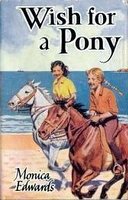
Monica Edwards’ Wish for a Pony
The first of a long series. Oh, I loved these books! Not just because of the ponies, but because of the setting on the Romney Marsh and the adventure elements of the later books in the series (and I loved the main character’s little brother Diccon).
Anne and Peter Go To…
There was a whole series of these, Anne and Peter go to France, Anne and Peter go to Germany… To someone stuck in Western Sydney, this was real escapist reading! Much of my understanding of Europe and its relationship to Britain came out of these books.
Of course, I could add in Narnia, Alice, Milly-Molly-Mandy, Rosemary Sutcliffe, Seven Little Australians, Famous Five, all the girls’ school stories, and many, many others. But who can pick just five?
Today’s five favourites have been selected by Natalie Jane Prior.
I had so many favourite books when I was a child that it is very hard to pick just five. The ones I owned, I read to shreds. Most of the titles on this list I knew practically by heart. So here are some sentimental favourites:
The Tree that Sat Down/The Stream that Stood Still, by Beverley Nichols
This bindup of two fantasy novels by Beverley Nichols (who is today chiefly remembered for his garden writing) is the book which inspired (at least in part), my recently published picture book, Lucy’s Book (Lothian, illustrated by Cheryl Orsini). Lucy’s Book tells the story of a little girl who loves a book so much that she borrows it from the library every time she goes, until at last the book wears out. My mother was very difficult about re-borrowing books; her own practice was to go to the library to find things she hadn’t read before, and she did not seem to understand that I should feel a sense of ownership in a library book. I suffered much anguish over this book, because I wanted to own it so badly. It resonated with me on practically every level. Though I could not have explained why this was so at the time, I think now that it was my first experience of a profound aesthetic synchronicity with another writer. I can’t explain it: I only know that when, at the age of 18 or so, I managed to buy a Lion paperback edition, I was devastated to find out that Nichols’s philosophical musings on beauty and morality had been cut out, presumably as not interesting to children. The effect was as if the chapter “The Piper at the Gates of Dawn” had been cut out of The Wind in the WIllows, or Aslan out of The Chronicles of Narnia: the heart of the book had gone. I am happy to report that I now own an early hardback with these sections intact, but the experience put me off abridgements for life.
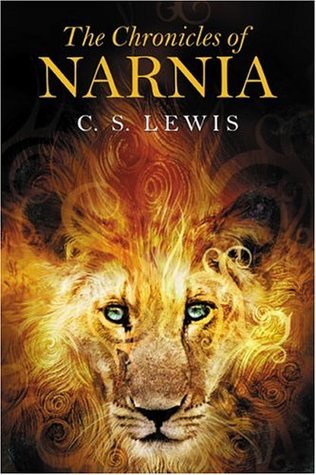
The Chronicles of Narnia by C.S. Lewis
No doubt I’m cheating putting them all down here, but again, these universal favourites resonated at every level, and still do. As a reader, I adore them, as a writer, I admire them (the full impact of Lewis’s casual erudition on the texts did not hit me until I did Middle English at university), as a Christian, I am still pulling insight out of them over forty years after I first read them. The end of The Last Battle still reduces me to a blubbering wreck every time I read it. There are not many books you meet in life that you can say that about.
A year or two back, I read an extremely insightful study which I would like to recommend to anyone who loves these books: Planet Narnia, by the academic Michael Ward (OUP, 2008), radically re-examines the structure of the series. Having dimly grasped a lot of what he suggests myself, without putting it all together, I am convinced he is correct in his conclusions. You can find the Kindle edition here: it’s a really stimulating read: https://www.amazon.com.au/Planet-Narnia-Seven-Heavens-Imagination-Lewis-Michael/dp/B000SKMOMY/ref=sr_1_1?ie=UTF8&qid=1493002048&sr=8-1&keywords=planet+narnia
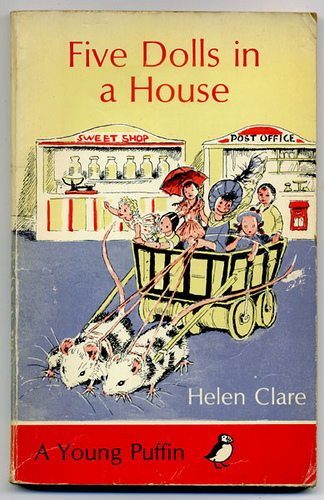
Five Dolls in a House by Helen Clare
Often books which we love as children are not classics: they just speak to us at a profound and necessary level. The 1970s must have been the great age of the library omnibus edition, as these were another book I borrowed again and again as bindups. (There were, from recollection, five in the series, and they were published in two omnibus editions.) I was passionate about my dolls as a child. They were, like books, an outlet for stories and adventure, and I loved making things for them (I still do). These simple stories about a little girl called Elizabeth Small, who is able to miniaturise herself and actually enter her dolls’ house and interact with her dolls in all sorts of eccentric situations, was the ultimate wish-fulfillment for a child who desperately wanted a dolls’ house and never got one. The dolls, ranging from a soi-disant duke’s daughter whose hair kept falling off, to a French paying guest who hogged the bathroom and refused to speak English when work was required of her, were all screams. Unfortunately, it was never quite explained how Elizabeth cracked the secret of miniaturising herself, but I lived in hope for many years.
Seven Little Australians by Ethel Turner
I was of the generation that first encountered this book via the landmark ABC serial in the mid 70s. Until then, it must have been out of print, because I remember the moment it started on the TV my mother went out and bought me a TV-tie in; it had been one of her own childhood favourites, and until then she had been frustrated that she could not get me a copy.
The model for Ethel Turner’s book is clearly What Katy Did (which was another favourite of mine—I used to lie in bed at night and recite it), but Seven Little Australians bit down far deeper into my consciousness. As a child, I never questioned the peculiar psychology behind free-spirited girls like Katy Carr and Judy Woolcott getting to puberty and immediately being crippled or flattened by trees; I just inhabited the stories they featured in, and I loved the Woolcotts passionately, every single one of them. Judy’s death scene in the slab hut (“…and with a little shudder, she slipped away”) is one of the most iconic moments in Australian literature, and I want it read at my funeral.
The TV serial, faithful to the story and clearly made with love, still holds up pretty well, too.
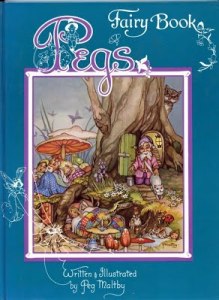
Peg’s Fairy Book by Peg Maltby
This is a book I inherited from my mother. Our copy (which my sister snaffled when our library was broken up, drat her) was given to Mum for Christmas in the late 40s, by a favourite aunt and uncle, so it’s also strongly associated in my mind with our darling Auntie Maisie, surely one of the kindest people I have ever known. I’ve included it in my list, because while it was dated even when I was a child in the 1970s, (it was published in 1944), it was one of the few books where I can honestly say I was profoundly affected by the illustrations. (I did not have many picture books; I had comics like Teddy Bear and assorted Little Golden Books, but as I progressed very rapidly to chapter books, the great picture books of the fifties and sixties sadly made very little impact on me.)
Peg Maltby’s stories of fairies and goblins in Australian setting were probably influenced by May Gibbs (I was also a great fan of Snugglepot and Cuddlepie), but are done with less subtlety and skill; the stories themselves are certainly nothing special. However the bright colours and Art Deco sensibility of her illustrations are still charming, as is her sepia linework (you can see Peg’s Fairy Book on the National Library’s website, here http://nla.gov.au/nla.obj-2600932/view?partId=nla.obj-2662970#page/n-1/mode/2up). As a child what I was particularly drawn to was their incredible detail; this detail is something that I also love about the work of my own illustrative collaborator, Cheryl Orsini. I particularly loved the goblin market, and the fairy houses, and still do. I’m sad this book is today more or less forgotten; it gave me such pleasure that for all the limitations of the stories themselves, I would love to see it come back into print.
Today, it’s the turn of Adèle Geras to tell us about her five favourites.
Is there a woman writer of a certain age who won’t have LITTLE WOMEN by Louisa May Alcott among her favourites? I don’t think so. They generally love the book because of Jo, and her burning ambition to be a writer, but for me the attraction was more the four sisters living together through good times and bad and getting irritated with one another but still remaining loving throughout. I am an only child and this book paints a portrait of life with siblings that felt magical to me when I was very young and still does.

Today’s selection of five favourites is by Janeen Brian.
The story about Ping, by Marjorie Flack and illustrated by Kurt Wiese. First published in 1933, Ping is a colourfully- illustrated story about a domesticated Chinese duck lost on the Yangtze River.
My mother read this to me when I was about four. I can’t remember any other story that was read to me by either parents. So, it’s special.
The Old Curiosity Shop by Charles Dickens.
I read, or tried to read, several chapters of this book when I was seven. There weren’t any other books in the house to read and this was on a shelf. Perhaps it had been given to one of my parents. I was sad that it defeated me, but it still showed me there were books out there.
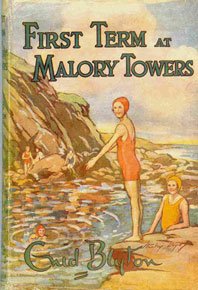
Series of Famous Five and Secret Seven, by Enid Blyton.
Borrowed these from friends, as there no school library, very few books at home and we never went to a library. They had all the ingredients for a child wishing to be involved in dramatic events, adventures and being heroes.
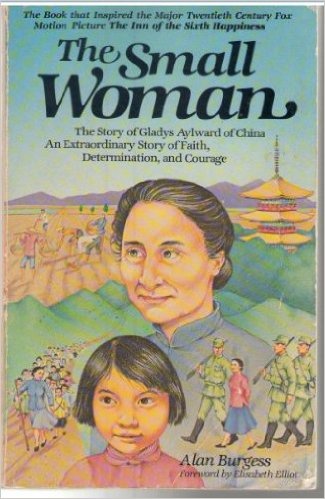
The Small Woman by Alan Burgess
A true story of Gladys Aylward, a wonderfully brave woman who surmounted incredible odds to take her strong, religious beliefs to China. It was unusual to read about a woman hero and I remember admiring Gladys immensely.
An Omnibus by Readers Digest.
Because I achieved good marks in my last year in Primary School, my parents gave me this book. I loved it because it was an anthology of stories, poems, quizzes, illustrations and articles. I’d never had anything like it. One of my favourite stories was about Houdini.
Today Hazel Edwards tells us about her five favourites from childhood.
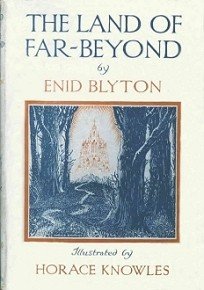
The Land of Far Beyond by Enid Blyton
My grandfather had a private lending library and the children’s section was a wall of Enid Blyton. So I devoured the Famous Five and the Secret Seven, and then moved onto flying with Biggles. I wasn’t that keen on horses, so missed out on the Mary Grant Bruce books. But the book which impacted on my early life was Enid Blyton’s ‘The Land of Far Beyond.’ This was my first experience with an allegorical story, which was a quest, and where the characters had the names of their attributes. E.g. Mr Doubt, and the giant’s page boy called Fright. Even the places they travelled matched their names.As an adult, when we orienteered on a real map with Mt Disappointment labelled, it reminded me of ‘The Land of Far Beyond.’ Because I no longer have my own copy, I Googled the title and had a feeling of familiarity as I looked at the cover on the Enid Blyton Society webpage. http://www.enidblytonsociety.co.uk/book-details.php?id=358
Today’s children would consider this cover bland, but I loved the sense of a journey conveyed in the artwork. I liked the economy of a story with several meanings and layers. But the story ALSO needed adventure and danger with eccentric characters to interest me
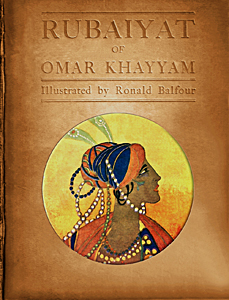
The Rubaiyat of Omah Khayyam
My father encouraged me to read. He shared ‘The Rubaiyat of Omah Khayyam’ with me by reading it aloud. I didn’t really understand it. But I liked the shape of the ideas. And the idea of a door to which there was no key. Maybe that encouraged me to co-write Hijabi Girl later.
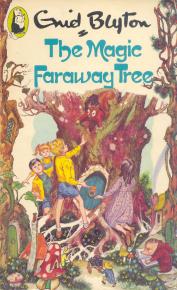
The Magic Far-Away Tree, by Enid Blyton.
The atttraction there was the food and the variety of different lands.
Animal Farm, by George Orwell
Read the other levels later as an adult. But as a child I thought it was about pigs.
The poetry of Robbie Burns
My father read this in his Glaswegian accent and I didn’t understand a word of it, but I knew he liked it.
My other reading was Biblical stories because I went to Baptist Sunday school. So my reading was fairly diverse as a child. Now I prefer biographies and well-plotted mysteries.
Today’s selection of childhood favourites is by Libby Gleeson.
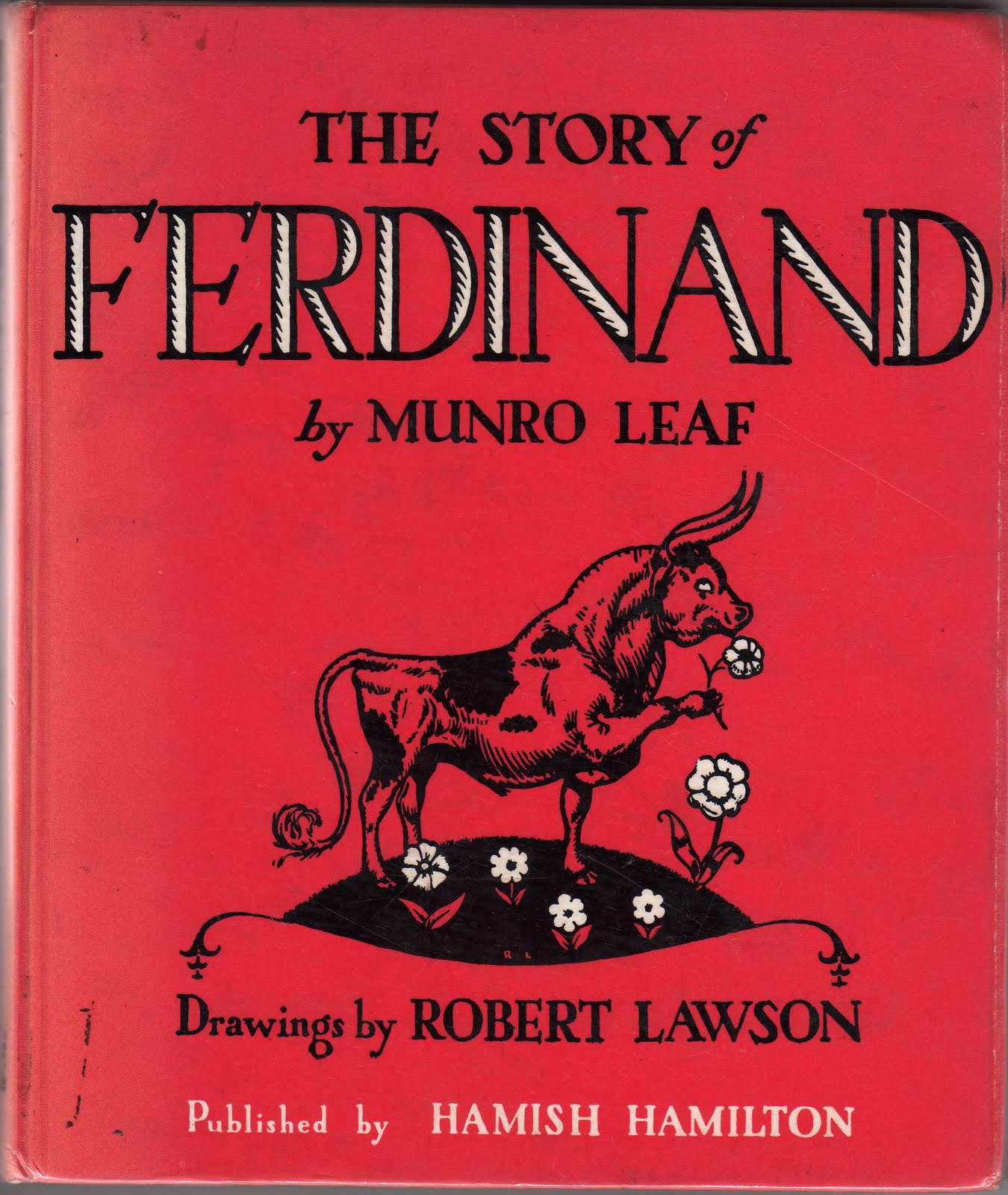
The Story of Ferdinand Author: Munro Leaf. Illustrator: Robert Lawson
This one of a bull which didn’t want to fight in the bull ring but rather to sit and smell the flowers really delighted me. He grows up to be the biggest and strongest bull in the field but still remains one who would rather smell flowers. He sits on a bee on one occasion and the sting sends him leaping and charging around the field and so he’s seen as aggressive and is taken to the bull ring. He still only wants to smell flowers and so those organising the bull fight are thwarted.
Anne of Green Gables. L M Montgomery
I loved this story of a red headed outsider who was determined to make her way. Anne had been adopted by Mathew and Marilla to help on their farm but they had thought they were adopting a boy. Despite initial difficulties, Anne – with an ‘e’ – stays and develops friendships. I loved her disdain for her classmate Gilbert, knowing they’d get together in the end.
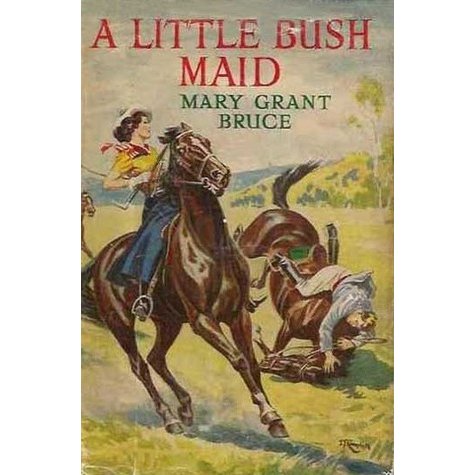
A Little Bush Maid. Mary Grant Bruce
This is the first in the long series of Billabong Books and I devoured every one. Norah Linton is growing up on a station in Victoria in the early years of the twentieth century. She is doted on by her widowed father and her brother Jim when he comes home from boarding school on holidays. He brings his friend Wally with him and the three of them have fairly standard bush adventures together. Old fashioned values towards race and class persist and I remember feeling a bit uncomfortable but I envied Norah, wild on her horse, and so I ignored them when I was a child.
The Enchanted Wood. Enid Blyton
I read all the Enid Blyton books I could get my hands on but this is the one that stayed with me. I think it’s the best book she ever wrote – and she wrote hundreds. It’s the first in the Faraway Tree series and introduces us to Jo, Bessie and Fanny and their cousin Dick. (names are sanitised in modern editions.) The children find a tree in a wood and when they climb it they meet all kinds of fantasy creatures such as Mrs Washalot, Moonface and Saucepan Man. A ladder at the top of the tree leads to lands that circulate so a different land may be at the top at any time. The children must leave before the land moves on from the top of the tree. I thought it was brilliant when I was a child and I still do!
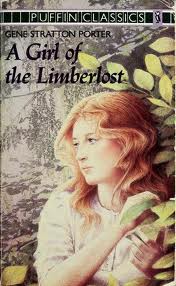
A Girl of the Limberlost. Gene Stratton Porter
This was my most favourite novel of my early teenage years. Elnora Comstock lives with her widowed mother on the edge of the Limberlost swamp land. Elnora is bright and wants an education but her mother believes it to be a waste of time for a girl. Elnora fights and argues with her mother and pays for her education by gathering artifacts and moths from the swamp. She grows in her understanding of the world of nature and in her confidence as she becomes a woman. This is a dramatic, gothic novel, so unlike the sweet rolling green hills of much English fiction I read. I loved it.
Today Dan Rabarts (story in vol 1) is sharing the fascinating Maori background behind his And Then contribution.
Tipuna Tapu is a post-apocalyptic adventure story, set in a dieselpunk world where every conceivable monster of myth and legend walks the earth, and where humanity struggles to exist in the shadow of dragons, giants, and kaiju. In a far corner of this world, misty Aotearoa, people crowd into places made tapu, sacred, by events of the deep past, or by the sacredness of bones that protect them and keep the hungering taniwha at bay. Our heroes, or perhaps anti-heroes, search for forgotten bones to sell to those who can afford them, and want to keep themselves safe from the taniwha. Which is all good and well, until things turn against them. Suddenly, the bones are more than just profit and loss. They’re a map to a past that just might save Aotearoa from the hell it has fallen into, but can our heroes change their ways in time?
My iwi is Ngati Porou, and my father maintains our histories, our whakapapa, going back many generations. Over the years, he has been sharing these stories with me, among them the narratives that connect our family to our ancestral lands in the Coromandel. This has included discussions of how the remains of our ancestors were handled and stored, of the tapu, or respect, associated with the bones of the dead, and the sacredness of those places, and those remains. So this story has been brewing for a while, and it was only a matter of time before it came out, mashed up with taniwha and motorbikes and nailguns.
Today, Kelly Gardiner talks about her story(published in Vol 1)
Boots and the Bushranger is set in the early days of the Victorian Gold Rush in the booming town of Castlemaine, where every square foot was dug up and turned over, where people made and drank and lost fortunes or pennies, and where (as we now know, thanks to Clare Wright’s ‘Forgotten Rebels of Eureka’) women were a important part of the goldfields communities.