Five Favourites 5: Adele Geras

Today, it’s the turn of Adèle Geras to tell us about her five favourites.

Is there a woman writer of a certain age who won’t have LITTLE WOMEN by Louisa May Alcott among her favourites? I don’t think so. They generally love the book because of Jo, and her burning ambition to be a writer, but for me the attraction was more the four sisters living together through good times and bad and getting irritated with one another but still remaining loving throughout.  I am an only child and this book paints a portrait of life with siblings that felt magical to me when I was very young and still does.

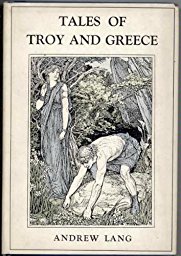
TALES OF TROY by Andrew Lang.  This book was given to me in 1951  when I was 7. It has coloured my entire life. It’s the story of the Trojan War with the most beautiful illustrations by H.J. Ford. I knew whole passages of it by heart by the time I was 8.  It was the beginning of my love affair with the legends and stories of Ancient Greece and then later, Rome. But this was the start of it and I still have the book on my shelves. It’s been a huge inspiration to me, leading directly, I think to my own books set in Ancient Greece: TROY, ITHAKA and DIDO.
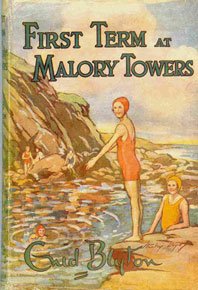
 THE MALORY TOWERS series by Enid Blyton.   I had to re- read one of these books about twenty years ago for a conference at which I spoke about them. And I was shocked to discover that (unlike Little Women and Tales of Troy) they did not stand up to adult scrutiny. They struck me as paper thin, rather shoddily written and clichéd in every way. But….but but but. I loved them with a passion as a child, and this passion didn’t dim when I went to boarding school myself and found it to be not a bit like Malory Towers. Blyton has created a world that swallows up young girls and transports them. She fills it with characters who are readily identifiable and when I was about 8, this was so enchanting that I hold the world the books made in my head  quite separately from the rather thin gruel of the actual text. That is Blyton’s magic. She created more readers than anyone before or since, except for J. K. Rowling.
BALLET SHOES by Noel  Streatfeild. Oh, my goodness how I adored this book! I’ve also read it as an adult and it’s just as good as it ever was because Streatfeild was such a wonderful writer. Here again we have siblings, albeit not birth siblings but three girls collected by an eccentric explorer with a kind heart. The whole set up struck me as thrilling. The grown ups were amazing: different from most other grown ups in books. They were bohemian and strange and did unexpected things. And the dramas of the ballet classes and the fact that one of the sisters went on to become a pilot…it was, in every way, a brilliant wish -fulfilment book and also beautifully written.  When I first read it I was determined to be a STAR and I identified with  that side of the novel  completely.
Nowadays, we have box sets. Back in the late 50s and early 60s we had series of books. I loved John Galsworthy’s FORSYTE saga but mostly at school the books that kept us  going, that we passed around the class, discussing every turn and twist of the plots till we were blue in the face, the books that preoccupied us most were the WHITEOAKS books by Mazo de la Roche.  They were set in Canada and the house the Whiteoaks family lived in was called Jalna. I can’t now recall how many books there were but they seemed never to stop. My own favourite character was Rennie, who was a dangerously attractive red-headed man and RENNIE’S DAUGHTER was my favourite of the series, though I also loved FINCH’S FORTUNE. Finch was the pale, rather more weedy and intellectual brother of Rennie, if I remember correctly. These books were, in the words of my elder daughter: heaven on a stick. Big house, slightly tyrannical matriach, lots of different siblings and assorted in – laws. Difficult children. And lots of romantic sexual simmerings. Fabulous stuff!  I have never revisited these books. I daren’t…I want the spell to be unbroken. I doubt if anyone under 60 will ever have heard of Mazo de la Roche. Sic transit gloria…

Five Favourites 4: Janeen Brian

Today’s selection of five favourites is by Janeen Brian.


The story about Ping, by Marjorie Flack and illustrated by Kurt Wiese. First published in 1933, Ping is a colourfully- illustrated story about a domesticated Chinese duck lost on the Yangtze River.

My mother read this to me when I was about four. I can’t remember any other story that was read to me by either parents. So, it’s special.


The Old Curiosity Shop by Charles Dickens.

I read, or tried to read, several chapters of this book when I was seven. There weren’t any other books in the house to read and this was on a shelf. Perhaps it had been given to one of my parents. I was sad that it defeated me, but it still showed me there were books out there.


Series of Famous Five and Secret Seven, by Enid Blyton.

Borrowed these from friends, as there no school library, very few books at home and we never went to a library. They had all the ingredients for a child wishing to be involved in dramatic events, adventures and being heroes.


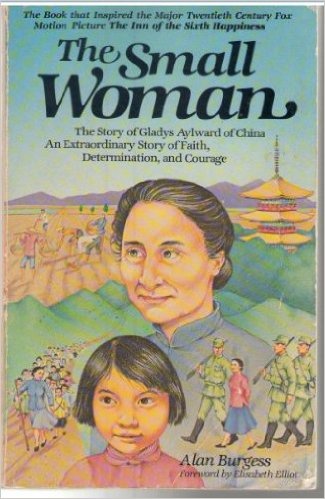
The Small Woman by Alan Burgess

A true story of Gladys Aylward, a wonderfully brave woman who surmounted incredible odds to take her strong, religious beliefs to China. It was unusual to read about a woman hero and I remember admiring Gladys immensely.


An Omnibus by Readers Digest.

Because I achieved good marks in my last year in Primary School, my parents gave me this book. I loved it because it was an anthology of stories, poems, quizzes, illustrations and articles. I’d never had anything like it. One of my favourite stories was about Houdini.


Five Favourites 3: Hazel Edwards

Today Hazel Edwards tells us about her five favourites from childhood.

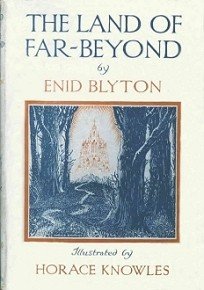
The Land of Far Beyond by Enid Blyton

My grandfather had a private lending library and the children’s section was a wall of Enid Blyton. So I devoured the Famous Five and the Secret Seven, and then moved onto flying with Biggles. I wasn’t that keen on horses, so missed out on the Mary Grant Bruce books. But the book which impacted on my early life was Enid Blyton’s ‘The Land of Far Beyond.’ This was my first experience with an allegorical story, which was a quest, and where the characters had the names of their attributes. E.g. Mr Doubt, and the giant’s page boy called Fright. Even the places they travelled matched their names.As an adult, when we orienteered on a real map with Mt Disappointment labelled, it reminded me of ‘The Land of Far Beyond.’ Because I no longer have my own copy, I Googled the title and had a feeling of familiarity as I looked at the cover on the Enid Blyton Society  webpage.  http://www.enidblytonsociety.co.uk/book-details.php?id=358

Today’s children would  consider this cover bland, but I loved the sense of a journey conveyed in the artwork.  I liked the economy of a story with several meanings and layers. But the story ALSO needed adventure and danger with eccentric characters to interest me

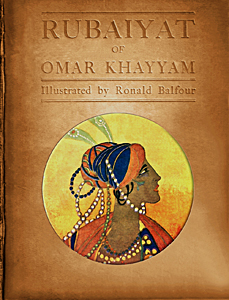
The Rubaiyat of Omah Khayyam

My father encouraged me to read. He shared ‘The Rubaiyat of Omah Khayyam’ with me by reading it aloud. I didn’t really understand it. But I liked the shape of the ideas. And the idea of a door to which there was no key. Maybe that encouraged me to co-write Hijabi Girl later.

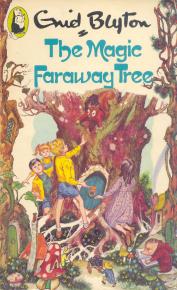
The Magic Far-Away Tree, by Enid Blyton.

The atttraction there was the food and the variety of different lands.

Animal Farm, by George Orwell

Read the other levels later as an adult. But as a child I thought it was about pigs.

The poetry of Robbie Burns

My father read this in his Glaswegian accent and I didn’t understand a word of it, but I knew he liked it.

My other reading was Biblical stories because I went to Baptist Sunday school. So my reading was fairly diverse as a child. Now I prefer biographies and well-plotted mysteries.


Five Favourites 2: Libby Gleeson

Today’s selection of childhood favourites is by Libby Gleeson.


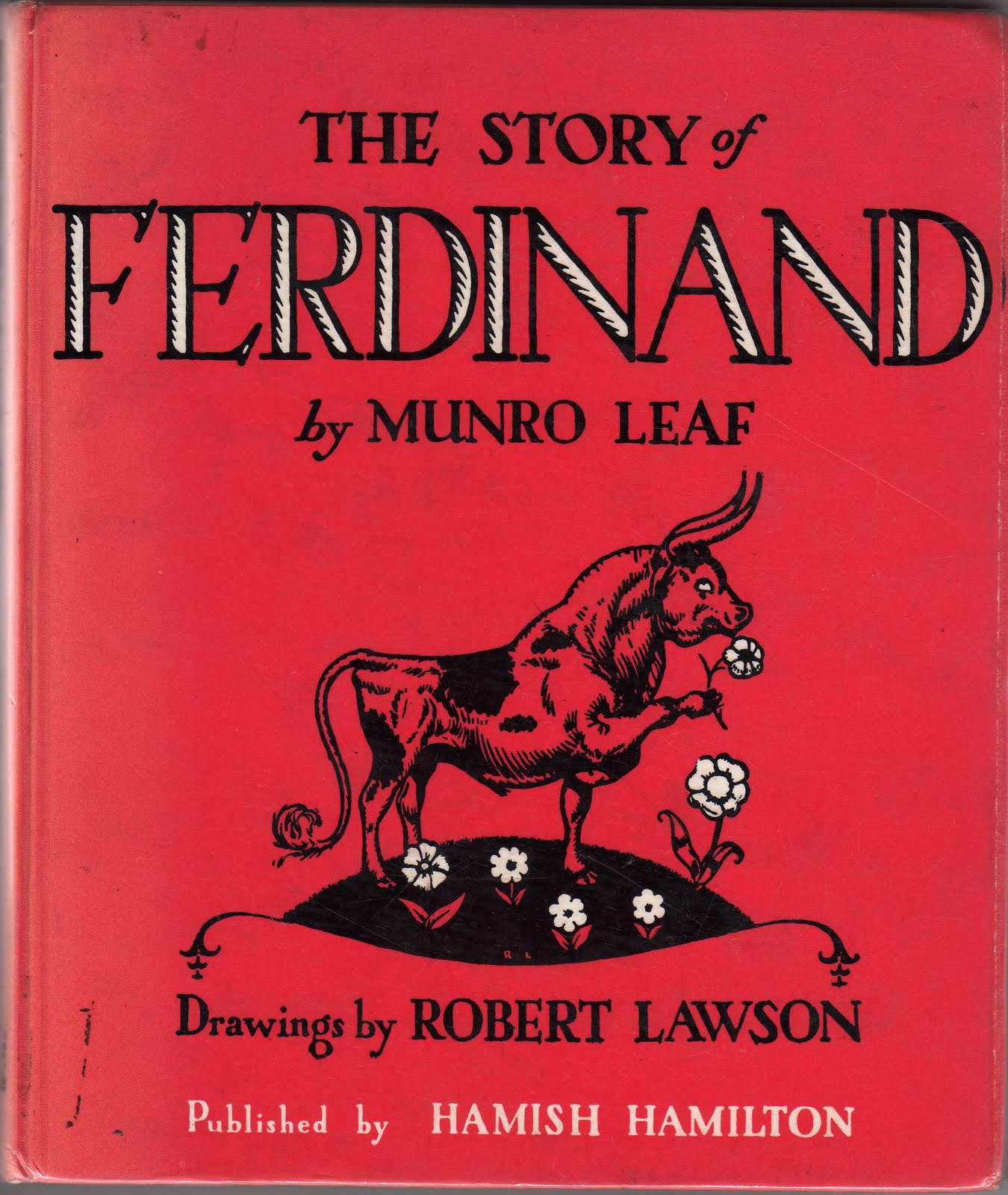
The Story of Ferdinand Author: Munro Leaf. Illustrator: Robert Lawson
        This one of a bull which didn’t want to fight in the bull ring but rather to sit and smell the flowers really delighted me. He grows up to be the biggest and strongest bull    in the field but still remains one who would rather smell flowers. He sits on a bee on one occasion and the sting sends him leaping and charging around the field and so he’s seen as aggressive and is taken to the bull ring. He still only wants to smell flowers and so those organising the bull fight are thwarted.

Anne of Green Gables. L M Montgomery

       I loved this story of a red headed outsider who was determined to make her way. Anne had been adopted by Mathew and Marilla to help on their farm but they had  thought they were adopting a boy. Despite initial difficulties, Anne – with an ‘e’ – stays and develops friendships. I loved her disdain for her classmate Gilbert, knowing they’d get together in the end.

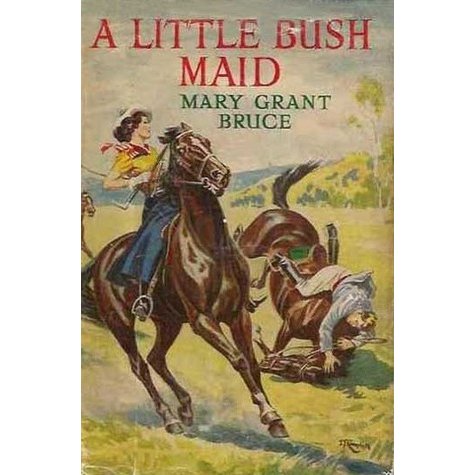
A Little Bush Maid. Mary Grant Bruce
        This is the first in the long series of Billabong Books and I devoured every one. Norah Linton is growing up on a station in Victoria in the early years of the twentieth century. She is doted on by her widowed father and her brother Jim when he comes home from boarding school on holidays. He brings his friend Wally with him and  the three of them have fairly standard bush adventures together.  Old fashioned values towards race and class persist and I remember feeling a bit uncomfortable but   I envied Norah, wild on her horse, and so I ignored them when I was a child.

The Enchanted Wood. Enid Blyton
        I read all the Enid Blyton books I could get my hands on but this is the one that stayed with me. I think it’s the best book she ever wrote – and she wrote hundreds. It’s the first in the Faraway Tree series and introduces us to Jo, Bessie and Fanny and their cousin Dick. (names are sanitised in modern editions.) The children find a tree in a wood and when they climb it they meet all kinds of fantasy creatures such as Mrs Washalot, Moonface and Saucepan Man. A ladder at the top of the tree  leads to lands that circulate so a different land may be at the top at any time. The children must leave before the land moves on from the top of the tree. I thought  it was brilliant when I was a child and I still do!

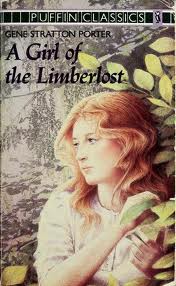
A Girl of the Limberlost.  Gene Stratton Porter
        This was my most favourite novel of my early teenage years. Elnora Comstock lives with her widowed mother on the edge of the Limberlost swamp land. Elnora is   bright and wants an education but her mother believes it to be a waste of time for a girl. Elnora fights and argues with her mother and pays for her education by gathering artifacts and moths from the swamp. She grows in her understanding of the world of nature and in her confidence as she becomes a woman. This is a dramatic, gothic novel, so unlike the sweet rolling green hills of much English fiction I read. I loved it.

Five Favourites 1: Introduction

I’m starting a new series on this blog today:titled Five Favourites, it’s about writers’ and illustrators’ favourite childhood books. I’ve asked everyone to select five favourites from their childhood reading, and to write a bit about why they loved that particular book, and I’ll be featuring their choices over the next month or so. Today I’m introducing the series with my own selection: five of my favourite books from childhood, not in any particular order of preference, I loved them all equally–and love them still. One I have left out however is Jules Verne’s Michel Strogoff, which as readers of this blog will know is one of my top favourites from childhood–but I’ve written about it so often that I thought I’d give another book a chance today in this list!

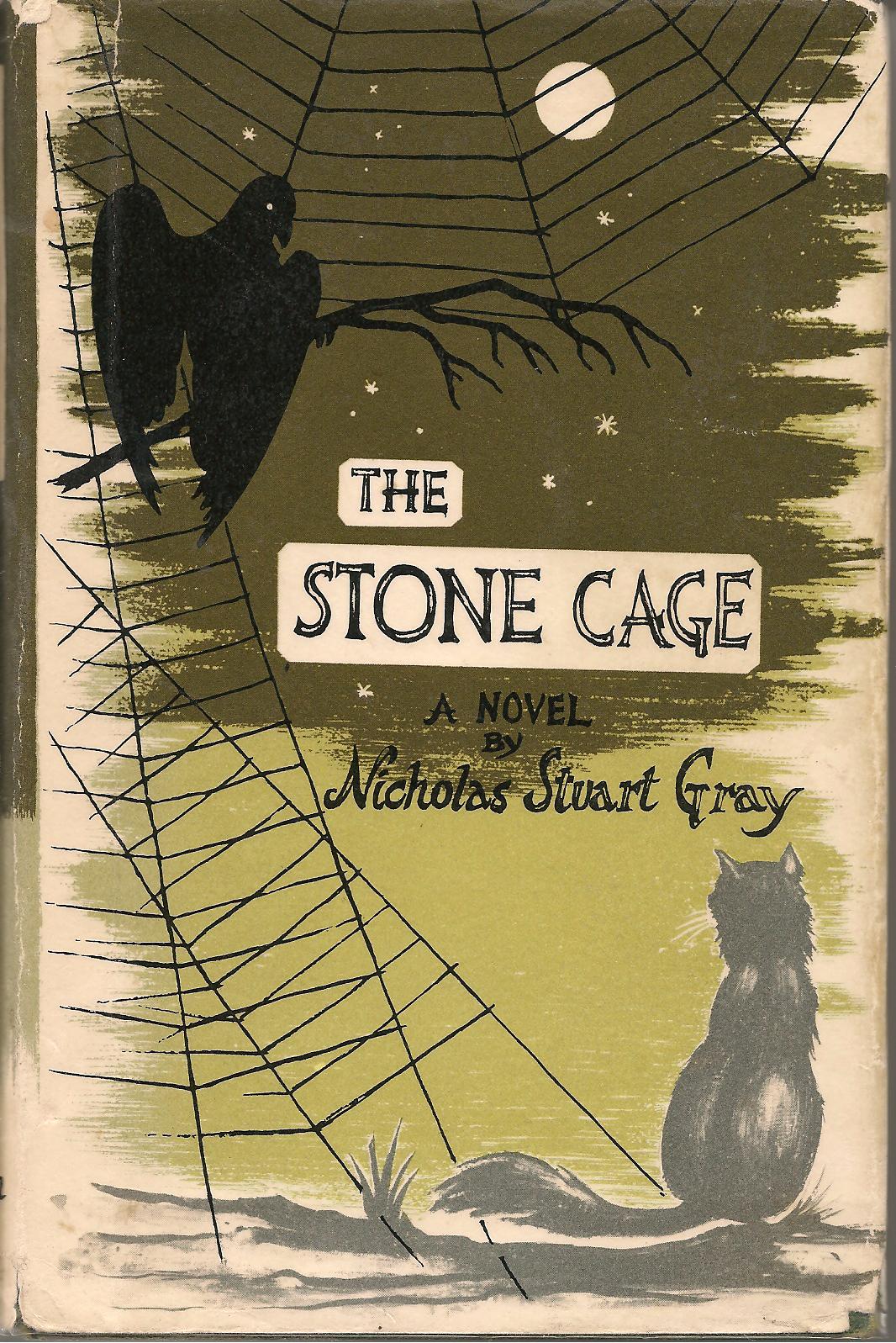
The Stone Cage, by Nicholas Stuart Gray, with illustrations by the author

This wonderful novel is an inspired riff on the fairy tale Rapunzel, seen through the eyes of the witch’s familiars: the cynical, witty and hard-bitten cat Tomlyn, and the pompous, timid but kind raven Marshall. Magical, touching and inventive, with a touch as light as it is deep, it’s a novel I read several times as a child, its enchanting atmosphere and pacy story thrilling me every time. Rereading it as an adult I have been struck anew by its beautiful lightness of touch, perfect pitch and wit.


Seven Crystal Balls/Prisoners of the Sun, written and illustrated by Hergé

I know, it’s two books but it’s really the one adventure in two parts, so I’m putting them both in as one. Brought up as a French-speaking child with BD (bande dessinées, or comic books), I especially loved the Tintin books and devoured every single one more than once. But this adventure of the little quiffed reporter and his faithful friends Captain Haddock and Snowy(Milou in the French original I read) with its hint of the supernatural along with the exciting adventure and humour that is so characteristic of the series, was my top favourite. I still love reading it–and indeed all the Tintin books–and find them a great comfort if I am ill!


Finn Family Moomintroll, written and illustrated by Tove Jannsson

I loved all the Moomintroll books but I am singling out this one because appropriately enough it was the first one I read and I immediately clicked with the atmosphere, characters and general sense of a world that you just didn’t want to leave. Its playful oddness was a part of a magic that was hard to describe to friends who hadn’t fallen under its spell yet, but it’s one that has stayed with me into adulthood.


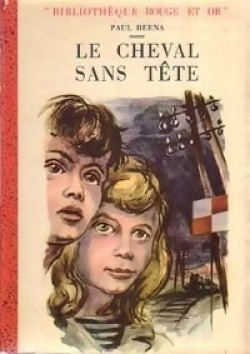
A Hundred Million Francs, by Paul Berna

This French novel, which I read under its original title of Le Cheval sans tête, is unusual as a children’s adventure story in that it is set in shabby city streets–Paris, in this case. A group of friends, street urchins running wild in a poor neighbourhood, find a headless rocking horse at the tip and restore it to play with: but soon discover that their new acquisition interests some very dodgy people! How the kids find out the truth and outwit a ruthless gang of thieves is a story full of twist and turns and I loved it. The characters, like Gaby the leader of the urchins and Marion with her pack of stray dogs, are absolutely fabulous and the setting of backstreet Paris was one that felt both familiar and exotic to me, as my family comes from the South of France and at the time I had never been to Paris.


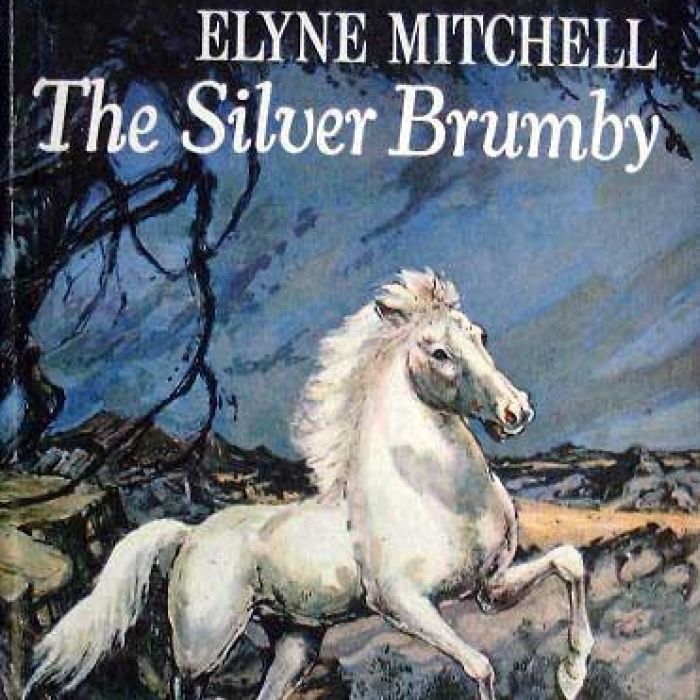
The Silver Brumby, by Elyne Mitchell

This was one of the wonderful classic Australian novels I discovered in childhood and I still remember the huge thrill of reading about the extraordinary adventures of Thowra, Bel-Bel, Yarraman, Golden and the rest of the brumbies in the grand Snowy River country. I loved horses as a child and even learned to ride, but I didn’t really take to most horse books, finding them too tame–until I found The Silver Brumby. Then I had to read every one in the series but the first one remains my favourite.


The Old Woman and the Imp revisited

The Old Woman and the Imp is another of my original stories with fairytale/folktale elements, and like The Clever Thief, it was published both in The School Magazine and Cricket. It is a subversive riff on the story of Rumpelstiltskin, and I had a lot of fun with it!

The Old Woman and the Imp

by Sophie Masson

There was once an old woman, a rather hasty and clever old woman, who lived all alone in a small cottage.

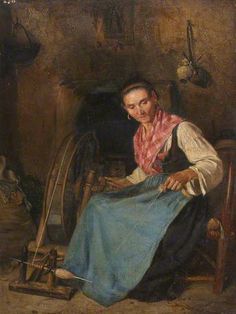
Now this old woman had another important thing about her; for she was a champion spinner, as good as any you’d find on a long day’s walk; but ‘pon my word, she was a terrible cook!

That wouldn’t have mattered, normally, except for this small fact–that the old woman had just landed a job as a cook in the town, not far away.

I’m afraid to say that the old woman had been less than truthful when she’d been to ask for the job; she’d told the innkeeper that she’d cooked for the king, in her time, and as she could spin words as skilfully as she spun wool, she soon had him believing her.

When she arrived,on the appointed day, to take up her new duties,the innkeeper greeted her with a rather anxious face, and said, ” Oh, and it’s glad I am that you came! We are expecting several fine gentlemen to dinner tomorrow night, and you must start cooking the food at once!”

“Wait a minute, wait a minute,” said the old woman, not to be flustered. “Show me to my quarters first, then I’ll start greasing your pans!”

Well, the old woman was taken to her room–the best in the house, with a large high feather bed, and soft carpet, and a mirror, for the old woman had let the innkeeper know, ever so softly, that the person who cooked food fit for a king must have quarters to match. .

Once there, and the door closed, she threw herself back on the bed, and dozed a little, without worrying overmuch about how she was going to cook this food, for all those fine gentlemen. Then she got up and started spinning; a-whir, whir, whir, and turn; a whir whir whir, and turn, and as she spun, she sang.

Suddenly, as she sat there singing and spinning, she heard the bedroom window creaking, ever so slightly, and the next minute, a strange creature had hopped through and was standing on the floor, grinning at her.

It was the size of a small cat, though not half as fat,and shaped more or less like a person–as if it had tried to follow a person-pattern, with not much luck!

And its grin was so large it seemed to split the creature’s face, so that its sharp yellow teeth winked, a one two three, a one two three!

The old woman looked at it for a moment,then calmly closed the window, went to the dressing table and began to unpin her hair.

“I’ve come to help you,” the little thing said, its grin fading just a bit, as the old woman kept ignoring it.

“Oh yes?” said she, and began combing her long grey hair, making smoochy faces at herself in the mirror. She was a clever old woman, as I’ve already told you; and she had a shrewd suspicion as to just who this little man-thing might be. But she was much too sharp to say so!

“I’m an imp,” the little thing said, trying hard to get the old woman to look at it. I”ve come to help you cook,” it continued, sounding a bit desperate. “For the fine gentlemen. “#”Oh, ah?” the old woman said, politely, but the imp was sure it had caught a twinkle in her eye.

It grew quite sulky. “If you don’t cook for these fine gentlemen, then you’ll be. . without a home,” it finished quickly. It had nearly said, “The king will have your head off,” before realising that was the wrong story.

The old woman turned around and looked properly at him. “I suppose you’re right,” she said at last.

“Well, then,” the imp said, rather put out.

“I can offer you a deal. I’ll cook for you for a year,invisibly, so it’ll look as if it’s you, doing it–and after that time, I will return and you will have to ask me three riddles. If I can guess all of them, you will come back with me to be my slave. If I can’t guess them all–even if it’s only one–you will be free. How’s that for a bargain?”#It grinned, and twirled around.

“Done!” the old woman said briskly. The imp looked surprised. “Are you sure?” it said. “Are you sure?”

“Of course I’m sure!” she said.


So, the next day, the innkeeper came into the kitchen to be met with an army of lovely smells: of wine and cream and onion and mushroom; of vanilla and cinnamon and chocolate. He opened cupboards and found pies, smoking delicately;dishes of fried chicken, of creamed potatoes and chocolate puddings, of butterscotch pancakes and pears in red wine. He was overcome, and sat down at the kitchen table, his legs wobbly from hunger and pride.

“Oh, my goodness gracious,” he said to the old woman, “You ARE a cook fit for a king! You will make my fortune!”#”I think I’ll make my own,” the old woman snapped, and he murmured, “Quite, quite,” because everyone knows that good cooks are like glass, and must be handled carefully.

Invisible, at the old woman’s elbow, the imp stirred and mixed and whispered recipes, tricks, fancies. All the old woman had to do was to pretend to look busy–and she didn’t even need to pretend that, when the innkeeper wasn’t in the room. She had brought her spinning wheel into the kitchen, and in quiet moments could sit and spin: a whir, whir whir and turn; a whir whir whir, and turn.

Well, the fine gentlemen came, and they ate. How they ate! Their fine white shirts were splashed with gravy, and their red and blue waistcoats were stained with cream, and their belts had to be loosened several times. They praised the innkeeper and his wonderful cook, and showered them with gold.

Things went on in this way for some time. Word of the wonderful cook at the inn was soon spread far and wide. The innkeeper’s moustache grew daily more bright, his hands rubbed together with joy, and he watched the old woman tenderly, yet cautiously. He’d got it into his mind that she would make a fine wife–and, faith, she didn’t disagree!#

But time must march on, and soon the year was up. One day, the imp’s voice squeaked into the old woman’s ear,”Tomorrow is the day! Tomorrow is the day!”

The old woman looked at the calendar. Sure enough, it was the last day of the year, and tomorrow would be the first day of the new one!”Remember our bargain,” the imp said, and it laughed.

That night, the imp disappeared on business of its own, and the old woman was left alone in her fine room, thinking gloomily about her bargain, and what on earth she was going to ask the imp. She racked her brains for all the riddles she’d ever known, and finally came up with two. But the third eluded her. She tapped her foot impatiently, thinking of being that little imp’s slave, and how he’d likely make her spin mountains of straw into gold.  Her eye fell on her own spinning wheel lying silent in one corner, and she went to it, and began spinning, just to calm her nerves.  A whir whir whir, and turn! A whir whir whir and turn! Suddenly, as she sat there, spinning, an idea came to her, and she laughed out loud.


The next morning, bright and early, the imp was there, grinning and twirling round and round.

“Well?” it said impatiently. “well?”

The old woman looked at the imp. She smoothed her dress. She stroked her shining silver hair. Then she said, “I lie in halls of ivory, I am all of gold and snow, but no good am I to anyone until I am cracked and done. ”

“Oh, that’s easy!” said the imp, jumping up and down and grinning. “It’s an egg, an egg!”

“Well, then,” said the old woman, and I must confess her heart felt a little fluttery,”I am so strong and mighty, I can tear down hall and town; and yet my strength will never take me up, for I can only go down. . what am I?”#The imp looked at the old woman in astonishment. “I learnt that when I was but a tiny imp!” it said scornfully. “It’s water, of course!”

“And now,” it said, grinning wildly, “Now for the last one, and you’ll be mine, my slave, for ever!” It chuckled, and rolled on the ground, laughing.

Not so fast, my dear, thought the old woman. She said, “Well, imp, tell me, then–why am I always spinning?”

The imp stopped its laughing. It stopped twirling. It stood still and stared at the old woman.

“Why you are always spinning?” it repeated. “Why?” It looked deesperately at the old woman’s spinning wheel, where neither straw nor gold was to be seen. The light in its eyes faded.

“Well, of course everyone knows. . ” the imp began. Its more or less ear-shaped ears drooped. “Well, of course that’s easy,” it said defiantly. “Of course. ”

The old woman smiled, and waited.

“Oh, I’m not answering such a stupid riddle,” the imp said haughtily, and, clicking its fingers, it jumped out of the window and disappeared, never to be seen again.


Although the innkeeper was a little disappointed when his new wife proved not to want to cook, he wasn’t too disappointed. For in that long year, he’d watched her as she moved from stove to table, from table to stove, and he had picked up enough recipes and tricks and fancies to become a good cook himself. Soon the fame of his cooking spread far and wide, and crowds of people filled the tables. Whenever guests came, they would notice the old woman, sitting in a corner of the grand dining room, spinning, and spinning, her wheel whirring and turning with a most soothing sound. And if they asked what she was making, she would smile, and put a finger to her lips, and whisper, “Who knows?”
The Clever Thief revisited

I’ve written quite a number of stories which are based on folktale or fairytale elements, but are original in storyline and concept. Several of these have been pretty popular, and published more than once, and I thought it might be interesting to revisit a few of them. This one today, The Clever Thief, which was published both in The School Magazine(Australia) and Cricket (USA)quite a number of is one of those tales centred around an underdog triumphing over a dangerous situation through sheer wits, and it seemed to really strike a chord back then with readers both young and not so young! Hope readers of this blog enjoy it just as much now.

THE CLEVER THIEF

by Sophie Masson.

There was once a boy who was captured by robbers. Now these robbers were the most feared in the whole country. They held up travellers and robbed coaches, and their cave was full of stolen gold and silver and precious stones.

It was the custom of the robbers to make all their captives steal, as well. In this way, the robbers kept adding new members to their gang, because no-one ever dared to refuse. And once you’d stolen, you were in for good, because you were marked as a member of the robber gang, and would go to prison if you were caught.

Now the boy I am telling you about was as bright as a dewdrop and twice as fast as the breeze. But in the robbers’ cave, he pretended to be dull and stupid, while he thought of a way out of his predicament.

One night, the robber chief said to him, “Boy, tonight, you will join our gang. I want you to go down to the high road and relieve all the travellers of their purses. ” And he smiled, his broken yellow teeth giving him a wolfish look. The boy, although he was very much frightened, nodded vacantly and grinned an idiot grin. The robber chief felt a little uneasy at that grin–was the boy too stupid to understand?–but he sent him out, nevertheless, and waited in his cave for the boy to return.

Now the boy went out on the high road, and he saw all the travellers passing by. As he had been told to do, he stepped out onto the road, shouting, “Your purse or your life!” He was a tall, thin, gangling boy, with eyes that shone like ice, and the travellers were frightened by his strangeness. So they stopped, pulled out their purses, heavy with gold and silver and copper coins, and gave them to him, trembling. He opened the purses, tipped out all the money into their palms, and took their purses, saying, “My chief has told me he wants your purses,” and then he’d give a grin, empty as an abandoned house. The travellers wouldn’t wait to hear more; they bolted, taking their money with them, full of his strangeness and their good fortune.

So the boy went back to the cave, loaded with silk and leather and cotton purses; some new, some old, some large, some small. And he said to the robber chief, “Master, here are the purses you wanted,” while he smiled his silly grin.

“Fool!” The robber chief called out, pale with rage. “Fool! I didn’t just want their purses, I wanted their money as well!”

“Oh,” the boy said, and his face drooped at the corners, as if he was sorry for what had happened. Inside his bright quick heart, though, a smile danced and sparkled.

The robber chief contained himself with difficulty. Then he said, “Tomorrow night, you will go out again. And this time, this time, boy, I want you to get all their change! Do you hear, all their change, boy!”

The boy nodded, eagerly, his eyes seeming as dull as dirty water. Again the robber chief felt uneasy, but he thought that surely no-one could be as stupid as that a second time.

So the next night, the boy went out again onto the high road. Again, he stepped out into the road, calling out, “Your change or your life! Your change or your life!” And his tall, thin shape, ghostly in the moonlight, made travellers uneasy and frightened, so they stopped, pulled out their purses, heavy with gold and silver and copper coins. The boy carefully tipped out the purses, counted out all the copper coins, put them in his large pockets, then, just as carefully, tipped back all the gold and silver coins into the travellers’ purses, and gave them back. Then he smiled at them with a smile that did not seem quite as dull and vacant, and told them to go on their way. Which they did, thoughtfully, this time.

Then, after a hard night’s work, he went back to the robbers’ cave, his pockets filled with copper coins. He emptied out his pockets in front of the robber chief, grinning like a pumpkin.

The robber chief couldn’t believe his eyes. “Copper?” he roared. “Where is the gold, where is the silver?”

“But you said change,” the boy whispered, as if he were afraid. “Change is copper, isn’t it?”

“Boy!” the robber chief screamed. “You will go out one more time and bring back everything. Everything, you hear! And if you don’t. . ” His broken teeth glittered, his wicked eyes flashed, his hand drew slowly across the boy’s throat.

The boy gulped a little, as if he were afraid. And indeed he was, but his bright quick mind was working like a windmill, spinning, sending ideas into his skull.

“Yes, master,” he whispered, and bent his head.

So the next night, the boy went out for the third and final time. He stepped out onto the highroad in the moonlight, his figure tall and straight, his eyes shining, and he stopped each traveller and talked to them. As he spoke, their eyes began to shine, their mouths to smile, their hands to tighten on their belts. At the end of the night, there were many travellers assembled there, with the boy in the middle of them, still talking.

As the sun began to edge over the corner of the world, they were all climbing up the hill towards the robbers’ cave, where the gang lay asleep. And working quickly, they gathered up all the robbers’ weapons, and put them into a large sack.

Wasn’t the robber chief surprised, when he opened his eyes to see the great assembly in his cave! He sprang to his feet, as did the other members of his gang, but it was too late. Every sword, every dagger, every knife and bow and arrow had gone into that huge sack which the boy held in his hand. Weaponless, helpless, the robbers and their chief looked at the boy and heard him say, “You told me to bring everything. Everything I brought, and everyone. ”

Now it was the turn of the robber chief to bend his head, as he and his men were led out of the cave, down the hill, and towards the town. Now and then, he lifted his head and looked at the boy, so thin and gangling, and felt his smile, as bright and fleeting as the dew on the grass.