Five Favourites 22: Meredith Costain

Today’s five favourites have been chosen by Meredith Costain.

Ballet Shoes by Noel Streatfeild, with illustrations by Ruth Gervis

I have read this book so many times over the years it is falling apart. It made me long for a life in a genteel inner-city London, one of the three little ‘Fossil sisters’ tenderly cared for by a guardian and a no-nonsense and very proper English nanny, and earning their keep on the stage. The scene where they vow to get their names in history books has stayed with me forever (and set me on the path to becoming a writer). I devoured the rest of her books one after the other.

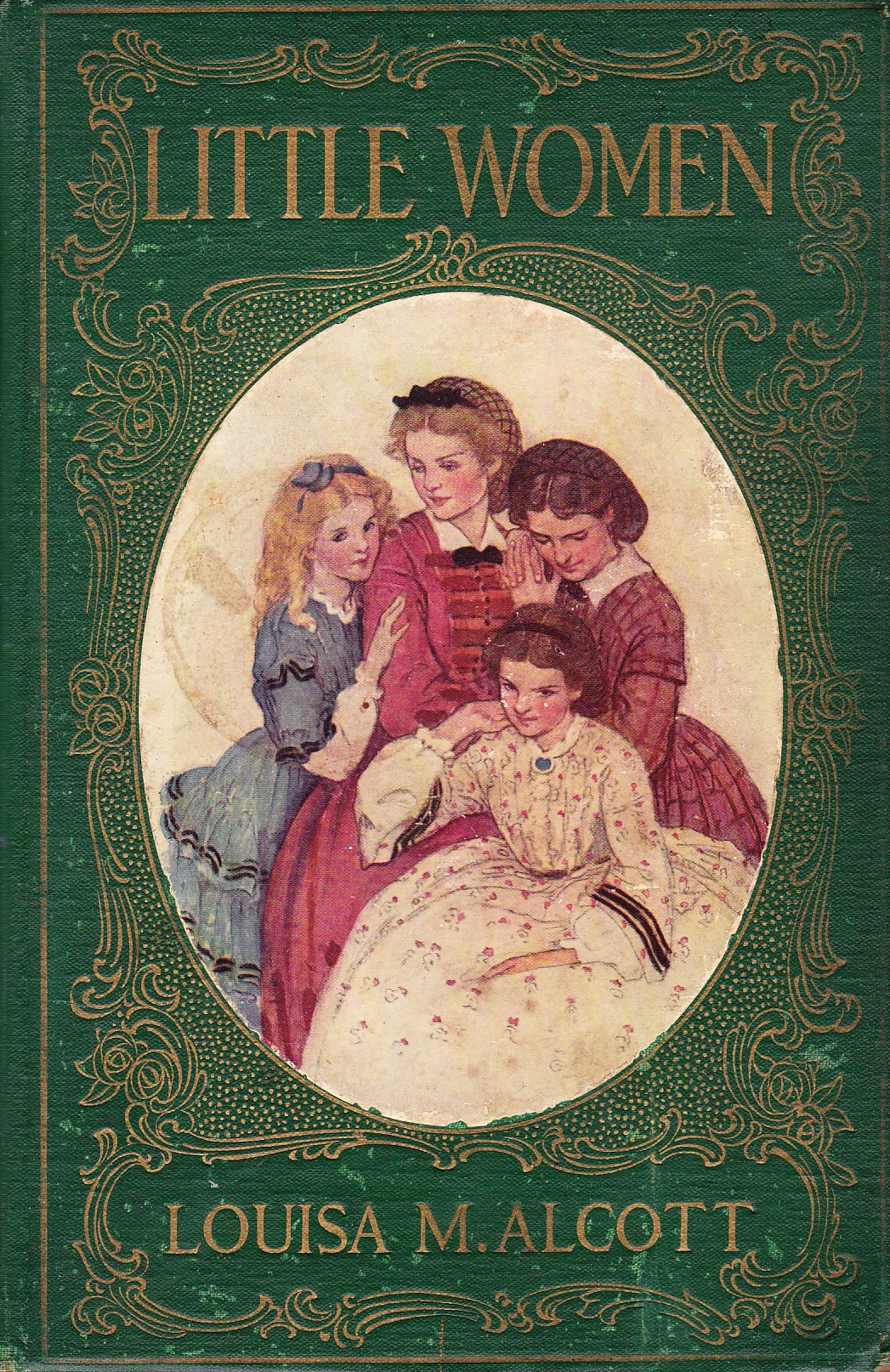
Little Women by Louisa May Alcott

I suspect I loved this book so much because I identified so strongly with Jo. She spent every spare moment she could reading, writing, crunching apples up a tree or acting out plays with her sisters. I also admired the family’s dogged insistence on making the best out of every situation: the scene where the four sisters are hand-hemming a bed sheet (hemming being something I hated doing myself) and imagining each seam was a new continent to be explored is wonderful.
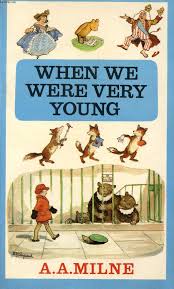
When We Were Very Young by A A Milne, with illustrations by E H Shepard

We recited a lot of poetry in our house when I was growing up – and this book (along with Now We Are Six) contained some of my favourites: ‘Disobedience’, ‘The King’s Breakfast’, ‘Happiness’ and ‘At the Zoo’. All his writing had such wonderful, matter-of-fact rhythm that went marching through your head. The perfect companion to the perfect Winnie-the-Pooh.
A Book For Kids by C J Dennis

I went to a tiny two-roomed country primary school where our wonderful teacher shared his love of rhythm and rhyme (and the new kids on the block – The Beatles!) with us every day. He introduced us to the poetry of C J Dennis and I still know most of the poems off by heart, particularly ‘Hist!’, ‘The Ant Explorer’, and ‘Triantiwontigongolope’.


The How and Why Wonder Book of Dinosaurs by Darlene Geis, with illustrations by Kenyon Shannon

My brother and I fought for ownership over this book (I’m happy to say I won – it’s currently sitting on my ‘beloved books’ shelf). We spent hours poring over the words and images and had fun trying to pronounce their unpronounceable names (so different to the names of animals we had first-hand knowledge of: cow, dog, chook, rabbit, horse). The blend of hard facts and narrative and its conversational tone made it perfect for young readers desperate to find out more about these fabulous beasts from another world and time.

Finally, just want to add some ‘near misses’: I feel like I will have betrayed these lovely books if I don’t give them a mention as well!

Near misses: A Girl of the Limberlost by Gene Stratton-Porter, Ash Road and Hills End by Ivan Southall, What Katy Did and What Katy Did Next by Susan Coolidge, Emil and the Detectives by Erich Kästner, Warrior Scarlet by Rosemary Sutcliff.

http://www.meredithcostain.com

Five Favourites 21: Claire Corbett

Today Claire Corbett is presenting her five favourites.

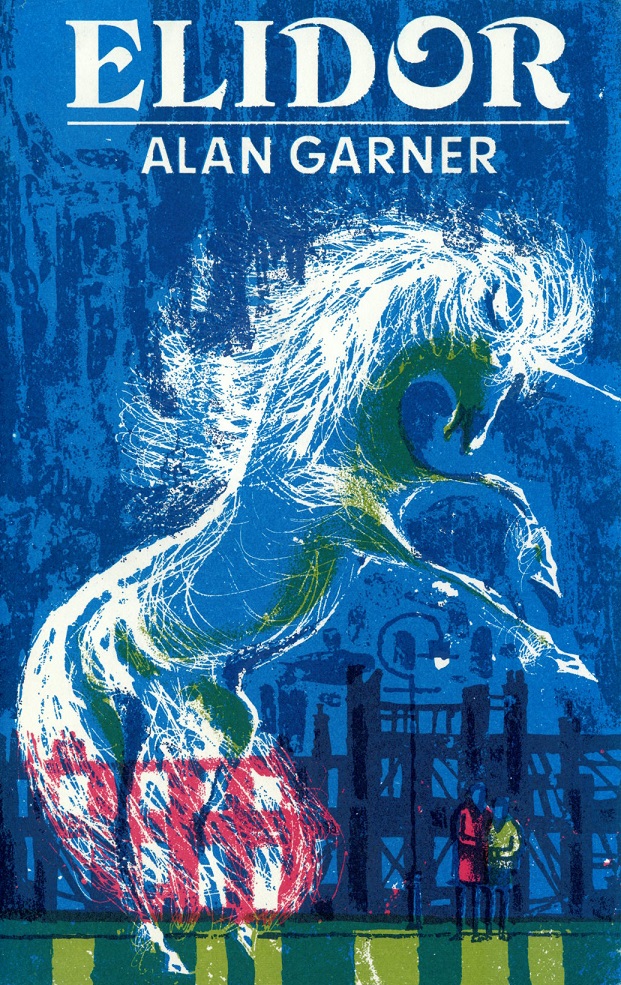
Elidor–Alan Garner–the anti-Narnia

This novel introduced my child self to the grown-up pleasures of having your heart broken by a book. Elidor, a slim novel published in 1965, is one of the greatest fantasy novels ever written. It lures you in by beginning as a classic portal fantasy: that is, the main characters enter Elidor, ‘Green Isle of the Shadow of the Stars’, through a ruined church in the bombed-out suburbs of post-war Manchester. The four children find themselves in an eerie, dying land and encounter trials of evil magic before being entrusted with four relics they must guard back in Manchester to keep the last of the light alive in Elidor. But the darkness of Elidor follows them into their seemingly dull everyday world. Here the book becomes more SF horror than high fantasy (its moments of suburban satire intensifying the terror), with its ending modulating to tragedy in the key of Celtic Twilight.

This perfect book is described by Garner himself as the ‘anti-Narnia’. It is scary and sad and refuses the child reader the pleasure of exploring its fantasy world. Instead its terrors erupting onto the streets of Manchester are gripping; only as adults do we see how Elidor not only  parallels postwar England, but is of course itself England, with the adults in that fantasy land having no more idea of how to hold back the darkness than did the adults during World War Two. Garner has talked about how he used scientific parallels for magic in the book with static electricity being one form that Elidor’s magic takes in Manchester. This is how Garner weaves SF into his fantasy, and it’s a very powerful device, making the magic feel real in his modern setting and denying the reader the comfort that scientific rationality will defeat the darkness.

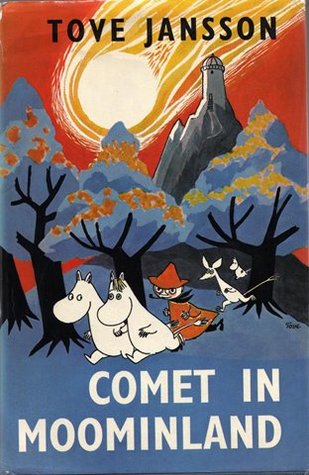
Comet in Moominland – Tove Jansson – the Romantic Sublime

All of the Moomintroll books are enchanting but this book deals in the Romantic sublime. This captivated my child’s imagination before I ever heard of the concept of the sublime – the shiver of awe we feel at the beauty and terror of that which is great beyond human understanding: sheer mountains, vast Deeps, the infinite reach and darkness of space. This book delivers all of that as Moomintroll and his friends go on a quest to the Lonely Mountains to ask the astronomers what to do about the Comet threatening Earth. This book even has a kickass heroine in the form of the vain Snork Maiden, who saves Moomintroll from a giant octopus.

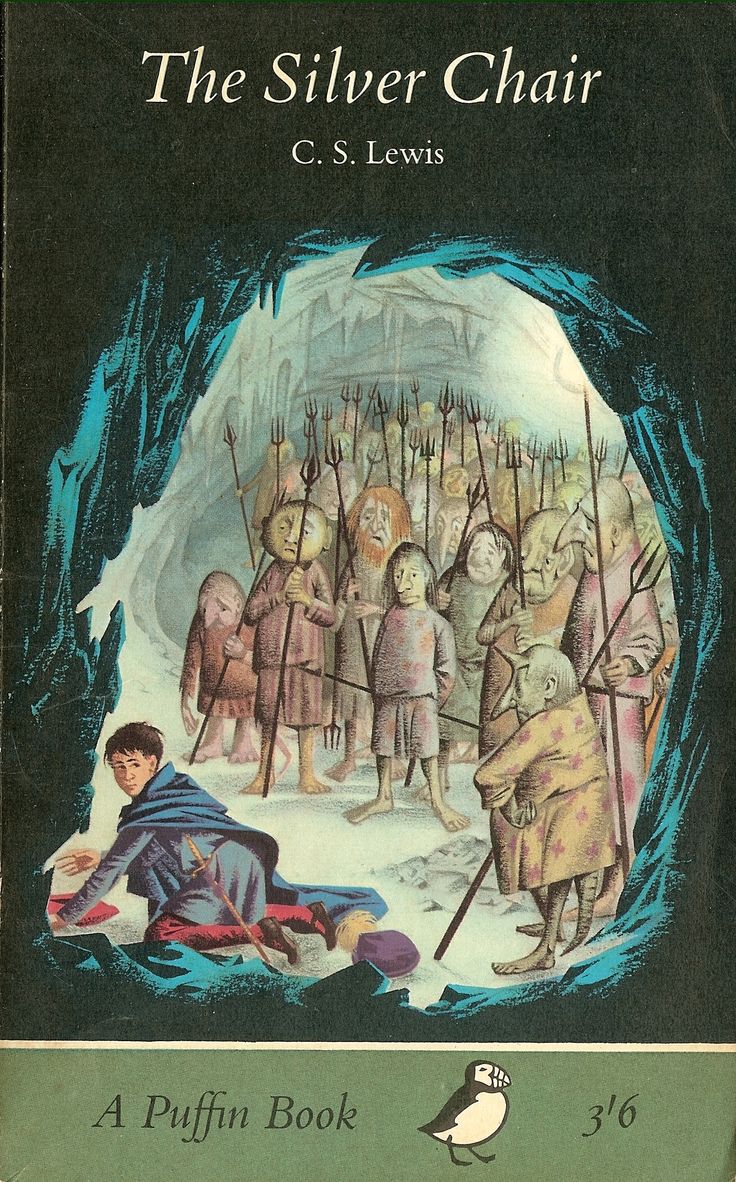
The Silver Chair – CS Lewis – Plato’s cave

The darkest, most Gothic and most convincing Narnia tale. I loved it for its epic quest through terrifying settings and its philosophical meditations on the nature of reality. Its pivotal scene is a gripping retelling of the parable of Plato’s cave (of course as a child I didn’t know this). As always with Lewis, the villain, challenging male authority, is a beautiful powerful woman, in this case a witch who kidnaps Prince Rilian, son of King Caspian. Using her engine of enslavement, the Silver Chair, she plans to turn the Prince into her puppet to allow her to rule Narnia.

Two children, Eustace Scrubb (the reformed brat from The Voyage of the Dawn Treader) and fellow victim of bullying Jill Pole, are sent on the quest to rescue Rilian by teaming up with one of Lewis’ most charming creations: the hilarious Marshwiggle Puddleglum, whose idea of looking on the bright side results in ghastly statements worthy of Eeyore such as: Now a job like this–a journey up north just as winter’s beginning, looking for a Prince that probably isn’t there, by way of a ruined city that no one has ever seen–will be just the thing. Puddleglum, one of the great pessimists of English literature, turns out to be the bravest and most stalwart friend any frightened child, or Prince, could ever wish for.

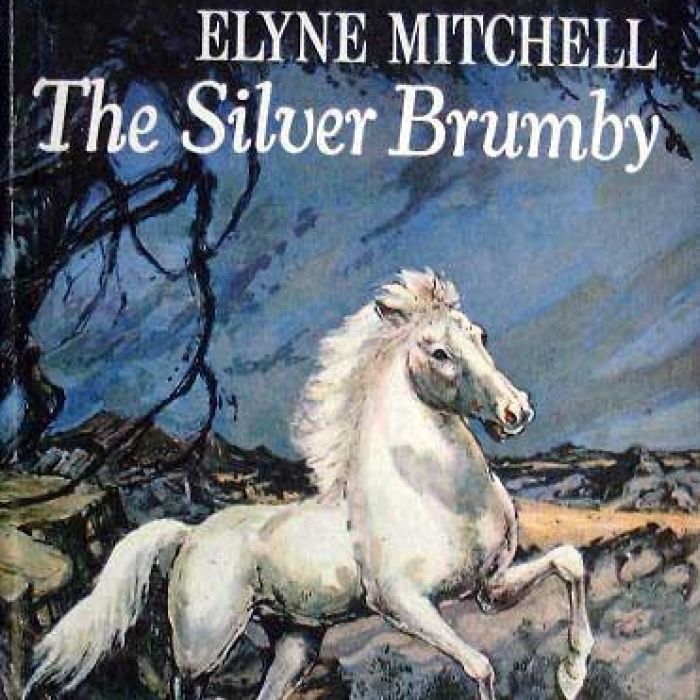
The Silver Brumby – Elyne Mitchell – the beauty of wildness

As a girl I loved horses and riding above anything except swimming. The thrill and danger of riding, the scent of gum trees and saddle leather and horse sweat, the exhaustion at the end of each day, all this was exhilarating. When I wasn’t riding, I loved reading horse books – Thunderhead by Mary O’Hara and the Black Stallion books by Walter Farley. When I came to Australia I was enchanted by the Silver Brumby books which not only thrilled me with tales of wild horses in the Snowy Mountains (I preferred wild horse stories) but introduced me to the beauty of the Australian bush.

1984 – George Orwell – language can corrupt thought

Freedom is Slavery. Ignorance is Strength. War is Peace.

This may seem an odd choice for a childhood favourite but so it was. I read it when I was twelve and instantly its images and lines and ideas were engraved on my brain. How true and how loud do those slogans ring now in our post-Trump election, post-truth world? For a writer, 1984 is the key text, its meditations on the relation of language to politics and consciousness some of the most important ever written: But if thought corrupts language, language can also corrupt thought. Orwell is one of our greatest writers whose work keeps language bright and sharp as a weapon against lies, a tool for truth against those who want to enslave our minds.

Five Favourites 20: Pamela Rushby

Today, Pamela Rushby writes about her five favourites.
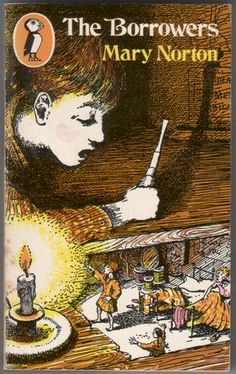
The Borrowers series by Mary Norton. Four-inch high people living secretly under the floorboards and in the walls? And scurrying out to ‘borrow’ things? You can’t scare me!
The Sword in the Stone,  T.H. White   I loved this for the use of old English expressions (eg where the hunting Tally-ho! comes from) and for strange facts such as the ‘monsters’ that people believed lived in far-away countries.
I Capture the Castle, Dodie Smith   My favourite book of all time. So romantic- girls living in poverty in a ruined castle. And then the rich Americans arrive. Sigh …
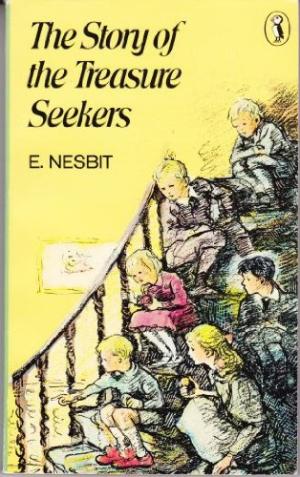
The Bastable series by E.Nesbit  eg The Story of the Treasure Seekers.  The children are so real – and the stories so clever.
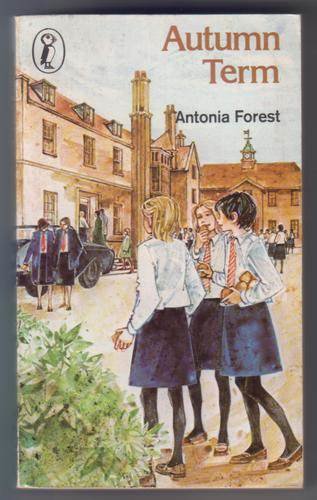
The Marlow series  by Antonia Forest   eg Autumn Term, Falconer’s Lure, The Attic Term,   Sisters at Boarding School, and In the Holidays. You’ve got to love an English boarding school story! Again, the characters are so real, and the situations they’re in very realistic. I also adored the way Antonia Forest started the series off just after WW2, and it finishes in what appears to be Swinging London times – but the characters have only aged a few years. So what? It’s fiction, isn’t it!
One more … The Little White Horse  by Elizabeth Goudge. I loved this as a child, and I was shattered to re-read it recently, and find that it now kind of made me want to vomit. Oh well …

Five Favourites 18: Belinda Murrell

Today Belinda Murrell has selected her five favourites.

As a child I was a voracious reader, borrowing piles of books from both the school library and our local council library. I was the sort of kid who would stay up half the night reading under my doona with a torch, or bumping into a light pole on my way home from school with my head in a book! So it is very hard to choose just five childhood favourites, which is why a few of these are favourite series! Here goes:

I absolutely loved The Famous Five series by Enid Blyton. I desperately wanted to be George Kirrin, who dressed up as a boy, and together with her beloved dog Timmy and her three cousins, Julian, Dick and Anne, had the most amazing adventures. Like all good children’s books, the parents were always absent, leaving the kids to get on with apprehending criminals, solving mysteries and eating fabulous feasts. The books were laugh out loud funny and full of politically incorrect quirky characters. George even had her own island!


As a child, the book that most fired my imagination was The Lion, The Witch and The Wardrobe by C.S. Lewis. I loved its enticing mixture of adventure, action and fantasy. My sister and I would dress up in silver chain mail, with swords and bows and arrows, and pretend to be in Narnia. I was enraptured by the idea that it might be possible to pass through a secret door into a magical world, full of talking animals and adventure.


Seven Little Australians by Ethel Turner is a lively, colourful story about the mischievous Woolcott children growing up in 1880s Sydney. I loved its historical setting as an insight into nineteenth century Australian life.  The children had a stern father, an army captain who tried in vain to maintain order. Their stepmother was very young and lovely, with her own baby ‘The General’, so struggled to keep her step-children in line. I loved the naughty pranks and mischievous antics of the Woolcott children, especially tomboy Judy, who together with her brother Pip, was always leading the others into trouble.

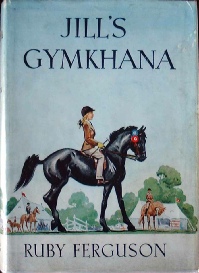
As a child I had my own pony, so I was horse obsessed! Like many girls I loved pony books, especially the Jill series by Ruby Ferguson. The Jill series of nine books, take the 12 year old Jill Crewe from a complete novice who has just moved to a small English village, to owning her first pony, then learning to ride and becoming a proficient rider, competing at gymkhanas. I loved the character Jill because she was lively, active, independent and funny, working hard and earning her own money to achieve her dreams.

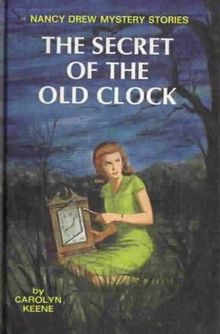
The Nancy Drew series by Carolyn Keene, was about a feisty amateur teenage detective with red-hair called Nancy Drew. Nancy was an inspiring role model as she was strong-minded, independent, intelligent, confident, outspoken, poised and beautiful. Sixteen year old Nancy was an amazing talented heroine – a fabulous horse-rider, expert driver, swimmer, sailor, gourmet cook, rower and sportswoman, with a fabulous sense of style. Together with her best friends Bess and tomboy George, she solved a series of baffling mysteries, helped those in need and outwitted dangerous criminals.

It was these beloved books which inspired me to start writing my own stories when I was a child. When I look back I realise that my favourite books all had a common theme. They all had girl heroes, often tomboys, who were bold and brave, feisty and adventurous, unconventional and independent, and very inspiring to me as a young girl. Perhaps that is why I write books now which focus on girls who are bold, brave, strong-minded, feisty, hard-working, clever and adventurous.

Five Favourites 17: Ursula Dubosarsky

Today, Ursula Dubosarsky is sharing her five favourites.

What Do You Do, Dear? (1963, USA), written by Seslye Joslin, illustrated by Maurice Sendak

Very absurd, very funny series of situations about good manners. What do you do when a lady polar bear walks into your igloo in a white fur coat? that kind of dilemma.  I loved the satirical gaiety of it, I loved the illustrations (these were really my only knowledge of Maurice Sendak until I was an adult, I didn’t read his picture books for some reason) and I loved the form – the set-up of the crazy situation, the repeated question, “What do you do dear?” and then the equally absurd solution.

Gone is Gone  (1935) USA  written and illustrated by Wanda Gag

I was given this before I could read by a friend of my mother’s. I loved the shape of it (small hardback), I loved that it was mine. I loved the storytelling style (a retelling of a traditional tale), the strange words, the madcap humour and I loved the black and white pictures with all the crazy details – the baby, the little dog, the cow on the roof eating the grass. I remember being fascinated by the details of rural life – churning the butter, cutting the crops, gathering the vegetables and so on. Beautiful deep illustrations.

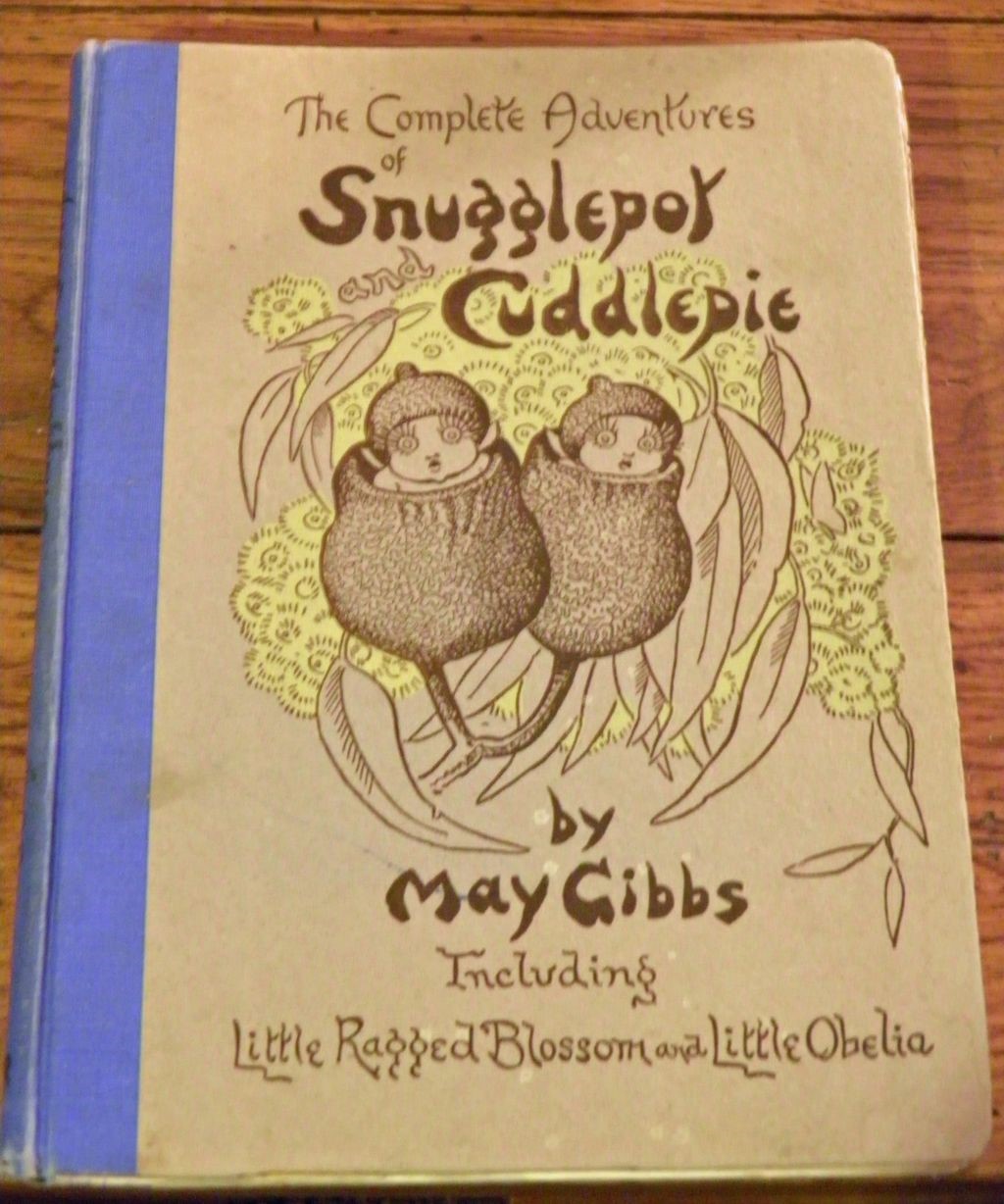
The Complete Adventures of Snugglepot and Cuddlepie, including Little Ragged Blossom and Little Obelia (1940) Australia. Written and illustrated by May Gibbs

I bought this at a book stall at a fete at Gladesville Hospital – at least my dad bought it for me – when I was about eight. I distinctly remember loving the language of it, especially the individual sentences. I also loved the picaresque nature of the storytelling, with simply one strange thing following another and then suddenly ending. And I devoured the illustrations where the modern world is recreated in the world of the bush creatures – the cinema, the (sea) horse races, the restaurants, the art school and so on – I was fascinated by the ingenuity and satirical absurdity of it.

Biquette the White Goat (1953) USA written and illustrated by Francoise

I was given this for my 6th birthday and I still know it off by heart, so clearly I read it again and again and again and again and again. It’s the story of a sick little girl who must have goat’s milk to get better.  I think it’s a masterpiece! – of beautiful clear gripping storytelling and equally beautiful clear gripping painted illustrations. As an adult I have sought out as many of Francoise’s books as I’ve been able to.

I Had Trouble in Getting to Solla Sollew (1965) USA.  Written and illustrated by Dr Seuss.

This was also a birthday present, when I turned eight. Again, I still know this book off by heart and often recite it to myself when I’m trying to fall asleep or feeling at a loose end.  It did and does bring me the most enormous pleasure – the sounds of the words, the ingenious and silly rhymes, the invented words, the crazy sudden characters who disappear just as suddenly, the ridiculousness of the whole premise, the haplessness and openness of the main character, the vanity of human wishes (well not quite human) – it’s got it all! Wonderful, rich literature.

Five Favourites 15: Elizabeth Hale

Today Elizabeth Hale is introducing us to her five favourites.


The Swish of the Curtain, by Pamela Brown.

About a group of kids who find an abandoned hall, turn it into a theatre and put on plays.  As a child, I loved reading about their cameraderie and creativity.  Written in post-War Britain, and gives a wonderful snapshot of the period.

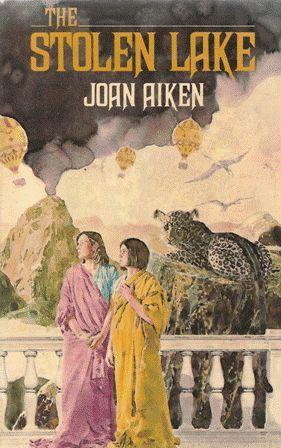
The Stolen Lake, by Joan Aiken.

I loved everything I read by Joan Aiken, but this one stayed in the mind.  Dido Twite finds herself on a ship heading to Hy Brasil, a colony on the coast of a South American country.  Ruled over by an ageless queen who dines on a porridge made of the bones of children.  Gruesome and fascinating.  Dido helps break the spell.  The book’s spell was harder to break!

The Old Joke Book, by Janet and Allen Ahlberg.

My family loved anything by the Ahlbergs.  This was our favourite.  Like a Victorian almanac of jokes, full of fairy tales, monsters, talking animals, and above all jokes.  ‘Why wasn’t Cinderella chosen for the football team? Because she was afraid of the ball.’  ​Monsters who say ‘fangtastic’ when they’re pleased.  ‘Waiter, waiter, this egg is bad.  Don’t blame me, sir, I only laid the table.’

Under the Mountain, by Maurice Gee.

Redheaded twins with telepathic abilities save Auckland from destruction by totalitarian mud-dwelling worms called the Wilberforces.  I still see it in my mind’s eye when I visit Auckland.

A Little Princess, by Frances Hodgson Burnett.

This could be any of a number of iconic nineteenth-century books (Anne of Green Gables, Heidi, etc etc).  I loved this book.  I loved Sara, the regal storyteller, her dignity under pressure, her kindness to others.  The scene that still makes me cry: when Sara finds a coin enough to buy some buns, and she gives them away to a girl even hungrier than she is.

Five Favourites 14: Corinne Fenton


Corinne Fenton writes about her five favourites today.


Bambi by Felix Salten – There is something about the gentleness of this story and of course the tale of a baby fawn, which make this one of my favourites. Perhaps this is where my passion for animal stories began?

Bill the Budgie (we moved house last year and I can’t place my hands on this at the moment) but for some reason I imagined noisy Bill lived in a stately house in Germany. The other characters are a group of naughty boys and a man delivering coal to the door but Bill saves the day and of course is the hero.

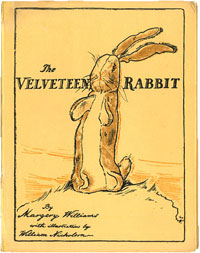
The Velveteen Rabbit by Margery Williams – Always truly beautiful. The idea of a toy becoming ‘real’ was so totally believable to me. I always check every new version that’s produced.

Heidi by Johanna Spyri – Imagine living in a cottage high up in the mountains where you could run free with your pet goats? My own children spent their childhoods living on a hill in Warrandyte and they each had a pet goat. I’ve never thought about this until now. The warmth of grandpa’s home and Heidi’s bedroom in the loft always fascinated me.

Linda and Her Little Sister – I hold a battered copy of this treasured Little Golden Book with sticky tape holding the cover in place. It’s by Esther Burns Wilkin and my darling mum gave it to me in preparation for the arrival of my little sister. I remember the illustrations so well. All these books hold a special place in my memories.

Anna Daniels on her book Girl in Between

Today I’m very pleased to be hosting debut novelist and experienced comedic screenwriter and presenter Anna Daniels in a guest post as part of her blog tour for Girl in Between, her first novel, which she describes as ‘a rom-com set in Rocky’ . Read on to know more!

Girl in Between…the rom-com set in Rocky!

by Anna Daniels

It’s wonderful to be with you, Sophie, and your Feathers of the Firebird followers!

My debut novel, Girl in Between, is a rom-com largely set in my hometown, Rockhampton…the Beef Capital of Australia!

For anyone who hasn’t been to Rocky, it’s a tropical city of about 70,000 people, situated on the Tropic of Capricorn in Central Queensland. There’s a wonderful larrikin element to Rocky, heightened by the bull statues astride the roundabouts, and the sense that everyone knows everyone

Jerry Seinfeld has a theory there are some cities in the world, like New York, which are just funny. For me, Rocky fits that bill…it’s just funny!

In deciding to set Girl in Between in Rocky, I wanted to capture the town, with all its quirks and landmarks, so that it was easily identifiable, but I also wanted to make the setting accessible to anyone who’s spent time in any regional Australian city.

I had great fun conjuring up characters and names for the places they work. Ruth, for example, runs a one-woman car wash on the corner of Fitzroy and Albert Streets, and hosts an annual Suds ‘n Thuds disco; Colleen, Ruth’s best friend, works at the popular Rocky café, ‘Bits n Pizzas’, and the central characters, Lucy and Rosie, often have wild nights out at their local, The Whipcrack Hotel.

I remember Gina Riley and Jane Turner, the creators of Kath n Kim, once saying their series was an affectionate look at suburbia, and I like to think that’s how my portrayal of regional Australia in Girl in Between will be viewed….as one of great affection!

Best wishes!

Anna x

Girl in Between by Anna Daniels is published by Allen & Unwin, RRP $29.99, available now.

More about Girl in Between:

Life can be tricky when you’re a girl in between relationships, careers and cities… and sometimes you have to face some uncomfortable truths. The sparkling debut from comic TV and radio presenter, Anna Daniels.

Lucy Crighton has just moved in with some gregarious housemates called Brian and Denise… who are her parents. She’s also the proud mother of Glenda, her beloved 10-year-old… kelpie. And she has absolutely no interest in the dashing son of her parents’ new next-door neighbour… well, maybe just a little.

When you’re the girl in between relationships, careers and cities, you sometimes have to face some uncomfortable truths… like your Mum’s obsession with Cher, your father’s unsolicited advice, and the fact there’s probably more cash on the floor of your parents’ car than in your own bank account.

Thank goodness Lucy’s crazy but wonderful best friend, Rosie, is around to cushion reality, with wild nights at the local Whipcrack hotel, escapades in Japanese mud baths, and double dating under the Christmas lights in London.

But will Lucy work out what she really wants to do in life and who she wants to share it with?

Anna Daniels is a natural-born comedian. She originally set out to write a screenplay that was part Muriel’s Wedding, part The Castle. Instead, she wrote Girl In Between, which was shortlisted for the 2016 Vogel’s Award. She says ‘I’ve always loved comedy which not only makes you laugh but also pulls at your heartstrings. I think a lot of people may be able to relate to Lucy’s story!’

Girl in Between is a warm, upbeat and often hilarious story about life at the crossroads. Featuring an endearing and irrepressible cast of characters, it will have you chuckling from start to finish.

More about Anna Daniels:

Anna Daniels has enjoyed great success as a comedic storyteller since kicking off her career by winning the ABC’s ‘Comedy Segment of the Year Award’ for an interview with Russell Crowe. She then went on to co-create the ABC’s first online sketch comedy series ‘Tough at the Top’ with Melbourne comedian, Anne Edmonds. For several years Anna wrote and presented funny upbeat stories for The Project, winning over viewers with her warm, silly, endearing style.

Having grown up in Rockhampton, she particularly championed the stories and characters of rural and regional Australia with affection and humour. As well as The Project, Anna has written, presented and/or produced radio, TV and online content for Queensland Weekender, Red Symons’ Breakfast Show, and the BBC One series, ‘John Bishop’s Australia’. Anna continues to report for The Project and often presents on ABC Radio Brisbane.

  • Twitter: @annadtweets
  • Insta: @annamdaniels
  • Website:annamdaniels.com


//cdn.thinglink.me/jse/embed.js

Five Favourites 13: Lizzie Horne

Today Lizzie Horne selects her five favourites.


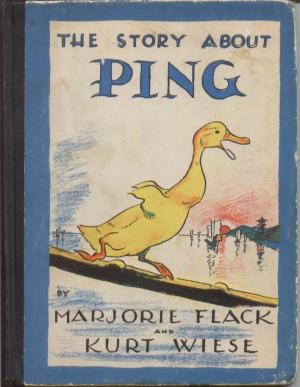
The story about Ping

I can still see the yellow waters of the Yangtze River and hear that duck master calling, la la la lay and feel the thwack of the cane coming down on the last duck home each day – no wonder Ping hid to avoid it!
Snugglepot and Cuddlepie
 
Transforming the Australian bush into a world of darling gumnut babies and wicked banksia men in rollicking adventures.
All the Famous Five and Secret Seven books by Enid Blyton
 
Definitely a girls-can-do-anything-boys-can-do series that had me reading at every opportunity.
Seven little Australians
Of course I loved the feisty Judy and cried and cried when the tree fell.
Pearl Pinkie and Sea Greenie 
The beautiful illustrations had me hooked!

Five Favourites 11: Linda Newbery

Today Linda Newbery shares her five favourites.

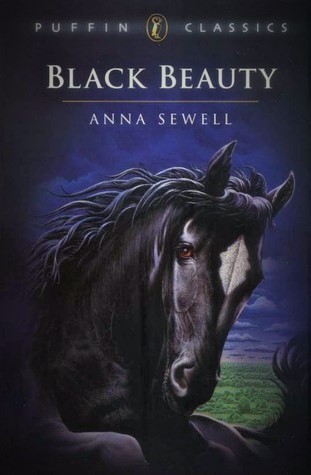
BLACK BEAUTY by Anna Sewell (an abridged, illustrated version when I was seven or so; later the full text). I found it deeply tragic, especially the death of poor Ginger.
BAMBI by Felix Saltern – ditto! Rather different from the Disney version. There’s a bit of an animal theme emerging here. I remember being shocked by the violence of the animal world but even more dismayed by the treachery of humans. I’m sure that my readings of both BLACK BEAUTY and BAMBI at an early age led directly to my vegetarianism and animal rights campaigning.
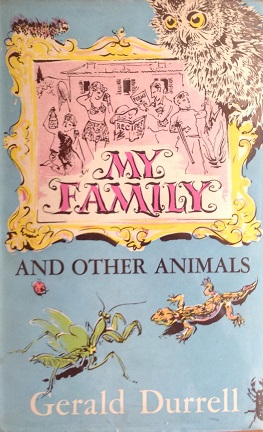
MY FAMILY AND OTHER ANIMALS by Gerald Durrell. I didn’t read this till I was twelve, so I can just about include it as a childhood favourite. Loved it for its description of place and animals, for the larger-than-life family and acquaintances and for the hilarity of many scenes. I’ve read it several times and it’s a book I can always return to with great pleasure.
THE CHRONICLES OF NARNIA by C S Lewis, especially THE SILVER CHAIR, but not THE LAST BATTLE (even as a child I disliked the unpleasant racism, cynicism and cruelty of that one). But THE SILVER CHAIR included the wonderfully doleful but staunch Puddleglum, the Marsh Wiggle, and beautiful scenes in the underground caverns.
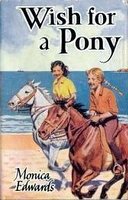
WISH FOR A PONY by Monica Edwards – have to include this one. It’s a fairly traditional pony story, but distinguished by the warmth of its characterisation and the realism of its setting, and it led on to many more Romney Marsh stories in which ponies took a background role. I loved Monica Edwards’ PUNCHBOWL FARM series, too. There were many authors I liked, but Monica Edwards was the one who made me decide to be a writer, at the age of eight.