Speaking in Tongues: a guest post by Sophie Constable

Sophie Constable greyThe pleasure and challenge of not being restricted to just one language is a subject dear to my heart (and close to my experience!) so today I am delighted to publish on my blog a wonderful article by writer Sophie Constable about the situation for multilingualism in Australia.

Sophie Constable has worked as an Antarctic researcher and veterinarian, been an expat trophy wife in the Middle East and did her PhD on health education with remote Australian Indigenous communities.  Throughout, writing has remained her passion.

Speaking in tongues

by Sophie Constable

Exploring Australia’s language skills crisis

Rejoice!  Jules Verne’s Mikhail Strogoff has just been published in English for the first time in over 100 years.  I loved this book and I love that new generations of English speakers are getting the chance to follow the fabulously intrepid Mikhail through the Wild West of Russia’s Far East.

But the fact remains that translation of foreign language books – be they new masterpieces or old classics – is a tiny proportion of the English literary scene, as Strogoff’s translator Stephanie Smee has discussed.  And globally, native English speakers are rarely able to enjoy literary works in the original language.  Nowhere is this more true than Australia, where multilingualism, already the minority, is in steady decline.

If language, at its heart, is about humanity, as author Elizabeth Little writes, then Australians are losing their ability to understand the world.

Being bilingual, I sometimes forget multilingualism, the norm for much of the globe, isn’t the experience of most Australians.  Though we’re a multicultural nation, most people consider English to be enough for our needs and even within bilingual families, bilingualism is declining across the generations.

Are Australians just not interested in languages?  Is it too hard in a geographically isolated, monolingual society?  What’s the point in learning languages anyway, apart from an exponential increase in the to-read pile?

Imogen Weafer, a retail assistant in Darwin’s Casuarina Square shopping centre who uses Japanese in her work, certainly wasn’t interested in languages when she younger, despite her grandmother and mother being bilingual in Latvian and English.

‘My grandma taught my mother, but I wasn’t interested.  I regret that now,’ she says.

Miss Weafer considered that she grew up in a society that didn’t value foreign languages.

‘I lived among generation after generation of farmers who all speak English and nothing else, and think Sydney is overseas,’ she said.

She didn’t consider learning another language until going to Japan after year 11.  She chose to stay in Japan rather than study Japanese at school:  ‘In school, my Japanese teacher was a French teacher,’ she said, unimpressed.  It’s a common problem: more than 100 schools discontinued their languages program between 2003 and 2006, specifically due to a lack of qualified staff.

But English isn’t Australia’s only local language.  Growing up on the edge of the Barossa Valley, Ingkerreke Commercial project manager Daryl Thompson didn’t consider German a foreign language.  He grew up with it, going to a high school where many students had German heritage.  Though all students had to learn to German, by the end of high school he’d learnt more from his classmates than from the teacher.

‘I could swear at people’ he said, ‘and they can understand.’

Darryl Thompson

Darryl Thompson

Despite only speaking English at home and never having taken a language course, Mr. Thompson has since learnt parts of nine other languages.  He learned these on building sites around Australia by talking with co-workers.  ‘The Australian construction industry is a multinational industry,’ he says.  ‘Italians and Greeks do concrete, Vietnamese do the tiling, Croats and Russians do the gyprocking.  Knowing a bit of their languages shows that you are interested in them as a person; they are more amenable to do what you want them to do.  People that don’t make an effort won’t get as far.’

Sure, many find the idea of learning a language confronting.  CSC Adult Night Classes Japanese teacher Mikiko Kawano explains, ‘just like losing weight, you have to do it for a long time to see a result.’ This largely explains why those who beginning learning at a young age become more proficient.  However the idea that it’s too hard to learn other languages doesn’t hold with Mr. Thompson.  ‘That’s just excuses,’ he says.  ‘In today’s era of technology, of internet, easily purchasable online media, audio and video, there’s no reason why people can’t learn.’  CDU Indonesian lecturer Nathan Franklin agrees, finding that the opportunities to learn languages are all around us.  ‘They are walking past us in the streets,’ Dr. Franklin says, ‘they are working in the shops.’

The latest census counted almost 400 languages spoken in Australia, including over a hundred Aboriginal and Torres Strait Islander languages.  Most of Australia’s language skills come from recent immigrants: 87% of Australian secondary school students will have dropped out of language courses after two years or less.  For those who are studying languages, Australian students spend less time learning than any other OECD country.

I don’t come from a bilingual family.  Nor did I learn my second language overseas.  The reason I speak French is that my school went against the trend.  Telopea Park Public School in the A.C.T. has an agreement with the French government to import French national teachers to teach in a bilingual system from primary school onwards.  And it is one of the only schools in Australia producing entire classes of fluently bilingual students every year.

O.K., so maintaining the bi-national relationship was difficult at times.  I’ll never forget the expression on my French teacher’s face when a quarter of the secondary student body protested the testing of nuclear weapons at Mururoa atoll by refusing to stand for the French national anthem during assembly.  We experienced first-hand the impact of international relations at the personal level.  But isn’t that, after all, what language learning is all about?

Against the trend of declining bilingualism elsewhere, my new home in the Northern Territory has the highest proportion of multilinguists in Australia, and it’s rising.  I’ve come to the right place, then!

Eva McRae Williams

Eva McRae Williams

Eva McRae-Williams, Senior Researcher with Batchelor Institute of Indigenous Tertiary Education, finds exposure motivates others.  She says, ‘In Darwin you hear five different languages in the supermarket.  Warlpiri, French, Thai, Yolngu, Sudanese.’   These languages are economically important as tourism and remote community work are some of the biggest employers in the Territory.

Motivation is notoriously lacking in native English-speakers.  In French there is a saying: a man who speaks three languages is trilingual, a man who speaks two languages is bilingual, a man who speaks only one language is English.  Though English is the language which unites us, it’s also isolating us, Dr Franklin finds, because it reduces the compulsion to learn other languages.  ‘The Western mentality is that everyone needs to learn English, as English is the lingua franca of the world,’ Dr Franklin states.  Whereas ‘[English-speakers] don’t need to learn another language to get a job’, here, as well as overseas, ‘students and business-owners know they need to speak English and they learn out of necessity’.

However, in a global market place, sharing a language can markedly increase bilateral trade and reduces tariffs, according to research.  While historically this has been a boon for trade with the UK and the US, seven of the Australia’s top ten two-way trading partners are now countries where English is a second language, including China and Japan, as well as the vast majority of our fastest growing markets, including Indonesia and India.  That can put English monolinguals at a disadvantage at the negotiating table.  The rise of Asia may threaten English’s dominant economic position – and that’s a problem for many Australian businesses.

For Dr. Chie Adachi, speaking as Linguistics Lecturer at the Australian Centre for Indigenous Knowledges and Education, the value of language learning is broader than its purely economic context.   ‘If you aren’t learning a language because you don’t see a purpose in it, you are missing the point,’ she says.  ‘It’s about changing the way you think.’

New research by a team at the Stanford University is finding more evidence supporting the idea that languages affect how we think.  Lera Boroditsky’s team has found that which language you use affects concepts as varied as colour differentiation, spatial orientation, direction of time and causality.  Dr. Boroditsky’s findings make sense for Jack Wang, a Chinese-born administrative assistant.  ‘Being able to speak another language gives you a different perspective on the world around you,’ he said.   Growing up in censorship-rich China, that was ‘mind-blowing’.   Dr. Adachi agrees, ‘it allows you to think more broadly and in different ways, which can be a rare experience.’

Ms. McRae-Williams found being a minority English speaker in spaces shaped by Aboriginal languages a transformative experience, saying ‘it opened up another world for me.’ Like 80% of


Australians, Ms. McRae-Williams spoke only English at home before going to Ngukurr in the Northern Territory, where Ngukurr Kriol  is the local language.  ‘Kriol seems to have a smaller vocabulary of words but there are important subtleties when you use those words and who to,’ she says.  ‘Even though there are many English sounding words, they can be used differently, with different

Pitjantjatjara country

Pitjantjatjara country

connotations and meanings.  English speakers might think they are understanding what the Kriol speaker is saying but they are not understanding them, really.’  For example, she found  ‘that unlike English language it is rare for people speaking in Kriol to use the word “I” or “myself”, rather “mela” is used which means “we” or “us”. Her experience of how cultural perspectives and knowledge are embedded in language gave her a new insight into centuries of intercultural misunderstanding.

The misunderstandings over land are a prime example.  In Pitjanjatjara, you don’t say ‘what is that place?’ but rather ‘who is that place?’  Land is related to people like a grandfather or aunty is: land is a “person” in the Pitjanjatara world view.  The idea of “owning” your grandfather becomes nonsensical; the idea of abandoning it, impossible.

Given the historic and ongoing lack of understanding between Indigenous and non-Indigenous Australians, and the national and international consequences of wider intercultural misunderstanding, the question ought not be why learn a language, but why not?
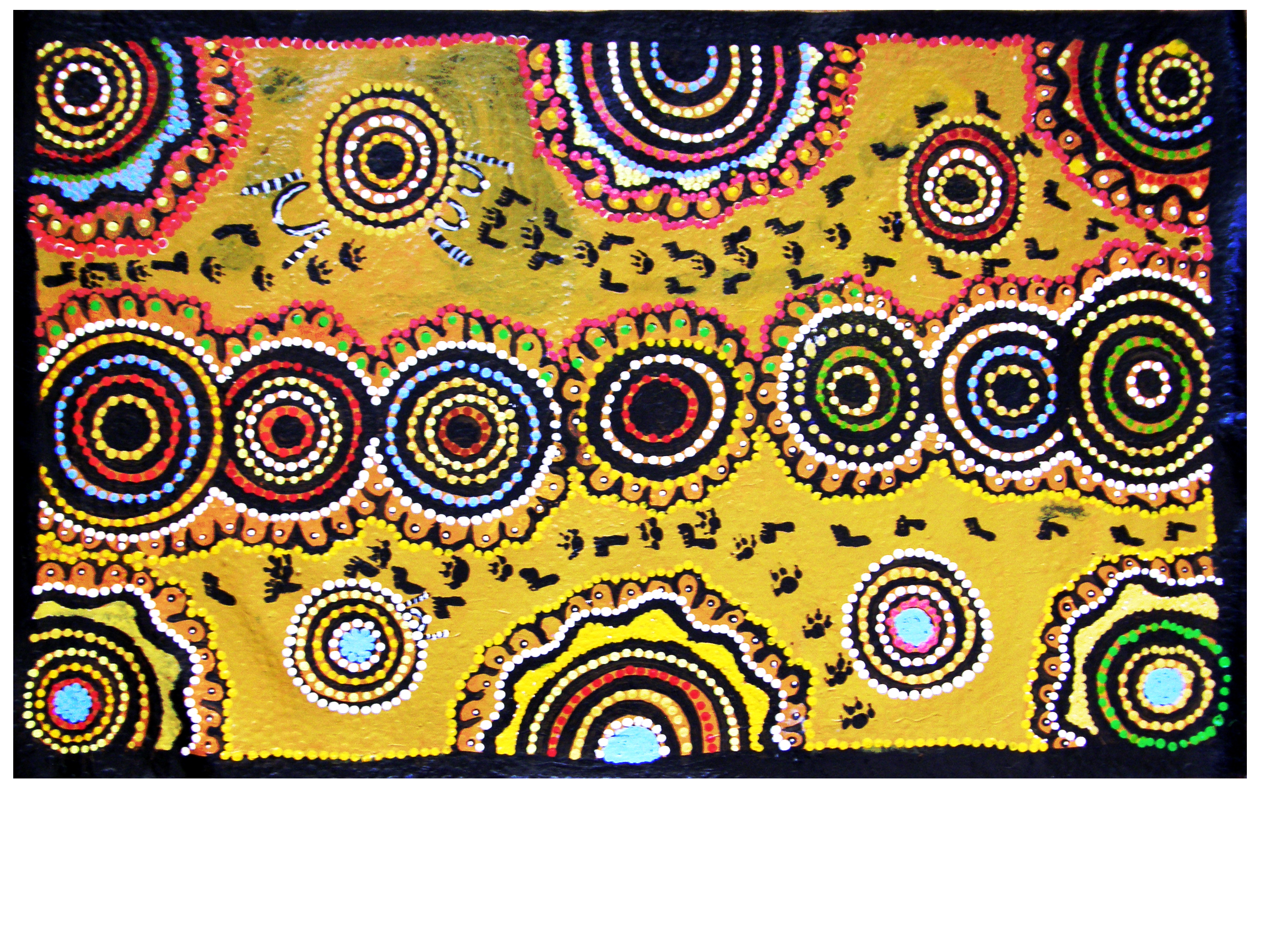
OLYMPUS DIGITAL CAMERA

Hunting Papa in the Hills, by Alan Wilson, Pitjantjatjara elder

Authors’ pick special edition reprise: Susanne Gervay

boy in striped pyjamasToday I’m reprising the authors’ pick series with a special post from Susanne Gervay, looking back at her favourite book of 2015.


A book that has left its mark on me is a small paperback with a simple blue and white striped cover. ‘The Boy in the Striped Pyjamas’ by John Boyne changed me and it will change you.

It’s  a simple fable like ‘Animal Farm’ that holds deep truths of humanity.  ‘Animal Farm’ exposed Russian communism. ‘The Boy in the Striped Pyjamas’ exposes the Holocaust. Through the friendship of two boys, Bruno and the boy in the striped pyjamas we see the beauty of friendship.  Within the landscape of their relationship, there is the background of the ‘Jewish solution’. The gripping climax to the story is poignant and compelling reading. This book is highly recommended for all ages, from children to adults. When you shut the book, it will remain with you, making you question prejudice, racism and war.

Multi-award-winning author Susanne Gervay’s books for children include the very popular I am Jack series, which has also been adapted into a play. She is co-president of the Society of Women Writers NSW, Regional Advisor for the Society of Children’s Book Writers and Illustrators, a Room to Read ambassador, and a former Chair of the NSW Writers’ Centre Board.

susanne gervay


Authors’ pick special edition: Angela Slatter

wolfwinterOkay, so I know I said that Matthew Thompson’s Authors’ Pick was the final in the series, but I’ve just received this fabulous review by Angela Slatter of her favourite book of 2015, and so here it is, in special edition!


“It’s the kind of winter that will remind us we are mortal,” he said. “Mortal and alone.”

One of the books that stuck with me from my 2015 reading pile was Wolf Winter by Cecilia Ekbäck (Hodder and Stoughton). http://www.ceciliaekback.com/

 Set in 1717 in Swedish Lapland Wolf Winter seamlessly blends history, mystery, and speculative elements. Recent settler Maija and her daughters Frederika and Dorotea are left alone on Blackåsen Mountain when Maija’s husband leaves to find work. The women must face a dreadful winter, roaming wolves, and, perhaps most terrifyingly, the other folk who live on Blackåsen.

 Life as outsiders is difficult enough, but when Frederika discovers one of the other settlers, Eriksson, murdered things become more complicated. Not only is Maija stubborn, refusing to let the mystery of Eriksson’s death go unsolved, but Frederika begins to manifest eldritch powers; worse still, Eriksson has returned as a ‘heavy’ ghost and only she can see him. He was not a nice man in life − death hasn’t improved him − and he insists that Frederika solve his murder. It’s the only way she can be free of him, but there’s more than one secret on the mountain and their keepers will do anything to ensure they remain hidden.

 There is a wonderful clarity to Ekbäck’s prose; it is stripped back to its essentials but still lovely. It never feels sparse or lacking or cold, the landscape and its characters come through strongly and always seem real and relatable. She covers the historical detail with a light hand so you never feel as if the writer’s going, “Look at all the research I did! Look at it!”, but rather it’s woven beautifully into the fabric of the tale. Highly recommended.

Angela Slatter is: the author of six short story collections and a debut novel that’s coming out in 2016; a PhD survivor; an occasional award-winner; a lover of coffee; http://www.angelaslatter.com/; @AngelaSlatter.

angela slatter


Authors’ pick 24: Matthew Thompson

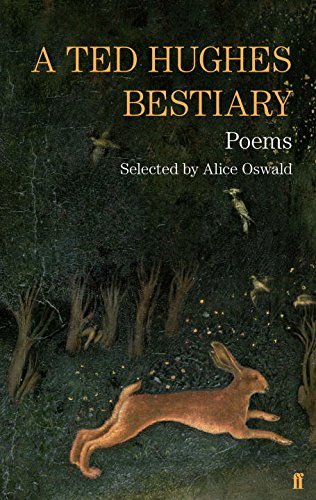
Ted Hughes Bestiary coverToday’s authors’ pick–and the final one in this series–has been chosen by Matthew Thompson.

A Ted Hughes Bestiary, poems selected by Alice Oswald.

The revelation of Ted Hughes and his exquisitely poised and powerful animal poetry was a long time coming. For decades a clear, open-hearted view appreciation of the crow poems and other work was not possible for me, due to the grip of Sylvia Plath’s fierce and tragic legend.

I did glance at Hughes’ poems now and then but my sight was displaced and distorted by the mythos of sadistic, maddening selfishness – even more so when I learned of how the woman that displaced Plath in Hughes’ affections, AssiaWevill, murdered their daughter and killed herself (and how quadruply weird to consider that Hughes and Plath’s son, Nicholas, eventually hanged himself in Alaska).

Age has taught me to let complexity be, even complexity of torment, instead of pruning it back to ready-understandability or by gripping isolated strands of it in order to haul oneself up to a fake height of mind.

So, a few months ago, decades after first reading Hughes, and while in Melbourne researching the life of a long-term recidivist prisoner for a book I’m writing, I slid from a bookstore shelf the slim hardback of A Ted Hughes Bestiary, Alice Oswald’s selection of Hughes’ animal poems.

Amidst the stark and ruthless crowscapes sat “The Jaguar”, a glimpse of a zoo-held beast seething with itself. I couldn’t help but think of my writing subject, a man who in his younger years could not be tamed, could not be contained, whose will was harder than the bars and walls around him.

…there’s no cage to him

His stride is wildernesses of freedom:

The world rolls under the long thrust of his heel.

Over the cage floor the horizons come.

But the prisoner’s jaguar days are gone.Sentenced again, this time to so long in isolation that even the judge said it would damage his mind, the man now sits spiritually detached from, but physically within spitting distance of, the predatory world of crime and jail. So attuned, he can sense when someone who, unlike battered old him, still hungers for prey: someone whosegrimacing face has not yet been smoothed. A blood-thirsty hunter in a moment that brings to mind the opening of Hughes’ “And Owl”:

Floats, a masked soul listening for death.

Death listening for a soul.

Yet it would be too limiting to keep relating these poems to men, to humans. Their centre is not anthropomorphic and in reading them, in handling them, DH Lawrence’s poem, “Fish”, comes to mind: specifically, its message that other beings inhabit their own universes, have not gods or not the same gods, are sometimes older and more purpose-made than we can comprehend. Lawrence’s narrator marvels at his witnessing of fish:

Loveless, and so lively!
Born before God was love,
Or life knew loving.
Beautifully beforehand with it all.

Joyce Carol Oates uses that line about a time “before God was love” to describe the severe and profound world of boxing, a world for its enthusiasts that remains beautifully before today’s widespread cringing avoidance of harm. The animals are not emotional about their pain or plight. They are clarity of instinct.

And over it all, unblinking in their exactitude, are not just Hughes’ famous crows but his hawk, who in “Hawk Roosting”, flies up to:

…revolve it all slowly –

I kill where I please because it is all mine.

Of course, there is so much more, including tales of animals lower on the food chain, but you’ll have to read them yourself. I have too much work to do.


Based in the small NSW town of Dungog, Matthew Thompson is the author of Running with the Blood God and My Colombian Death and a journalist whose recent work has focused on the violent intrigues of the Sulu Archipelago in the southern Philippines. For more information, see www.matthewthompsonwriting.com

Matthew Thompson

Authors’ pick 23: Sharon Rundle

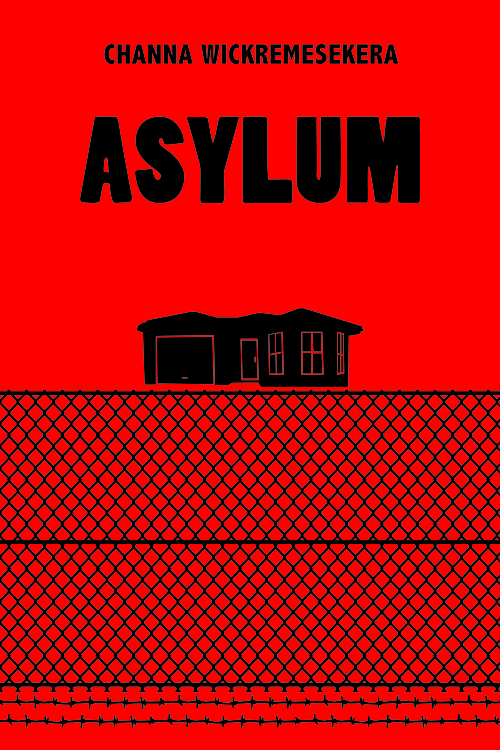
asylum palaverToday’s authors’ pick has been chosen by Sharon Rundle.

Asylum,  Channa Wickremesekera, Published by Palaver.

For the purpose of my research, I’ve been reading a lot of novels by South Asian-Australian authors with ties to Afghanistan, Bhutan, India, Nepal, Pakistan and Sri Lanka. I’ve read marvellous narratives from established and emerging writers. To choose one novel from this amazing array of fiction, is an enormous challenge. After long and difficult deliberation, I plumped for one that provided a new perspective, was surprisingly enjoyable, beautifully structured and written in a page-turning style.

Sometimes the best way to encourage discussion and provoke deeper thinking is through humour. Ideas that may seem simple on the surface havewider ripples and deeper currents than appear at first. So it is with Asylum by Channa Wickremesekera.

A young prison escapee decides to break into a home and take hostages,after the news that he is on the run with a gun is broadcast through media and police reports. The house he chooses is the home of Afghanis of Muslim faith. The mother wears a niqab, while her sometimes sullen, sometimes giggling young daughter, Aisha,wears a hijab. The mother understands English but prefers to speak in her Dari language.Through her family, she is the main negotiator with their captor. Khalid, the male teenage narrator with typical ‘attitude’, “I’ve seen bigger guns than that in Afghanistan with kids half his size” (p 23), is the perfect choice as the cynical observer. He is also a main player in the drama that unfolds as police surround the house. Negotiators are brought in to help, with mixed and sometimes hilarious results.

What could be a disaster turns into a tragi-comedy as the actions of the police and young man on the run with a gun become farcical when faced with this unexpected turn of events.

The Afghani family face another even deeper dilemma. Should they offer asylum to this person seeking refuge, as they believe they should? Should they lie to the police for the greater good? Which would give lesser offence to God? What to do in such an impossible situation? He is only a scared, tired, hungry, delinquent boy, after all. Khalid has heard it all before, “How you should look after people who take refuge with you, even if they are your worst enemies. Even if they had killed your own mother and father. I always thought that sort of thing happened only a long time ago and if it happened now it was only in the movies. Never thought we will have to practise it.”(p 40).

While the family debate the best plan, mum keeps cooking and feeding them all, including their captor Rusty.

This novel has impact and lingers in the mind long after it’s read. To my mind, ‘Asylum” should be on the HSC reading list. Suitable for both adults and young adults, the deceptively simple style and endearing narrator in “Asylum” allow for serious ideas to be discussed without polarising the audience. Many may be surprised by such a fresh perspective and by what they learn through humour.


Channa Wickremesekera is a Sri Lankan-Australian who has published three other novels, “Tracks” (published Sri Lanka, 2015), “Walls (Wasala, Sri Lanka, 2001)” and a novella “In the Same Boat” (Bay Owl Press, 2010).

A fun novel written in a jaunty teen voice—a novel that tries to tip our assumptions on their heads and succeeds.” —Anna Funder, author of Stasiland and All That I Am

“This is a timely novel, written with daring and imagination. It deals with themes that we urgently need to engage with and reflect upon, challenges that cry out for a long-overdue national conversation.” —Arnold Zable, author of Cafe ScheherazadeThe Fig Tree, and Violin Lessons

Asylum Wickremesekera, Channa. Published by Palaver.

ISBN 10: 0994343108 ISBN 13: 9780994343109


Sharon Rundle has researched novels by South-Asian Australian authors published in Australia for a Doctorate of Creative Arts thesis. She is co-editor of Indo-Australian anthologies of stories published by Picador Pan Macmillan (2009 & 2010 India, Australia & UK), Rupa Publishing in India (2014) and Brass Monkey Books in Australia (2012 & 2014).

20151212_114715

Authors’ pick 21: Yangsze Choo

IMG_0189Today’s Authors’ Pick has been chosen by Yangsze Choo. 

I must confess that I haven’t read much fiction recently. This is because I’m struggling to finish my second novel, a giant doorstop which I keep telling myself is almost done, but continues to expand in alarming ways as I try to squeeze in just one more plot twist. The situation is worsened by my frequent attempts to seek “inspiration” in dark chocolate… I need to go on a diet in more ways than one, which is why my book pick for 2015 is a cookbook.

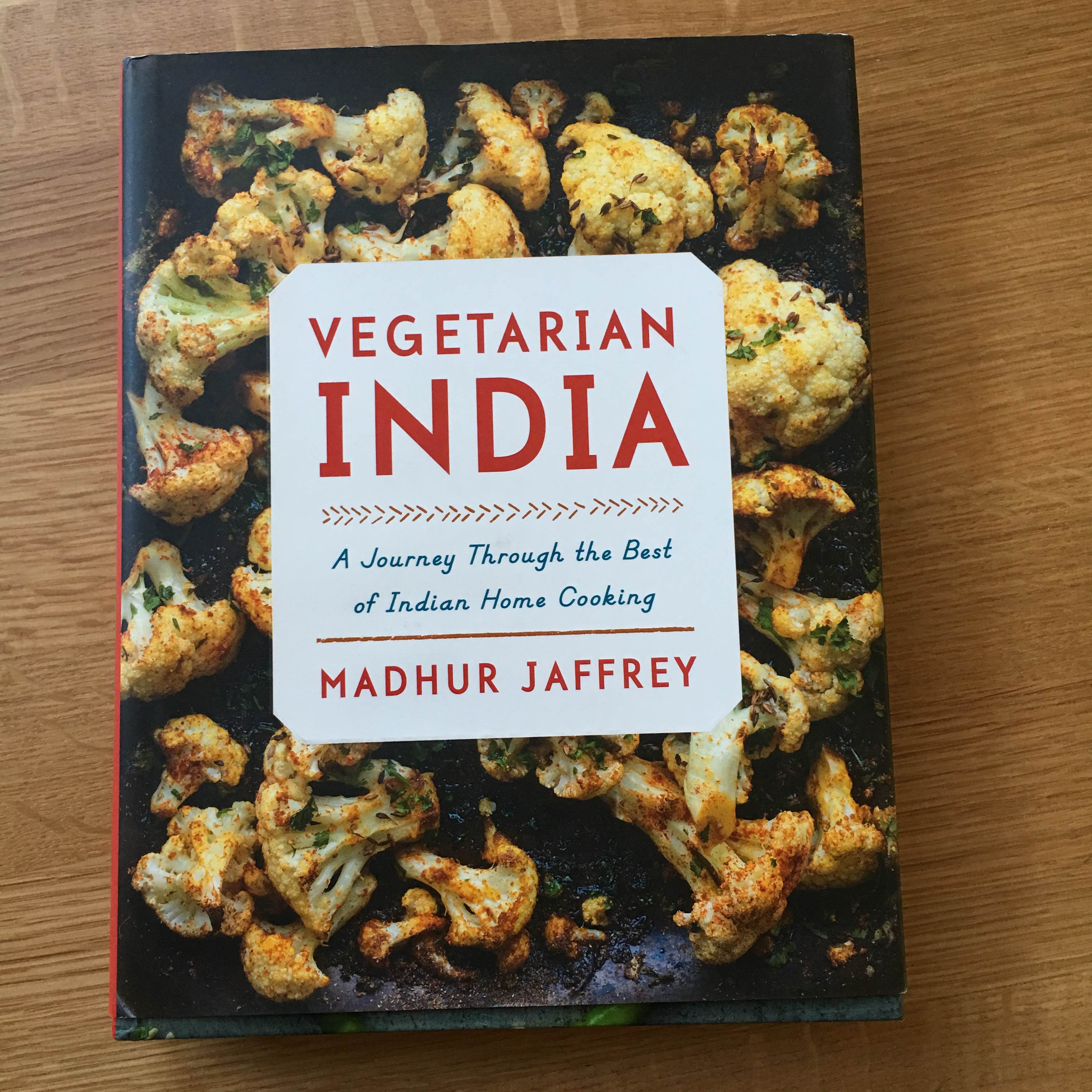
Madhur Jaffrey is my favourite Indian cookbook writer – over the years, I’ve cooked my way through many of her books, always with good and very authentic results – so when I realized that she had a cookbook called “Vegetarian India”, I rushed off to get it. Our family has been trying to move towards a more vegetarian diet (one of the reasons I’ve so enjoyed Sophie’s food blog featuring her lovely garden) and this book is stuffed with delicious ideas. In fact, when I first got it, I made the roasted cauliflower with Punjabi seasonings that’s featured on the cover three times in one week. Tossing cauliflower with lemon juice, cumin, coriander, ginger, turmeric and olive oil results in a sizzling pan of crusty goodness that’s quickly devoured in our house, even by small children who claim they will never, ever eat cauliflower.

Like Madhur Jaffrey’s other cookbooks, each recipe comes with a little backstory or some helpful tips, and there’s enough variety from rice dishes to hearty vegetarian mains and pulses, to cook an entire dinner banquet, if you’re so inclined. Or you can just do what I’ve been doing and add an extra veggie dish or two on weeknights.

So, if your New Year’s resolution is to eat less meat and more healthily, I highly recommend this book! Happy reading and eating 🙂

Yangsze Choo’s first novel, The Ghost Bride, was published in 2013. She loves to eat and read, and often does both at the same time. She lives in California with her husband and children, and a potential rabbit.

yangsze choo colour


Authors’ pick 19: Kelly Gardiner

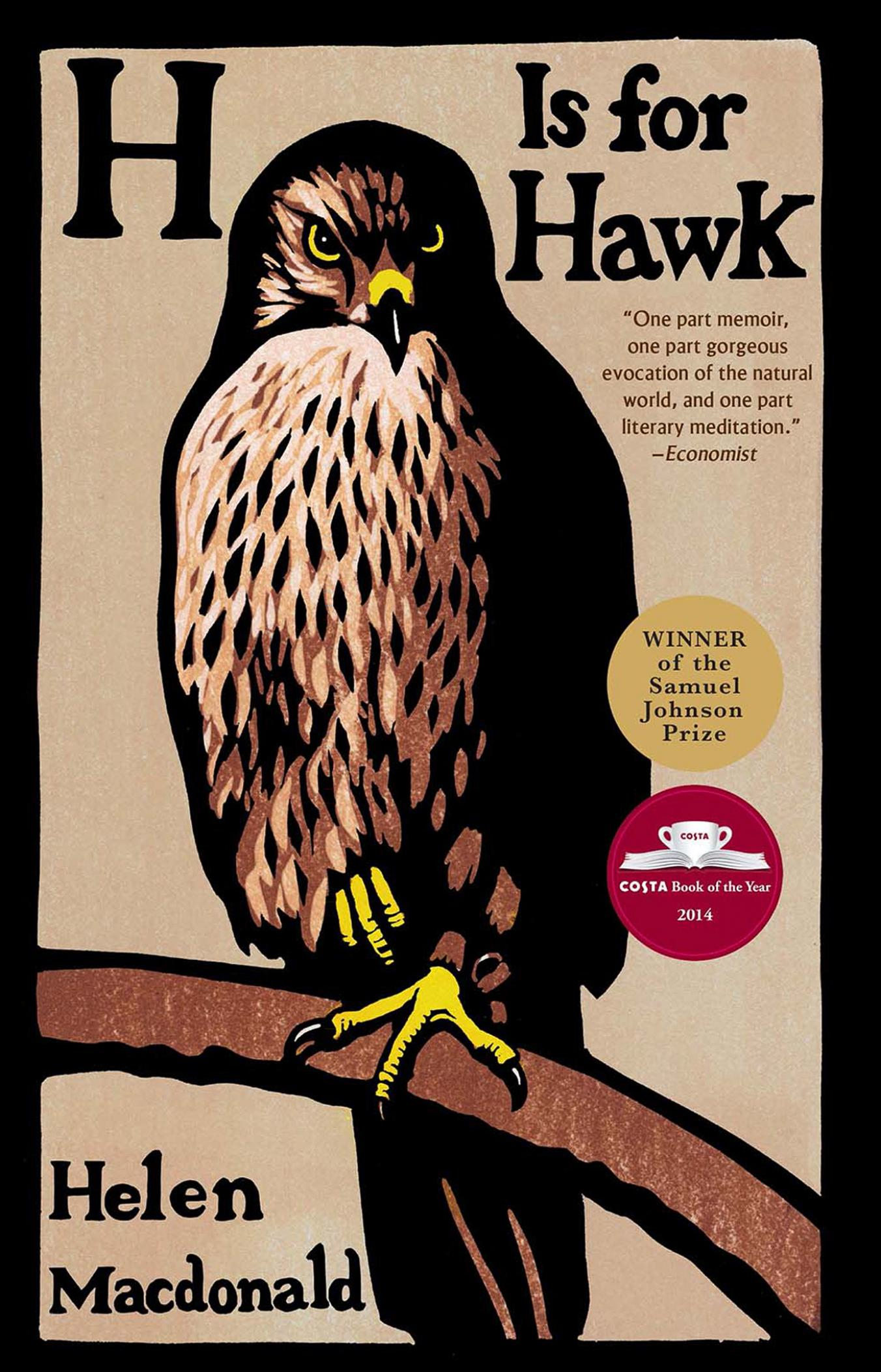
H_is_for_Hawk_cover-2Today’s Authors’ Pick has been chosen by Kelly Gardiner.

My favourite reading experience of the past year has been Helen Macdonald’s award-winning H is for Hawk, a memoir about grief, the vanishing British countryside, and a goshawk called Mabel. I’ve long been fascinated by the traditions of falconry, an ancient form of hunting in many cultures that became a sport of royalty in Europe in the middle ages.

H is for Hawk acknowledges this lineage, but more importantly it focuses on the relationship between raptor and trainer, taking us through the process and also tapping into the rich tradition of writing about hawks and falcons.

Chief among these is the work of T H White, author of The Once and Future King and other brilliant historical fantasies. His 1951 book, The Goshawk, was based on the journal tracing his own training of Gos – a troubled, tumultuous process that nearly finished off both of them.

Helen Macdonald weaves the story of White and Gos through her own reflections on the relationships between humans and wild creatures, and one another, as she learns to live with the sudden loss of her father, while Mabel and White reflect aspects of her own life back to her.

It’s brilliant, fascinating nature writing wrapped up in a poignant memoir about grief and belonging.

Kelly Gardiner’s books include Act of Faith and The Sultan’s Eyes, both of which were shortlisted for the NSW Premier’s Literary Awards. Her latest book is Goddess, a novel based on the life of the seventeenth century French swordswoman, cross-dresser and opera singer, Mademoiselle de Maupin.

2015-gardiner-kelly


Authors’ pick 18: Lucy Sussex

SutcliffToday’s Authors’ Pick has been chosen by Lucy Sussex.

I revisited Rosemary Sutcliff’s THE RIDER ON THE WHITE HORSE this year, after having mislaid it for some time. I wanted to know how I would read it after a long absence, if what I remembered still impressed, and what might have diminished with my increased craft/critical acuity. The answer is, very little.  The book is about the English Civil Wars, of two well-documented figures from the Roundhead side, General Sir Thomas Fairfax and his wife Anne. At the beginning of the conflict, in his native Yorkshire, Fairfax campaigned with his family, Anne and their small surviving daughter–which led to Anne being captured by the Royalists under the command of the Duke of Newcastle (later to marry another formidable woman, writer Margaret Cavendish). From the existing sources and her own imagination, Rosemary Sutcliffe wrote a portrait of a marriage, and with considerable emotional subtlety, for the romance is one-sided. The Fairfaxes have an arranged marriage, as was usual for the gentry, but while Anne loves Thomas, he is only grateful to her—or is he?

When working in the rare books section of a library, I had occasion to read some of Sutcliff’s source matter, Thomas Fairfax’s own memoirs. It showed me Sutcliffe’s fidelity to history, and at the same time how she imaginatively breathed life into it. In the battle of Wakefield town, Fairfax narrowly escapes capture by jumping his horse over a garden wall. In the book he finds the incident absurdly funny–as is quite clear from his own words. Sutcliff stages the scene brilliantly.

The novel is unquestionably for grown-ups, a story of unrequited love within a marriage. It also contains superbly realised battle scenes, vivid depictions of nature, and regional dialects reported without condescension.  It is immersive history, without the post-modern intrusion, as when Hilary Mantel has Henry VIII describe Jane Seymour as  his little “bun-face”. That is not Tudor language, and while absolutely right in terms of the lady, it jars. Similarly Cromwell, from his visual image–and Holbein was an acute observer–was a bit of a brute. Mantel depicts him as quite feminine in that people confide in him, and he listens, without interrupting. Fairfax is contradictory, a masculine man of war, a berserker in battle, but also gentle in his manners, kind.  Anne conforms to the gender expectations of her time, while not concealing her intelligence, nor her forcefulness–she is deeply involved in the political/religious struggle.  And yet she can be very obtuse.

Were this book published now, would it rate in the Bookers?  Surely yes, if the author’s genre/readership placement did not get in the way.

One final comment. Writing the pre-Enlightenment is tricky, as to be strictly accurate the religion would dominate the world-view, in a fashion incomprehensible to us rational post-moderns, wringing our hands over IS.  So while the title of Sutcliff’s book comes from Revelations, the wild religious discourse of the Civil Wars is downplayed.  But she does it, as she does with so much in this book, subtly and intelligently.

Lucy Sussex’s most recent book is the award-winning Blockbuster (Text, 2015), about crime writer Fergus Hume, and his Mystery of a Hansom Cab.

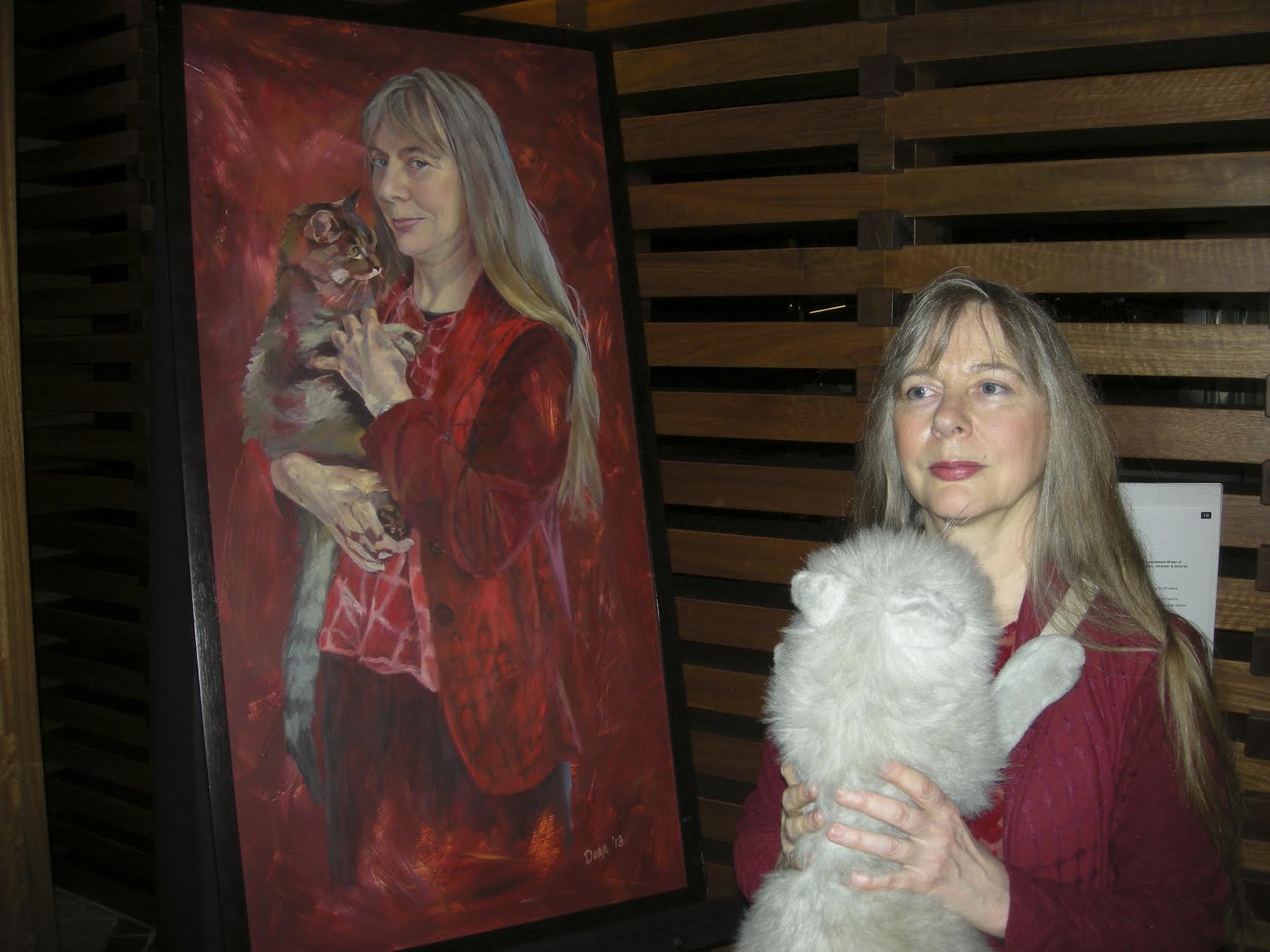
Lucy Sussex with portrait of herself by artist Dora Levakis, from the Archibald Prize's 'Salon des Refusés'

Lucy Sussex with portrait of herself by artist Dora Levakis, from the Archibald Prize’s ‘Salon des Refusés’

Authors’ pick 17: Amanda Bridgeman

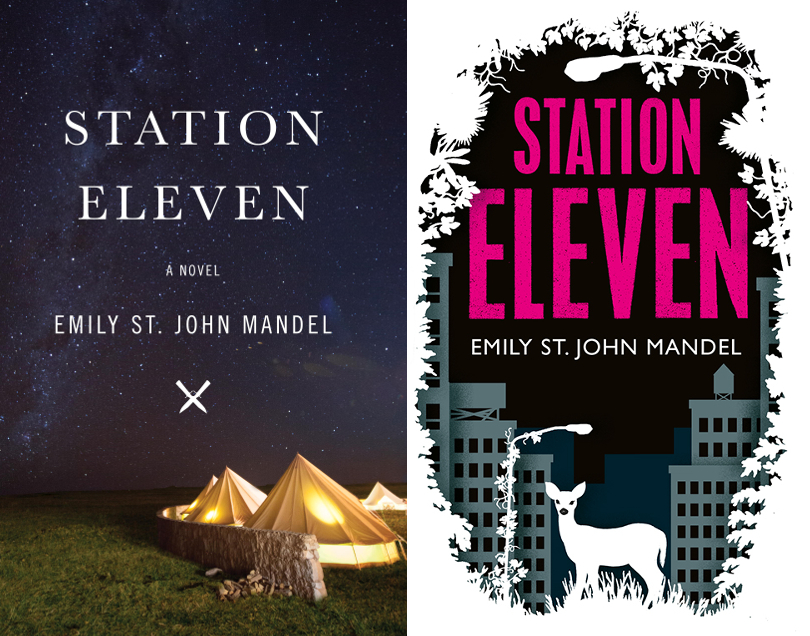
Station-Eleven-CollageToday’s Authors’ Pick has been chosen by Amanda Bridgeman.

This year I really enjoyed reading Station Eleven by Emily St John Mandel. It’s the story of how a deadly flu epidemic sweeps the world killing the majority of the population. Told half in the post-apocalyptic world, and half in the pre-apocalyptic world, the story follows several characters who are linked in one way or another with one central character, an actor by the name of Arthur Leander. I thought Mandel captured the flu epidemic perfectly (it was scarily realistic), and I found the characters’ stories, of how they try to survive (or don’t as the case may be) in a world gone to hell, very interesting. It’s a great examination of the human spirit, of how through the chaos, hope can still shine on.

Amanda Bridgeman is the author of the character-driven space opera ‘Aurora’ series.

_MG_0298

Authors’ pick 16: Wendy J.Dunn

poldarkToday’s Authors’ Pick has been chosen by Wendy J.Dunn.

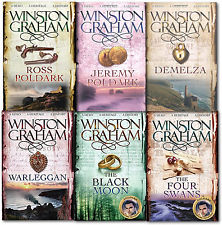
2015 has been a very good reading year – even if Goodreads keeps reminding me that I better hurry up if I am ever to reach my goal of reading 25 new novels this year. My problem is I like going back to old friends – those magical novels on my bookshelves to be re-read and re-read. Amongst the old friends I re-read this year were Winston Graham’s Poldark novels. That resulted from watching the new Poldark television series, when I yielded to the temptation to pull out the first Poldark novel from my home library. The first novel was followed by the second, until weeks later I closed the last page of the thirteenth novel, feeling sad again that Graham has left us. No more novels from his pen – novels demonstrating the power of a true storyteller.

This year, I also discovered novels I couldn’t put down by another great storyteller. Written by Barbara summerfoldGaskell Denvil, the first of these novels was Sumerford’s Autumn. Set at the beginning of the Tudor period, this gripping and richly researched novel kept me turning its pages until I reached the end. By then, Barbara Gaskell Denvil had gained a new fan and I couldn’t wait to read her other novels. What I loved about Sumerford’s Autumn was not only that it took me back to a period I love passionately and inspires my own fiction, but also how much Denvil’s wonderfully told story and well drawn fictional characters engaged me as a reader. The novel opening the door to a very lively and believable Tudor world, Sumerfold’s Autumn is pure escapism. Dialogue was another plus; perfectly pitched, evoking Shakespeare at times with its use of dark humour to help get the reader through those many tragic, poignant moments in the story, the dialogue powerfully made all the characters step off the page and into my imagination. Sumerfold’s Autumn doesn’t shy away from the violence and harshness of the Tudor period – or how death then was faced as a daily proposition. But it is also a novel of romance and adventure told through unforgettable characters.

Highly recommended.

Wendy J. Dunn is the author of two Tudor novels: Dear Heart, How Like You This?, the winner of the 2003 Glyph Fiction Award and 2004 runner up in the Eric Hoffer Award for Commercial Fiction, and The Light in the Labyrinth, her first young adult novel.

wendy j dunn