Picture That, illustrators on food: 1: Trish Donald

Cross-posted from my food blog.

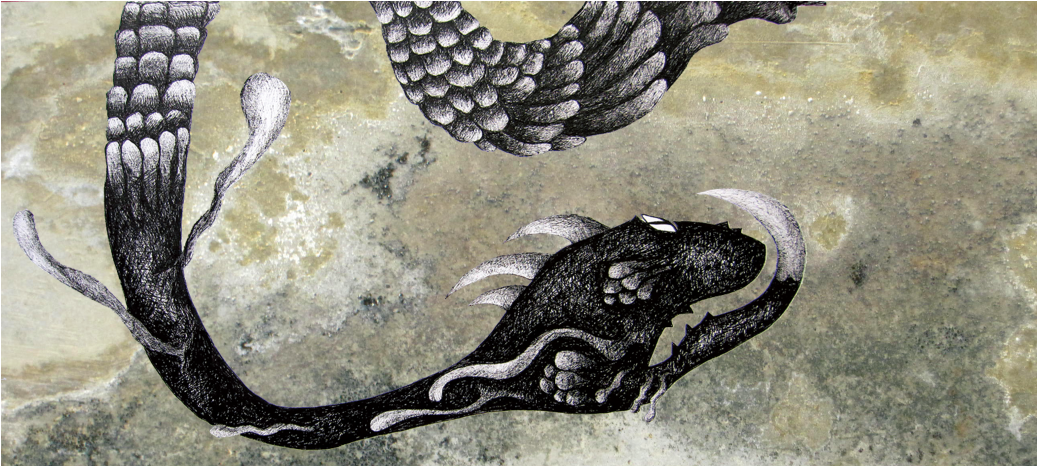
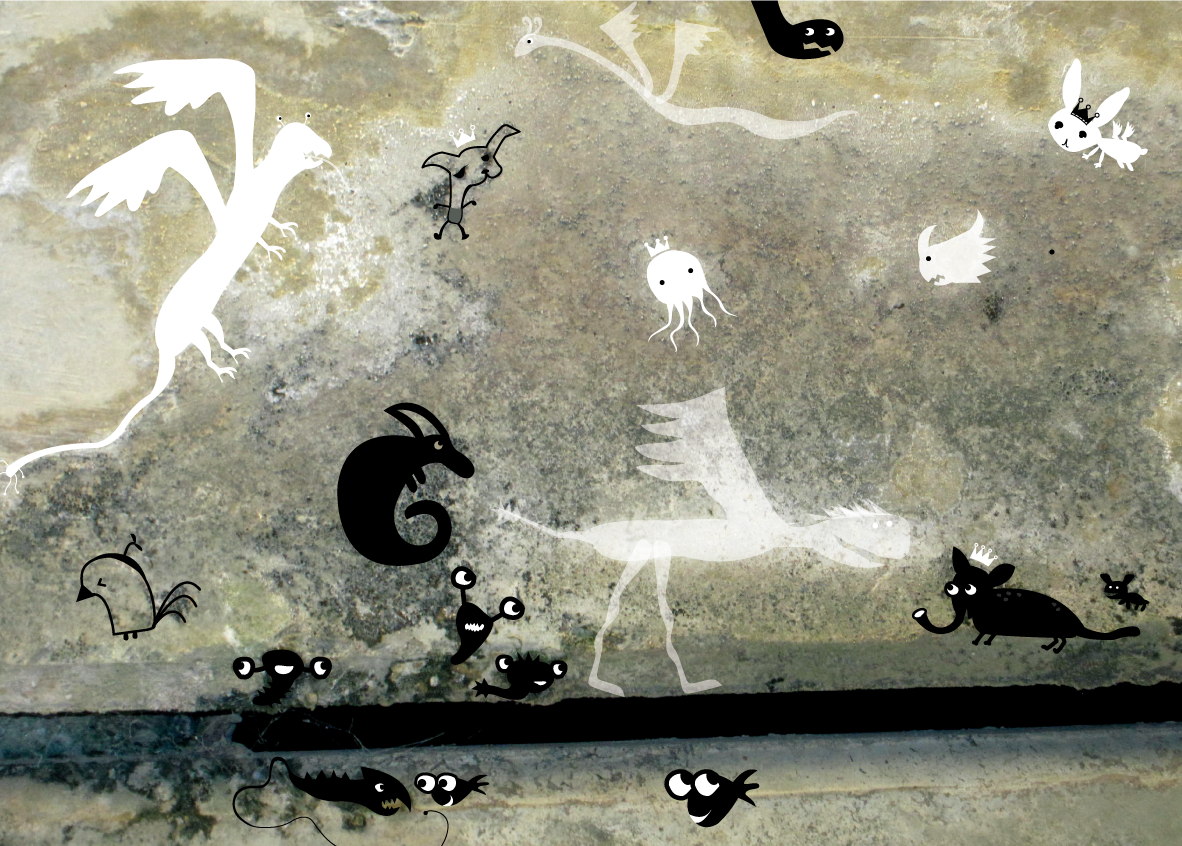
Cement_LIfe  A  couple of years ago, I ran a series featuring the favourite recipes of authors. This time, I’m inaugurating a new series, Picture That, which features illustrators talking about food and giving us a favourite recipe, but also showcasing favourite new illustrations. Picture That will be running from time to time over the next couple of months, but today is the first of the series, and it features the fabulous illustrator Trish Donald. Reptilicus


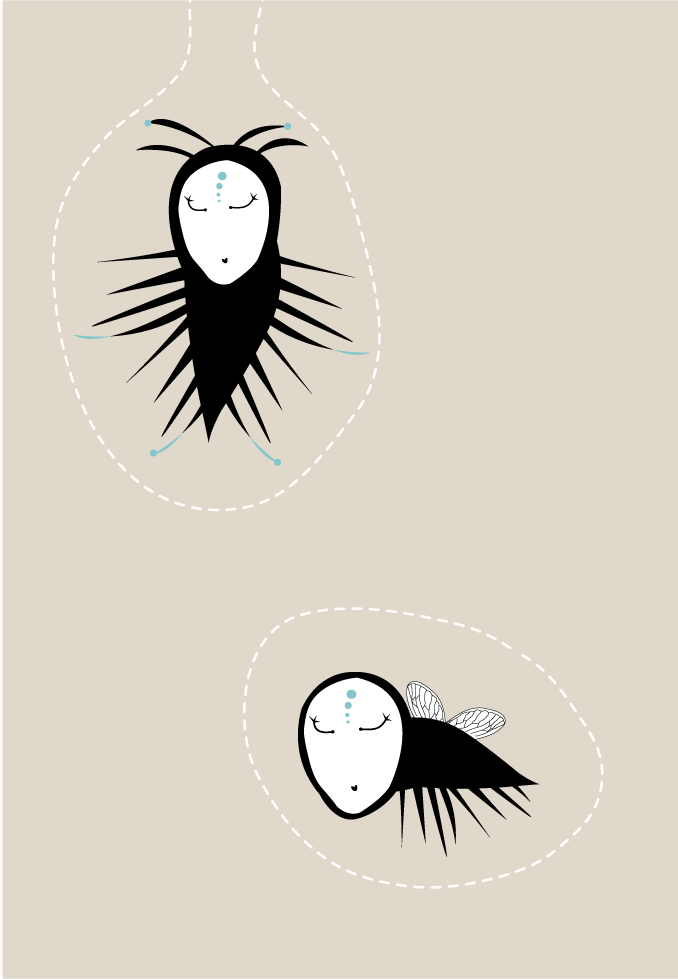
Trish usually paints landscapes using acrylics but in recent years she has been shifting focus toward character design where she likes to blend natural with digital medium. Her latest exhibition, in November 2014, contained works created through  a combination of pen drawings, collages, and digital drawings. Trish spent many years working as a graphic designer after which she spent 14 years teaching graphic design at TAFE. She currently works in Industry at the University of New England. Trish runs creative workshops at NERAM, in Armidale and the New England Writers’ Centre teaching others how to develop characters, use colour, or use mixed media.  Most recently, she had a short story and illustration published in Once Upon A Christmas (edited by Beattie Alvarez, published by Christmas Press, 2014) and she looks forward to future creative endeavours.

Trish_Donald

Trish presents here a favourite recipe: Portuguese Marinated Carrots.

When I make these for friends they are always impressed and absolutely love them so I am going to share it with you too.

Cenouras De Conserva – Marinated Carrots

(a Portuguese aperitif)

Ingredients:

4-5 carrots

1 Cup water (from cooking the carrots)

Pinch of salt

1-2 cloves garlic

Parsley – Continental

2 Tbsp Olive Oil (virgin)

2-3 tsp white vinegar

1tsp red paprika (not hot)

Toothpicks – for serving

Instructions:

Peeled and slice carrots into thick circles.

Put carrots in pot, cover with water and add some salt.

Boil for 3-5 minutes depending on tenderness – you want them to be soft but firm so they don’t fall apart.

Strain and put aside some of the carrot water (if you do not have enough carrot water you can just add water from the tap)

Put carrots in the fridge

Chop the garlic finely

Chop the parsley finely

In a cup combine the olive oil, vinegar, paprika and carrot water.   Cenouras_De_Conserva_Marinated_Carrots

Pour this mixture over the carrots and stir through, put back in fridge.

Taste mixture and add vinegar or oil according to taste.

Traditionally the carrots are a little bit on the vinegar side.

If you have added too much vinegar add more water and stir through.

Put on a shallow dish and supply toothpicks when serving.

Your guests will not be disappointed!

Butterfly_Bugs


Guest post: Michael E.Rose on a great place to set a spy thriller

The new Burma

Photo by Michael E.Rose

Michael RoseToday’s fascinating guest post is from thriller writer Michael E. Rose, author of the Frank Delaney series—The Mazovia Legacy, The Burma Effect and The Tsunami File–now being published by Momentum Books. Michael is the former Chief of Communications for Interpol and a former journalist, broadcaster and foreign correspondent. He draws on his years of experience in exotic locations around the world for his stories and characters. He’s recently back from a trip to Myanmar, where he set one of his books, and he reflects on the changes there.
When I sat down to write The Burma Effect some years ago, the place the military junta had decided would be called Myanmar, not Burma (just because they felt like it) was truly in a bad way. The generals held literally everything in an iron grip: opposition activists suffered appalling conditions in Insein Prison (great name for a bad prison); media censorship was absolute, the economy was in ruins, foreign journalists were not welcome, and Aung San Suu Kyi was under house arrest.
A great place to set a spy thriller, yes? And so it was. I had a great time researching and writing “The Burma Effect” and readers seemed to like it. So I was pleased and my agent was pleased and my publisher at the time was pleased. All was right with the world – except that conditions in Burma were still terrible and nobody was getting out of jail.
Now, over the past few years, there has been a breathtaking series of changes in Burma; sorry, “Myanmar”. I decided (once a journalist, always a journalist) that I would go up and see what was happening. Were the generals serious about moving toward democracy? Would they really be able to tolerate Aung San Suu Kyi now that she was a free woman again? Could people say what they liked there, at long last? Could a thriller writer find a good story there anymore?
Well, the answers are not simple. Yes, things are opening up. Tourists are pouring through Rangoon (sorry, Yangon) airport. Yes, journalists are allowed in and they can ask some tough questions and not get thrown out of the country like the bad old days. There’s a lot of new investment. You can even use credit cards now; some places, sometimes, and only if the power is on and there is a solid Internet connection.
But you still get a strong sense that just behind the new façade that is being constructed, there are very, very deep shadows.
The generals have rigged the new Constitution so they have 25 percent of members of Parliament, and it takes a vote of more than 75 percent to make any meaningful constitutional changes. Aung San Suu Kyi, clearly the most popular person in the country, bar none, is still forbidden from running for president because she has a couple of children who were born overseas. The generals, or their cronies, own just about all of the truly lucrative enterprises: mining, logging, airlines, hotels, key industrials.
They are also said to still have strong lines into the drug trade and other very shady goings-on. (Am I allowed to say that, about the new Myanmar? We’ll have to see.)
So, people on the streets of shabby, wonderful Yangon, or in a small market somewhere up-country in Shan state, or on a boat on the river near Mandalay, will tell you they are optimistic about the future. Elections are coming this year, there are more jobs around, the lights stay on longer than they used to, and fewer dissidents are in jail.
But people may still talk about such things with an almost imperceptible glance over their shoulder, to see who is listening. They may still choose carefully who they want to have a real conversation with. They aren’t going to rock the boat too much, for a while longer. They clearly know that things are still going to be rough, on a lot of levels, for quite a few years yet.
But there is hope, and that was in very short supply in the Burma where I put my series main character Frank Delaney a few years back. And there is hope there for thriller writers, because even the new Myanmar has a dark side and no-go areas and spies and guns and drugs and political chicanery.
A great place to set a spy thriller, yes?

Michael’s website: http://michaelrosemedia.com/

Twitter: @mrose_writer

About the Frank Delaney thrillers by Michael E.Rose, all now available through Momentum:

Mazovia

The Mazovia Legacy
The snow in a Montreal winter covers a multitude of sins …
In the icy depths of a Quebec winter, a harmless old Polish man dies in mysterious circumstances. His suspicious niece draws in Montreal investigative journalist, Frank Delaney, to help her find the truth behind the death, a story the authorities seem to want covered up.
The search for answers sweeps them into a dangerous web involving Canadian, Polish and Vatican agents who will use any means, even murder, to stop them. The catalyst for this international intrigue is the true story of Polish national art treasures secretly shipped to Canada to be hidden from the Nazis in the opening days of World War Two. This classic thriller combines fascinating history, deft storytelling and psychological depth.
The Mazovia Legacy was shortlisted for the Arthur Ellis Award for Best First Crime Novel, 2004.

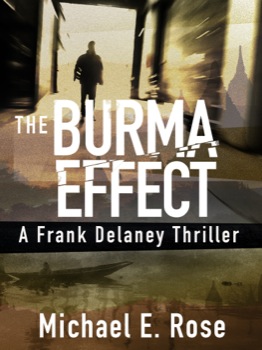
BurmaThe Burma Effect
Sometimes an obsession can become a death wish …
In the second Frank Delaney thriller, the Montreal-based investigative journalist and sometime spy is assigned by the Canadian Security Intelligence Service to locate one of their agents gone missing in Bangkok.
The search for Nathan Kellner, a bohemian bon vivant with a taste for young women and a variety of illicit substances, brings Delaney first to London, then to Thailand and Burma, where evidence points to an elaborate plot to destabilize the Burmese military regime. Untangling that plot thrusts Delaney directly into the line of fire between the generals at the head of Burma’s all-powerful junta and those who would use any means to see them overthrown.


TsunamiThe Tsunami File
Not every victim is found to be innocent …
Frank Delaney, investigative journalist and sometime spy, is on assignment in Phuket, Thailand, in the aftermath of the tsunami that killed thousands of people, foreigners and locals alike. Disaster victim identification teams from police forces across the globe have descended on this idyllic holiday location to carry out their gruesome work.
Delaney discovers that, against all logic, someone is trying to prevent identification of one of the bodies lying in makeshift beachside morgues. His search for the reason follows a trail through Thailand’s seedy child sex trade to an elaborate cover-up in Germany and France, where those with everything to lose use increasingly desperate measures to stop him dead.
The Tsunami File was shortlisted for the Arthur Ellis Award for Best Crime Novel, 2008.
 

Guest post: Fiona Price on adapting fairytale settings

0914 Let Down Your Hair_Final Intro from Sophie:

I have always been interested in the use of fairy tales as an inspiration for fiction. Fairy tales are so rich that they can be mined again and again without losing any of their magic; and they are also so full of hidden depths that they can be interpreted in many different kinds of ways. I’ve used them myself repeatedly, in my fiction; and I love reading the work of other fairytale-inspired writers, such as Angela Carter, Tanith Lee, Kate Forsyth, Robin McKinley, Juliet Marillier, and many many more.

Interestingly, in recent times the theme of Rapunzel has come up several times: in the beautiful historical novel by Kate Forsyth, Bitter Greens; in one of the motifs in my own (YA) fairytale novel, The Crystal Heart; and most recently in a fabulous and clever modern adaptation of the Rapunzel theme, Fiona Price’s Let Down Your Hair. As the blurb for the book has it, it is a timely re-telling of the Rapunzel fairytale in the era of selfies and smartphones. And in this interesting guest post Fiona writes about how the setting she created helped to really focus the novel.

Welcome, Fiona!

Author pic 3

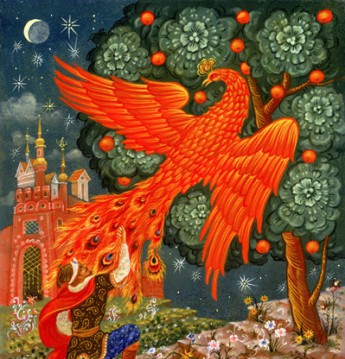
A big thanks to Sophie for inviting me to write a post for her blog. My name’s Fiona Price, and my novel Let Down Your Hair was published last month by Momentum. It’s a coming of age story based on the Rapunzel fairytale and set in the twenty-first century. I was inspired by the beautiful Russian building on the cover of Sophie’s latest book Trinity: The Koldun Code to write about the setting for my book.
When I decided to retell Rapunzel in the present, the first thing I needed was a tower. I considered a range of tall buildings for the job, and even toyed with making it a plane. But when I recalled the phrase “the ivory tower”, I decided I had to set Let Down Your Hair in a university. What better prison for Rapunzel than a place where scholars live lofty lives cut off from the world?
Setting ‘Rapunzel’ in a university worked on a couple of levels. For one thing, old-style prestige universities are built like storybook castles. Their buildings are made from ivy-covered stone, with giant libraries and halls lined with portraits. The other thing I liked was that it gave me an idea of who the witch was going to be. She’d be a senior professor, the type on a mission to change the world one conference at a time. A woman like the witch I created for my novel: Professor Andrea Rampion.
What would make a female professor lock a girl up in a tower? In the fairytale, the witch seems driven by the need to protect Rapunzel’s virginity. She locks Rapunzel up when she hits the age of puberty, and throws her out in a rage when she learns of Rapunzel’s affair with the Prince.
Protecting a girl’s virtue was never going to work as a motivation for Andrea. Most female professors would see dwelling on girls’ sexual behaviour as dated and patriarchal. I worked around this problem by shifting Andrea’s focus to something more progressive and intellectual: protecting her abandoned granddaughter Sage (my Rapunzel) from the sexist messages in the media.
Shielding a girl from all sexist messages wouldn’t be easy today. Sexualised pictures of women are on every smartphone, billboard and TV. Andrea would have to be ruthless about controlling everything Sage watched and read. She’d also have to monitor Sage’s company and movements, so she didn’t hear those messages anywhere else. Doing these things would cut Sage off from the world as surely as locking her in a tower.
What would Sage be like after twenty-two years of Andrea’s regime? With so few distractions and a dedicated teacher, she’d be brilliant at all things academic. Politically aware, with the ability to spot male privilege at seventy paces. But when it came to youth culture, technology and men, she’d be hopelessly ignorant and naïve. And both terrified and thrilled when she looks out a top floor window and a naked young man smiles up at her.
Once I’d found my tower and cast my main characters, I needed to think about the wilderness. In the fairytale, this is where the witch banishes Rapunzel when she learns of her affair with the Prince. When ‘Rapunzel’ was published, the ‘wilderness’ would have meant the forests of northern Europe. Presumably the witch hoped that Rapunzel would be punished for her sins by getting lost or attacked by wolves.
I let myself be guided by Andrea’s obsessions when choosing my modern-day wilderness. For Andrea, this would be a place where women are degraded and exploited by men: the red light district. Which is where Sage eventually finds herself, homeless, lost and surrounded by men on the prowl.
Retelling ‘Rapunzel’ as a present-day novel was a challenge I really enjoyed. If you’d like to take a look at Let Down Your Hair it’s available on all major digital platforms. Thanks again to Sophie, and I’d like to wish her and all of her readers a wonderful 2015!

Thanks, Fiona! And the same to you. (Sophie)

To find out more, check out Fiona’s blog: dressingthesalad.wordpress.com

Follow her on Twitter: @FionaSLPrice

Book Character Blog Tour from Felicity Pulman: win a book!

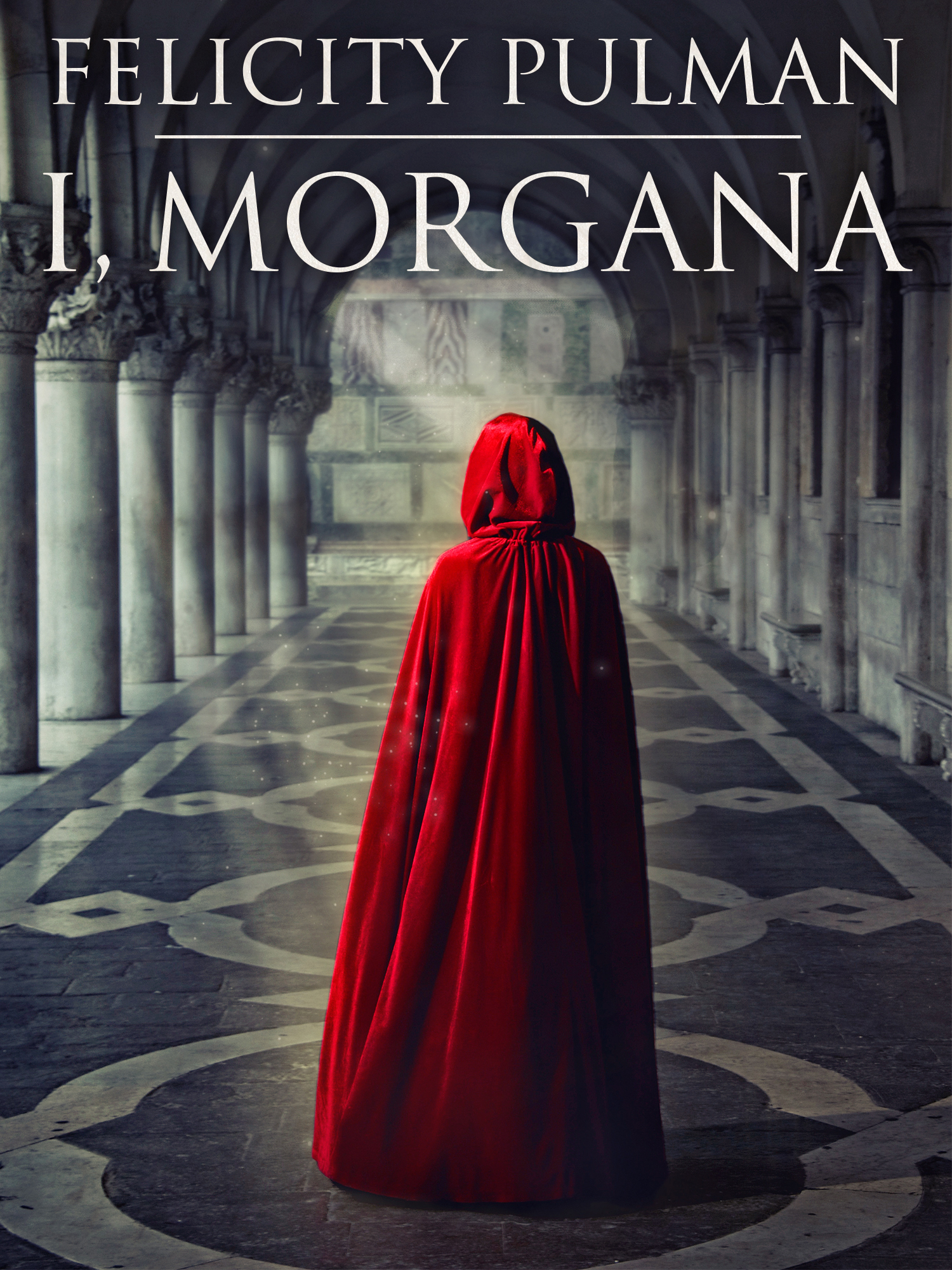
I morganaFellow author Felicity Pulman, who I tagged to take part in the Book Character Blog Tour that I participated in last week, now has her post up on her own blog. It’s about Morgana, the central character of her evocative Arthurian fantasy novel, I Morgana, published by Momentum. And three lucky readers can win a copy of the e-book of the novel, if you’re quick!


Guest post: Lauren Dawes, author of the Dark Series

Author Photo (low res) DarkDeceit_Final-768x1024 To those of you who don’t know who I am, my name is Lauren Dawes and I am the author of the Dark Series published by Momentum. Fellow Momentum author Sophie Masson has asked me to be a guest on her blog, and gave me free rein over the topic.
I’ve decided to give you all a little insight into the process I went through in writing the first book in the Dark Series, and also introduce you to a couple of my characters.
Let’s start with why I decided to write this series. First of all, I love Norse mythology. When I was younger, I was fascinated with runes, to the point where I tried to teach myself the runic alphabet and use it on a daily basis. Alas, like my soirée into teaching myself Greek, it only lasted about a week. By the way, the book titled “Learn Greek in 25 years” is completely accurate. In any case, that is where my love for all things Norse has stemmed from.
In December 2012, when the idea for “Dark Deceit” struck, I hastily scribbled down some rough notes about a potential plot and characters. I started off with the basics: protagonists and antagonists. Korvain, one of the protagonists, is the last of the pure-blooded Mares. ‘Mares’ are dark elves and were considered to be horribly evil creatures by the Vikings. According to Norse mythology, dark elves used to sit on a person’s chest while they slept at night, slowly pouring bad dreams into their heads. They gave these ‘spirits’ the name ‘nightmare’. Instead of using that idea, I changed it so my Mares became assassins because of their inherent perceived ‘darkness’.
The other protagonist sharing the limelight with Korvain is Bryn. Odin’s first Valkyrie now runs a successful nightclub in Boston and lives with her other sisters. The Valkyries left Odin’s service, and have been on their own since the 1920s after the All-Father committed an unforgiveable act. Bryn is still the leader of the group, and takes the job of protecting the other Valkyries very seriously.
Once I had my characters set, I had to think about the world I wanted them to live in. I chose Boston as the setting for the Dark Series after I visited the city while on my honeymoon in 2012. I fell in love with the history, and I knew that it would be the perfect city to set my books in. In “Dark Deceit” it’s explained that an event called “The Fall” was the beginning of the end for the gods and goddesses. The Nine Worlds—the worlds for the Aesir and Vanir gods, the light and dark elves, the dwarves and giants—disappeared. The humans had simply forgotten them, and so these beings settled on Midgard (Earth) and have been living side-by-side with the humans for nearly a thousand years.
The hardest part of writing the book was plotting the story. I didn’t have all the answers right away with it. The plot developed with time, and after many revisions. I actually almost threw in the towel completely with this book when I couldn’t quite get past some initial plotting hurdles.
Thankfully, I saw it through, and have ended up with a series that definitely does justice to my love of Norse gods. “Dark Deceit” firmly sits in the realm of dark urban fantasy. The fight scenes are graphic and bloody, and my characters are gritty and raw. I wanted them to be both loved and hated, and I think I’ve achieved that.
If “Dark Deceit” sounds like a book you’d like to read, you can get it on all major platforms. And if you’d like some more information about either books, check out my website: http://www.authorlaurendawes.com

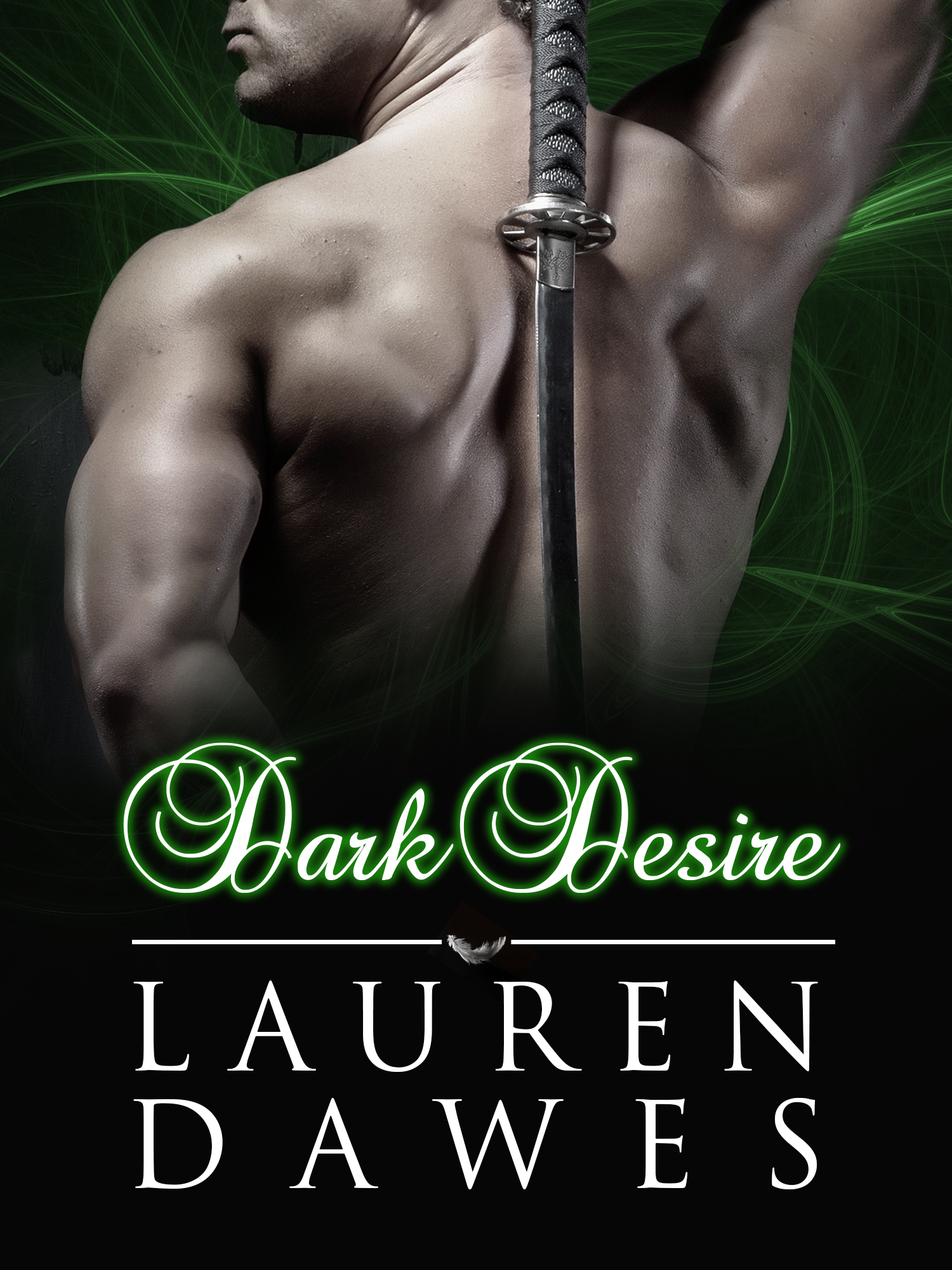
DarkDesire_Final

Dark Deceit Blurb:
The time of Odin is over. The Aesir gods now live among the humans in their bustling modern cities. Their brutal dominion over the other gods and their eradication of the entire dark elf race may have ended, but their actions have not been forgotten.
Korvain is one of the last full-blooded dark elves, and is feared like no other. His ruthlessness and cold heart are legendary, but when he is given the task of killing one of the most fabled goddesses of all time, he is left with an undeniable desire to make her his own. Failure in his task means only one thing: death. Will he follow his orders, or will he follow his heart? Bryn’s whole world crumbled when she left Odin’s service to protect the other valkyries. Now living with the humans, she is the only thing standing between them and total destruction. But her beliefs are about to be shaken to the core when she meets Korvain—a volatile, completely irresistible dark elf who threatens to take away more than just her innocence …

Dark Desire Blurb:
The time of Odin is over. The Aesir gods now live among the humans in their bustling modern cities. Their brutal dominion over the other gods and their eradication of the entire dark elf race may have ended, but their actions have not been forgotten.
With the death of Adrian still haunting Taer’s every waking breath, she dreams of getting revenge on the dark elf responsible for her brother’s murder. But when the one person she’s depending on to train her in the art of weaponry refuses to help, she has no other choice but to get instruction from the most unlikely of people. Driven by an undeniable desire, Taer finds herself learning more than just how to fight.

About Lauren Dawes:
Born in South Africa and raised in Sydney, Lauren Dawes is an urban fantasy/paranormal romance writer and the author of the Dark Series.
In 2009, she quit her full-time Teaching English as a Second Language job to finally begin writing “that book”, letting her over-active imagination pour out onto the digital pages much to everyone’s horror. The catch phrase “I didn’t know you had such a dark imagination” only fuelled her to write more, where her love for Norse mythology and gods finally got the spotlight.
She currently lives with her husband and daughter in whatever city they happen to be posted to, and her cat, Oscar, who has inspired more than one character quirk or scene in her books.
http://www.authorlaurendawes.com
https://www.facebook.com/authorlaurendawes
@officialldawes
http://laurendawes.blogspot.com
https://plus.google.com/+LaurenDawes

Guest post by author Justin Woolley, book-release buddy!

Author Photo - Justin Woolley A Town Called Dust CoverToday, my blog features a special guest–fellow Momentum author Justin Woolley, who’s also my book-release buddy, as his debut novel, a dystopian YA novel titled A Town Called Dust, comes out tomorrow, along with my own Trinity: Koldun Code.

In this fascinating post, Justin writes about the influences behind his creation of the distinctive world of A Town Called Dust, but first, to set the scene, let’s get a taster of the book from the blurb:

Stranded in the desert, the last of mankind is kept safe by a large border fence… Until the fence falls.
Squid is a young orphan living under the oppressive rule of his uncle in the outskirts of the Territory. Lynn is a headstrong girl with an influential father who has spent her entire life within the walled city of Alice.
When the border fence is breached, the Territory is invaded by the largest horde of undead ghouls seen in two hundred years. Squid is soon conscripted into the Diggers – the armed forces of the Territory. And after Lynn finds herself at odds with the Territory’s powerful church, she too escapes to join the Diggers.
Together Squid and Lynn form an unlikely friendship as they march to battle against the ghouls. Their journey will take them further than they ever imagined, leading them closer to discovering secrets about themselves, their world, and a conspiracy that may spell the end of the Territory as they know it.

Wow–that’s some set-up! Over to you, Justin. We’re all ears!

Inspiration for a book is a funny old thing. It never hits you as one fully formed idea; at least it never hits me that way. For me it’s more like that scene in Jurassic Park where Robert Muldoon, the park game warden, is facing off against the velociraptors. The ideas all sneak up on you and ambush you from different directions sometimes leaving you quite surprised. “Clever girl…” That’s how it was with the inspiration for my debut novel A Town Called Dust, a dystopian young adult novel set in a post-apocalyptic version of the Australian outback, inspiration came at me from many directions. Continue reading