 Today, I’m revisiting my ‘Double Act’ series of interviews with authors who are also publishers, and who started their own publishing houses. And I’m interviewing Anna Solding of Midnight Sun Publishing, a small press that has gone from strength to strength since it started a few short years ago.
Anna, when and how did Midnight Sun start? What motivated you to start your own publishing company?
It started one day when I had lunch with a close friend who is an entrepreneur. Even though my novel manuscript The Hum of Concrete had been nominated for three awards for unpublished manuscripts, no publisher had picked it up. My friend thought this was a shame so he suggested: ‘Why don’t we start a publishing company?’ You know, as you do, over lunch, just like that. My, quite logical and heartfelt, reply was: ‘Because we are not crazy…’ Five years later, we are crazier than ever and MidnightSun is beginning to take off in a big way. My friend’s initial expertise and help was invaluable and I would never have contemplated starting a publishing company if he hadn’t come up with the idea. My novel The Hum of Concrete went on to be nominated for another three awards once it was published, including the Commonwealth Book Awards, which meant we were off to a promising start and we felt that perhaps we could keep doing this.
How did you initially persuade booksellers to stock your books?
I was lucky enough to convince Wakefield Press, another independent Adelaide publisher, to distribute our books nationwide. It’s not really what they normally do so they only did it to be kind and give me a break, which was very nice of them. For the last couple of years our books have been distributed by NewSouth Books, who do a terrific job, getting our books into bookshops (and occasionally even into discount departments stores) around Australia and New Zealand.
Have your aims and strategies as a publisher changed from the beginning? How?
Yes and no. The aim has always been to publish amazing books, both in terms of content and design; books that you can lose 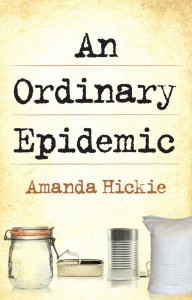 yourself in, books that look stylish and feel good in your hand. That is still our main aim. On our website we say: ‘MidnightSun Publishing has grown out of a disenchantment with the established publishing houses in Australia. We know there are plenty of fabulous manuscripts about unusual topics floating around, but publishing new and unknown writers poses a big risk. MidnightSun is prepared to take that risk. We want our readers to be entertained. We want to challenge, excite, enrage and overwhelm.’
When we started, we were mainly focused on adult literary fiction but now we also publish a wide range of books for children, from picture books to YA. I have always said that I will only publish books that I love and I think that is a good strategy for a small publisher. Because we spend so much time with each book, we really need to be comfortable talking about all aspects of it to anyone who will listen. Originally, I thought we’d just publish one or two books to see how they went but as all our books have made a profit it has always been easy to keep moving on to the next project. The more well-known MidnightSun becomes, the more high quality manuscripts are sent our way and the more projects we take on. When we started publishing in 2012, we did two books per year, in 2017 we are planning to do five. To publish five or six books per year would secure a more regular cash flow situation, which is something MidnightSun is still struggling with. The more I learn about the business, the more confident I get about all the small steps that need to happen for each book, including the metadata, the AI sheet, different ways to promote the book and which festivals and media contacts to approach.
Has working as a publisher impacted on your own career as an author–whether that be positive or negative?
Yes, I don’t think of myself as a writer first and foremost any more. Publishing has taken over my life, but I have let it happen and I love my job passionately so I’m certainly not complaining. I work with interesting people who all love books, so that has to count for something. Last year, I was fortunate enough to be awarded two writers’ retreat residencies, one month in Finland and one month in Perth, which were both fantastic months when I felt like a writer again. For years, I’ve been working on a ‘companion novel’ to The Hum of Concrete, also set in Sweden where I grew up, and it’s almost finished but I think I need one more retreat to get there. I would like to incorporate more writing into my everyday life, but when I can’t even get a Q&A like this one written until weeks after I should have delivered it, I’m not quite sure how to manage it.
What are the challenges and pleasures of small-press publishing, in your experience? Any memorable anecdotes?
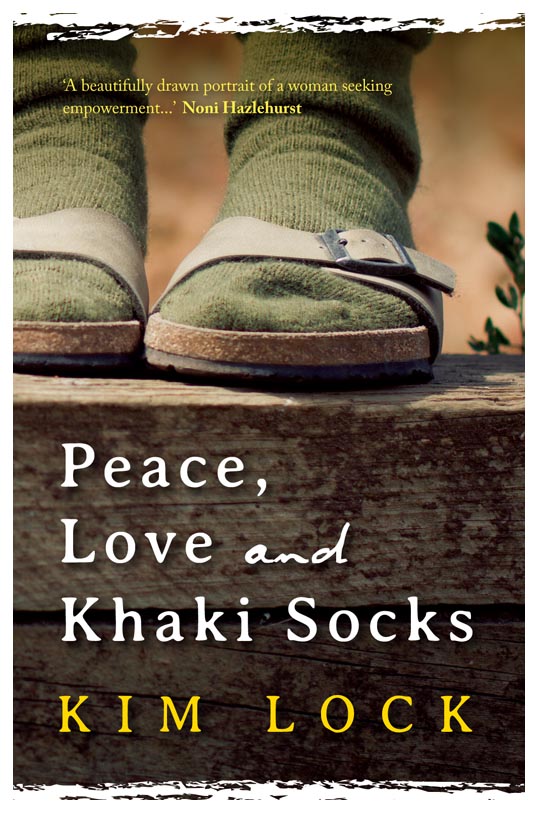
I love finding new talent and nurturing the writers from the beginning. Kim Lock, whose novel Peace, Love and Khaki Socks, was published by MidnightSun in 2013 has since evolved into being our regular designer. Her new novel has recently been published by big publisher Macmillan, which we think is fantastic. Last year, we published Amanda Hickie’s An Ordinary Epidemic and that book will come out with a new cover and new title (Before This Is Over) in the US next year. There are so many pleasures.
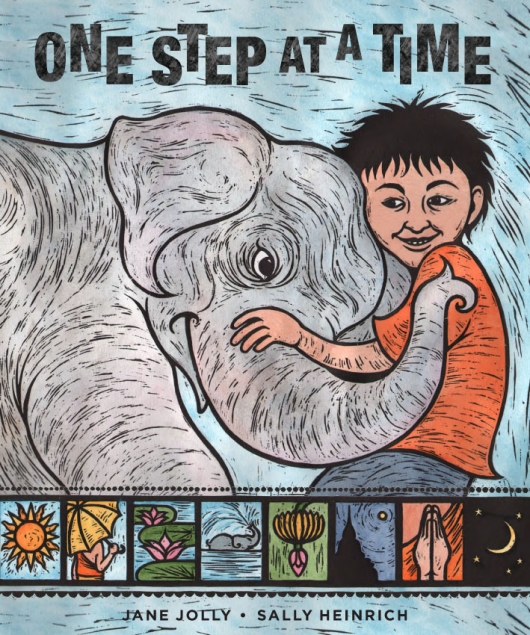
The challenges are plentiful, as they should be. It took almost a year to design the cover for Cameron Raynes’ First Person Shooter and we finally decided on one we all liked after rejecting about 30 others. Fortunately, we have a very patient designer. However, one of the biggest challenges for small publishers is to get noticed in the mainstream press. MidnightSun has a loyal following in Adelaide but it’s always a struggle to even get a tiny review in the larger newspapers, let alone a feature article. The other main challenge, at least for us, is to manage our cash flow. Because MidnightSun is doing really well, our first picture book One Step at a Time by Jane Jolly and Sally Heinrich has been nominated for several awards including the important CBCA award, we are in a position where we need to reprint the book but we have had to take out a loan to be able to do so.
As much as there are plenty of challenges for small publishers, the pleasures of seeing a project through from manuscript form to the final product, a beautiful and thought-provoking book, clearly outweigh the challenges. The buzz of opening a box from the printer to see a new book for the first time is very special and I don’t think I’ll ever get tired of that feeling.
Any advice for aspiring author-publishers?
Go for it! If you are passionate about books and have some sense of business, publishing might be the perfect place for you. I’m not going to pretend that it is easy, because it certainly isn’t, but if you surround yourself people who can help you with aspect that you might be less familiar with, it could be worth giving publishing a go. I have had a bookkeeper and a designer from the start as those were two aspect of the business that I didn’t know that much about. Other than that, you have to learn to wear many different hats; as editor, publicist, sales director, head of marketing and the one who is ultimately responsible – whether things go fabulously or the complete opposite.
Distribution is extremely important and it’s very hard to find a distributor so it’s worth doing some research on this before you take the plunge. Dennis Jones distributes many small publishers. Talk to other small publishers, research printers, become a member of Small Press Network, learn the terminology (what is metadata? AI sheets? ISBN?), subscribe to the daily newsletter from Books+Publishing and, most importantly, find amazing manuscripts to publish. Without intriguing content  and stunning production your books won’t be noticed. MidnightSun started in 2011 and we published our first book a year later, which felt right as that is how long it took to learn a bit about how the business works. The longer you have to prepare for a book, with marketing material, review copies, interviews, the better. Now that we are more established, we often work on a book for two years before publication. But don’t be scared, if publishing is your passion, just go for it!
Anna Solding
P.S. Metadata is the information that is put into search engines so that it will be easy to find. AI sheets are advance information sheets about the book, which often contain the cover image, a blurb, an author bio and photo, size, price, publication date and the all-important ISBN. The ISBN is the 13 digit number that is under the barcode, which is used by booksellers to identify the book.

 But Grangee wasn’t about stories, at least not that first day. It was about taking the first faltering step up the steep slope that led to literacy. I opened my school jotter (it says ‘Jotter’ on the front) and, as Mrs Pollock directed, wrote a page of ‘O’s. Note the big pink tick. Mission accomplished. Then I turned over and wrote a page of ‘X’s. Another tick. Then we went home for lunch.
 Quite a bit, it turned out. How to manage a page, for a start, as my increasingly huge and truncated attempts to write ‘Dick Has the Dog’ demonstrate.




 Feathers of the Firebird