I had the pleasure of doing an interview just recently with Kristin Centorcelli of the fabulous blog My Bookish Ways. It’s here.
Uncategorized
Fantasy short stories
 I love writing novels. And fantasy in particular, in its big breadth of genre, from heroic to urban, magical realism to paranormal romance, fairytale thrillers to vampire and zombie sagas, to name just a few, lends itself to the big canvas. But I love to have a holiday sometimes with the slimmer fantastic, the short story. Not only can it be easier to sell—some types of fantastical narrative, like the ghost story, seem to work even better in short than long form—there are many more great short stories in that genre than there are novels(the possible reasons why would be a whole essay in itself!) But it’s not just the ghost story that can trip the short fantastic: all kinds of fantasy and supernatural genres can lend themselves very well to the short-story form, even epic fantasy, and here I’d like to pass on a few tips I’ve learned over the years of having had many short stories published–some of which are collected together in my e-book, The Great Deep and Other Tales of the Uncanny.
*Remember you don’t have time to build up a detailed setting, but must still plunge your reader directly into atmosphere. Use a setting you already know well, and can sketch in quickly.
*Direct use of a single source is very effective.
Focus straight not only on one story, but on one strand of one story: for instance, the reaction of a single sailor from Odysseus’ crew, turned into a beast on Circe’s island; the feelings of Andromeda, chained on her rock in the ocean.
*Think about focussing on minor characters, rather than major heroes.
This is especially so when you’re using big myths as your background. For my Arthurian short story, ‘The Common Dish’, I used the voice of a very humble character, the anonymous sister-in-law of Sir Agravain, to tell the story of those who are left behind in the great Grail Quest, but who nevertheless learn very important truths.
*If you’re going to write about major heroes, focus on revealing his/her character.
The short story is probably one of the most emotional forms of all. Revealing character, though, doesn’t mean being talky; it means allowing the character to come through effectively, in action as well as reflection.
*Choose one event as the pivot for your story.
This is not the form for lots of sub-plots, though it’s perfectly possible to have more than one narrative stream.
*A twist at the end is always nice—but not always absolutely necessary. You do need some kind of good ‘payoff’ however. And though you don’t need to ’round off’ everything—I always think a good disturbing shock at the end of a story works well, the ‘oh no’ kind of moment—you do need to give the reader a feeling of satisfaction, and not leave things dangling. It’s annoying in a novel—even more so in a short story!
Magic of the Russian winter
An absolutely fabulous post by Achala Upendran over on the Momentum blog, about how Russian magic is so distinctively different.
Russian markets
 Second of my ‘tasty Russia’ postings on the food blog!
Nina Kulagina and the frog’s heart
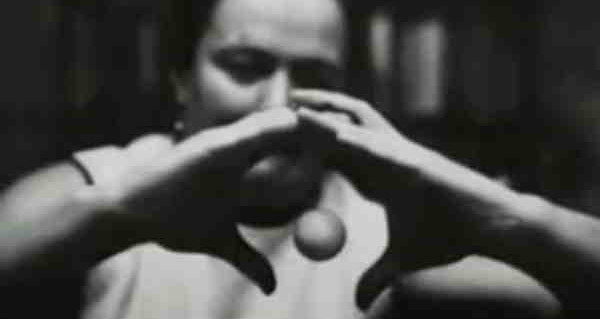 One of the inspirations for some of the weird stuff in Trinity was the extraordinary story of the Russian psychic, Nina Kulagina, who became very famous in the Soviet Union and well beyond for the spooky demonstrations of her talents in telekinesis–or as it’s sometimes known, ‘mind over matter’ –the ability to move objects solely by concentrating on them. Feted by the Soviet secret services, paraded as an example of Soviet superiority in ‘out-there’ research, Nina was a real character—a Red Army tank driver who became a soldier at the age of 14, she said she first realised her mind-power came originally from great anger, but its full potential could only be achieved through restraint and meditation. Back in civilian life, she was quickly spotted by the secret services, and more than 40 scientists, including two Nobel prizewinners, studied her, while weird black and white films of her demonstrations popped up all over the world. It was one of those films that I saw many years ago at school, as part of a documentary on Cold War rivalry(for the Americans, spooked by the apparent success of Soviet psychic research, quickly instituted their own research project, dubbed the Stargate project–later immortalised in the film, ‘Men who Stare at Goats’!)
I’ve long forgotten most of what the documentary said; but those few jerky scenes of Nina staring at a frog, and apparently stopping its heart then restarting it, simply, apparently, by the power of her mind, always stayed with me, and has now resurfaced in my book. You can see films of her abilities now on You Tube–check it out!
A tasty look at Russia
 Over at my food blog, A la mode frangourou, to celebrate the launch of Trinity: The Koldun Code, I’m reposting some articles about the culinary aspects of Russia, which I wrote while I was there in 2010 and 2012. Also there will be recipes! Here’s the first in the series of posts about the tasty side of Russia.
Interview with me on Urban Fantasy Investigations blog
A fun interview with me on Urban Fantasy Investigations blog, complete with a contribution from Helen!
Why your next novel should be set in Russia..
A fantastic blog post by Eve Merrier about why Russia’s such a great place to set a novel: and it’s got a wonderful mention of Trinity right at the beginning! Enjoy!
And it’s out!
Yippee! Today is the big day! Join me in raising a glass of e-champagne to the release of the e-book of Trinity: The Koldun Code, available now at lots of online bookstores!


One day till publication: Helen Clement, heroine of Trinity

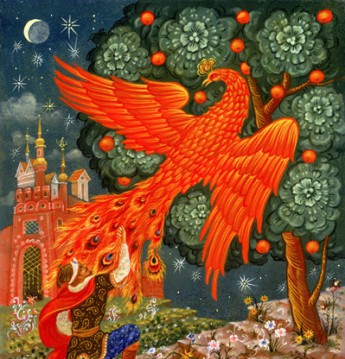
 Feathers of the Firebird