On this page, for the information and enjoyment of my readers, I’ve listed links to locations in The Paris Cooking School which feature in various scenes in the book. These include the main Paris setting, and other places in France that feature in the book in certain chapters.
Paris locations
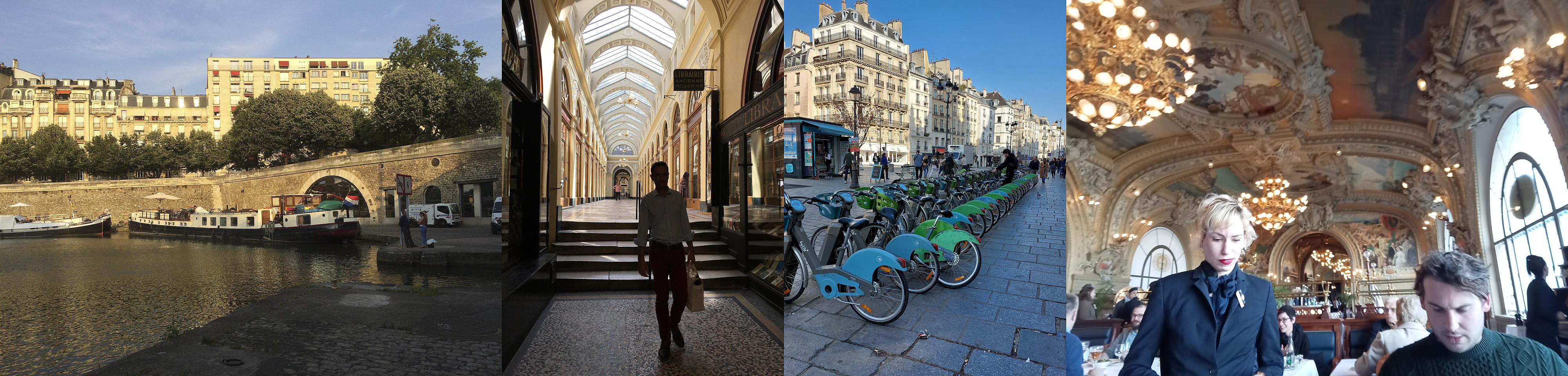
Port de l’Arsenal, where Arnaud lives on his boat.
Quartier Saint-Paul, where Kate’s and Gabi’s hotels are, and near where the School is situated. Much of the action of the novel takes place in and around here.
Pont Alexandre III, where Gabi meets up with Max in chapter 8.
Le Jardin du Luxembourg, where Kate meets up with Anja and Stefan in chapter 11.
Le Train Bleu, famous restaurant where Kate and her friends have a meal in chapter 13.
Bassin de la Villette, where Kate, Pete, Anja, Stefan and Arnaud go on a boat ride in chapter 21.
Galerie Vivienne and Galerie Vero-Dodat, where Kate goes on a shopping spree in chapter 24
E.Dehillerin, famous cookware store, also in chapter 24.
Various Paris markets mentioned or visited in the book in various chapters.
Other featured locations in France

The ‘Pays Basque‘ or French Basque country, where Gabi is in chapter 22. Her grandparents’ house was situated in the hills around the charming small town of Cambo (Kanbo in Basque), which is about 19 kms inland from the beautiful seaside town of Biarritz. (Note: The Basque country consists of two parts, straddling the western edge of the Pyrenees: the Northern, or French Basque country–Pays Basque in French–and the Southern, or Spanish Basque Country–País Vasco in Spanish. The whole Basque Country is called ‘Euskal Herria’ or Euskadi’ by the Basques themselves, while the ancient Basque language, which is still very much alive, is called ‘Euskara’).
Monet’s house at Giverny, where Sylvie goes in chapter 14. The great painter Claude Monet made his home there for 43 years, from 1883 to his death in 1926.
The Somme region, including the WW1 battlefield village of Villers-Bretonneux and the cathedral city of Amiens, where Kate and Arnaud go in chapter 34, including to the extraordinary ‘hortillonages‘.
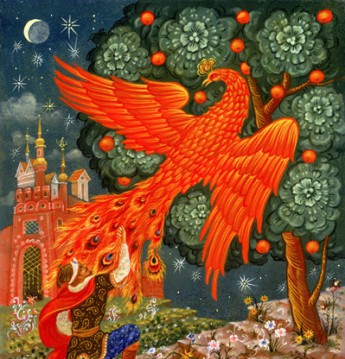
 Feathers of the Firebird