A great opportunity for emerging authors

Christmas Press has a great opportunity for emerging authors open at the moment: a call for submissions to the 2017 anthology, A Christmas Menagerie, which will feature stories for children 6-9 years old, set at Christmas, around the theme of animals. But watch out, there’s only a short time left–you have to get in your story by midnight on January 6! You can get all details including where to submit to, here: https://christmaspresspicturebooks.com/2016/12/26/a-fabulous-opportunity-for-emerging-authors-in-our-2017-christmas-anthology/


Established writers and creative writing doctorates/PHDs

I’m delighted to announce that my academic research paper, Breaking the pattern: established writers undertaking creative writing doctorates in Australia, has just been published in the latest(October) issue of the prestigious journal TEXT. Here’s the abstract:

The focus of this article is an examination of the experiences of established writers who have recently completed, or are currently undertaking, a creative writing doctorate, against a background of change within the publishing industry. Is it primarily financial/career or creative control concerns that are influencing established writers to undertake creative doctorates in recent times? And how do these writers fare within the degree program? To explore these issues through individual stories, interviews were conducted, by email and phone, with six established professional writers who had recently completed, or were still undertaking, a creative doctorate as well as with four established creative writing academics, most of whom are authors themselves. Questions of motivation and experience, as well as outcome, are canvassed in this piece of original research, which provides an interesting snapshot of the current situation for established writers in Australia undertaking creative writing doctorates.

The full paper is available for reading here.

Third Night published in Swinburne University journal

A creative non-fiction piece of mine, Third Night, which I presented as a reading at the Australasian Association of Writing Programs’ conference last year, has just been published, along with other conference presenters’ pieces, in a special edition, ‘Hauntings’,  of Swinburne University’s journal, Bukker Tillibul. I’m reproducing Third Night below, but you can also read it and all the other pieces here.


Third Night

By Sophie Masson

The first night, far from home, and a dream: a woman writing, at a desk in an old weatherboard cottage. The screen door creaks, and something hurtles into the room. A glimpse of a face, vivid in its sheer ferocity: a tiny thing, but deadly. The dreamer awakes in fright, to silence and friendly darkness, thinks on the dream, but does not understand.

Now it’s the second night, another dream. Two travellers, a woman and a man,  arrive at a lakeshore. The man strips, goes into the lake, and as he does so, the water turns his skin to bronze, he is becoming alien but doesn’t seem to notice, while his companion cries out in fear. The dreamer wakes, heart pounding, into the friendly darkness, and still does not understand.

It is the third night, in a Sydney suburb this time. The dreamer is asleep. All at once, dogs bark. The staccato sound that tells you their hackles are rising, that  something unexpected is out there. It is this that wakes the dreamer and gets her up to look out the window.

Outside, in the vacant lot next door, there is a man, standing in the moonlight, hair of black and silver, dressed in plain pale clothes—but exactly what colour are they?  He looks quite solid, there is no translucence about him, and yet..He has one hand on his hip, the other held out with fingers parted, a silent message. Otherwise, he is still, more still than ever any human can be: and his glance—what a cold, direct gaze!—is fixed at the wide-awake dreamer, standing transfixed at the window.

There is no fear. Don’t think that. Only an  eternal moment, suspended, the cold direct gaze, the silver glimmer, the silent calling.

Now the waking mind is rebelling, seeking to explain. There is an intruder! Something must be done. The dreamer rouses the household which stands there in its pyjamas staring bleary-eyed out at the night. The household shouts at the dogs, hoping to chase away the intruder. Then rubs its eyes, says, ‘But he’s not there! Look..’ And in the place where the man stood in the vacant lot, the dreamer sees…a tree. A small, stunted grey eucalypt. The dogs have stopped barking. The household goes back to bed, shrugging.

But the dreamer stands at the window and stares out at the tree. I’ve heard the dogs barking before, gone to the window to shout at them, and seen that tree. But not this night. The dogs barked, and I saw something else, which the first two nights had prepared me for. Not a dream.

For yes, this was my own story. What happened was real: but I may never be able to understand it. It does not matter. For all of us move in the world’s mystery as fish swim in water, because it is our natural element. Yet often without understanding, for fish are the last to know they live in water.
Off to SCBWI Conference!

scbwiTomorrow, I’m off to the SCBWI Conference in Sydney, which I’m much looking forward to. In a bit of a turn up for the books, as it were, I’ve been invited to present not as an author, but as a publisher–representing Christmas Press, of course!

On Monday I’ll be viewing the Illustrator Showcase, looking at the work of new ad more established illustrators; conducting a manuscript critique; and appearing on a panel on building a brand while maintaining your passion, with some fabulous other panellists: author and former publisher Margaret Hamilton; managing editor of Australian Standing Orders, Belinda Bolliger; author and festival director Sandy Fussell; Harper Collins publicity manager, Holly Frendo, and brand creator, journalist and author Valerie Khoo. Should be a great session!

In other literary events this coming week, and still with my publishing hat on, I’m going to be supporting Christmas Press author John Heffernan at a talk he’s giving on Tuesday 6 about his book with us, Two Tales of Brothers from Ancient Mesopotamia, at Leichhardt Town Library; and also at a SCBWI event on Wednesday 7th, at the Children’s Bookshop in Beecroft when John will be part of a stellar list of authors presenting their books to readers.

And finally, on the Thursday, it’s back to popping my author hat on, as I’ll be having lunch with two lovely Scholastic publishers: Clare Hallifax and Ana Vivas!


Lovely Book-by-book interview with me at Jon Appleton’s blog

My friend and fellow author Jon Appleton has a great interview series going at the moment on his blog. Called Book by Book, the series focuses on particular books–such as the first one you ever wrote, the one you wish you’d written, the one you know you’ll never write…and more! So far, Jon has interviewed Laurie Graham, Linda Newbery, Joanne Harris and Adele Geras. And now, it’s my turn to be interviewed!

Here’s an extract:

  1. What was the first book you wrote?

It depends which way you look at it! The very first ‘book’ I created was at the age of seven when I wrote and illustrated The Adventures of Princess Alicia, which I stapled up so you could turn the pages – sadly, no copies survive! Then, the next big milestone was the first book I actually completed as an adult (after several false starts with novels I started and then abandoned). This was a big historical novel called The Canadian, based on some of the history of my father’s side of the family, in 19th century Quebec, against a background of rebellion. I was around 23 or so. I sent it around everywhere but it got nowhere though I got some nice comments about it from publishers who nevertheless rejected it! That was the case also with The Witch from Crow River, another historical novel set in Quebec, this time in the 17th century (when my ancestors had arrived there from western France). I had not even been to Canada at the time and I think that might perhaps have shown.

Anyway, just a few years later, when I was 27 and had just had my second child (in fact just a week later), I picked up a short story I’d written back when I was 16, which was set on the far north coast of NSW (which I thought terribly exotic but had in fact visited!) and thought, I could turn this into a novel. I did – and the result was my first published novel, The House in the Rainforest, an adult novel set partly in the ‘90s (when it was published) and partly in the ‘70s (when I’d first gone to the north coast). It was not autobiographical, it was just the setting I knew well. While I was waiting to hear back from the University of Queensland Press (to whom I’d sent the novel – they took more than a year to get back to me!) I wrote a children’s novel, a timeslip story set partly in country NSW, partly in medieval France. That was Fire in the Sky, my first published children’s novel. It was published the same year as The House in the Rainforest.

You can read the whole interview here. 

Aussie SF Snapshot interview with me

The Aussie Spec Fic Snapshot, a series of short interviews with Australian writers of speculative fiction, has taken place five times in the past 11 years. This year, a team of eighteen interviewers have been emailing writers around the country and asking them intriguing questions. And I’m one of those interviewed writers, with my interviewer being Belle McQuattie.  So here’s an extract from the interview: a question focussing on my PHD work:

You’re writing Ghost Squad as part of your creative writing PhD at the moment, has this affected how you have approached writing the book?

Yes, it has. I’m writing the novel at the same time as I’m researching material for its accompanying academic exegesis, which is on the very interesting speculative fiction sub-genre of afterlife fiction, specifically YA afterlife fiction (ie novels set in the afterlife). This means that not only am I reading a lot of really fabulous novels that I would not necessarily have come across otherwise, but as part of the cultural context of afterlife fiction, I’m taking in some very interesting background stuff, such as Victorian gothic and ghost stories, and screen-based narratives, especially TV series, which have the general theme of afterlife, or return from the dead: including Les Revenants(the French series, known as The Returned in English), the Australian Tv series The Glitch, Resurrection(US) and also the very successful earlier series, Lost. It’s fascinating stuff! Because of this, I’m coming up with all kinds of insights and ideas which are feeding back into the creative work as much as the academic work. And vie versa too–my work on the novel is feeding back into the academic study. As a synergy, it’s working really well.

You can read the whole interview here.

My first published academic article!

Really delighted to see the article I co-wrote with Dr Elizabeth Hale, Mosaic and Cornucopia: Fairy Tale and Myth in Contemporary Australian YA Fantasy, published in the latest issue of Bookbird: A Journal of International Children’s Literature. I wrote about the fairy tale aspect, while Dr Hale wrote about myth. You can see more about it, and read at least the beginning of it, here. 

Busy days coming up!

I’m off to Sydney today for a packed program of book events. Tomorrow I’m giving the Keynote Address at the Society of Women Writers lunch meeting in the State Library, as well as giving a workshop the same day in the same venue! On Saturday it’s the Australian Society of Authors’ AGM and then a Board meeting, also in the State Library. Next week on Wednesday and Thursday, I’m going to the Visiting International Publishers program events, and on the Thursday I have appointments with no less than seven visiting international publishers, to talk about our Christmas Press list! Then from Thursday evening to Saturday afternoon, it’s the CBCA National Conference, at which I’m a presenter–and will also be on a Christmas Press trade display table! It’s going to be hectic–but great!

Great interview with me about fairytales, Shakespeare, bilingualism and more

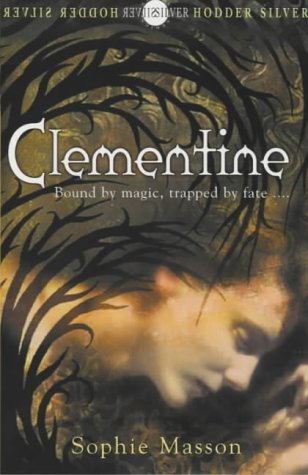
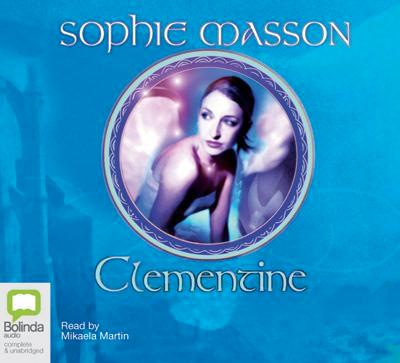
clementineWriter, musician and fairy tale aficionado Louisa John-Krol did a very wide-ranging interview with me on her blog recently, asking some very interesting and thoughtful questions. Following is a short extract which refers to one of my fairytale novels, Clementine, but you can read the whole thing here. 

L: One of my favourite books is “Candide” by Voltaire. I smiled to find that one of your characters in the novel “Clementine” is called Candide, which translates as optimism. You strike me as being an optimistic person, Sophie, not only in your conviviality but in the happy endings I’ve encountered so far in your stories. How would you describe your disposition?
S: Yes—I am an optimist—but a realistic one. I would say that love, joy, courage and laughter are every bit as real as hatred, gloom, betrayal and tears. We are not angels or perfect beings—we are shot through with flaws of iron—but also golden threads of beauty. That is human nature—divided—yet indivisible at the same time. My happy endings always, I think, have an inkling of that. Some experiences mark my characters forever—yet they can still get the joy that can be found in life. That to clementine (1) me is an important thing to hang on to, even in the darkest time. 
 

L: Another device for evoking optimism in “Clementine” is your abundant use of present tense. It occurs to me that as the major key is cheerful in music, and minor key melancholy, so it is with present and past tense respectively in literature. Was that a conscious decision on your part?
S: What a lovely insight! It wasn’t a conscious decision, no—just an instinct. But I’m glad you saw it and articulated it.