My most recent post on Writer Unboxed is about the dedications in books, and it was fun writing it and going down the rabbit hole of research to do so! Here’s a short extract:
Some writers have it in mind from the beginning, for others it might be last-minute addition, prompted by a publisher’s question or a sudden impulse. To dedicate or not to dedicate—that is the question.
Dedications in books are certainly very common. Of the seven books on my bedside TBR pile, for example, just two lack a dedication. One of these features an epigraph instead, a line from a poem which expresses something at the heart of the book, and the other has no dedication at all. The dedications in the other five books are all personal, addressed to important people in the author’s life, which are in fact the most common kinds of dedications. Occasionally, though, you might see a more general type of dedication, in the vein of ‘to all those who have been there’. And it’s not just a modern thing—dedications in books have been common for hundreds of years. They started as statements of gratitude to patrons—for example, Shakespeare’s famous, enigmatic dedication for the Sonnets (though some say it wasn’t Shakespeare but the publisher who wrote the dedication). Or even further back, 12th century French writer Chrétien de Troyes’ dedication of his extraordinary seminal work, Le chevalier de la charrette (the Knight of the Cart), which simultaneously launched the character of Lancelot, a massive craze for Arthurian romance, and, for a francophone like me, the birth of the novel (‘roman’ being ‘novel; in French). Chrétien dedicated the work to his patron, Marie de Champagne, daughter of Eleanor of Aquitaine, writing it as a graceful, sprightly poem which cleverly manages to avoid outright flattery, and a light touch that combines humor and gratitude. (If you read French, you can see it here.)
But from at least the 19th century, book dedications tended to be more personal. Looking up some famous book dedications as I was preparing to write this post, I found some that were basically mini-letters to family members or friends, such as CS Lewis’ affectionate message to his god-daughter Lucy in The Lion, the Witch and the Wardrobe, and John Steinbeck’s touching letter, for East of Eden, to a friend who was also his editor. Others, like PG Wodehouse’s rather acidly humorous dedication to his daughter Leonora, were like a mini-version of the author’s characteristic style, or more surprising in their form, like Carl Sagan’s lovely, poetic tribute to his wife Annie. Although never as popular as personal dedications, general dedications also started to become more common in the 20th century and beyond. For example, Agatha Christie wrote a tongue-in-cheek dedication of The Secret Adversary to ‘all those who lead monotonous lives.’ She also wrote many personal dedications, and you can read a compilation here). Jack Kerouac wrote a pithily disillusioned dedication, ‘To America, whatever that is’, in his book, Visions of Cody. If you’re interested in reading about more famous book dedications and their backgrounds, this oldie-but-goodie article from the New York Times in 1982, is worth a look.
You can read the whole post, and comments on it, here.

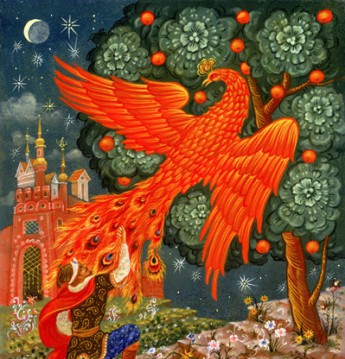
 Feathers of the Firebird